Ancient Egyptian Turquoise Faience Ushabti
£ 695.00
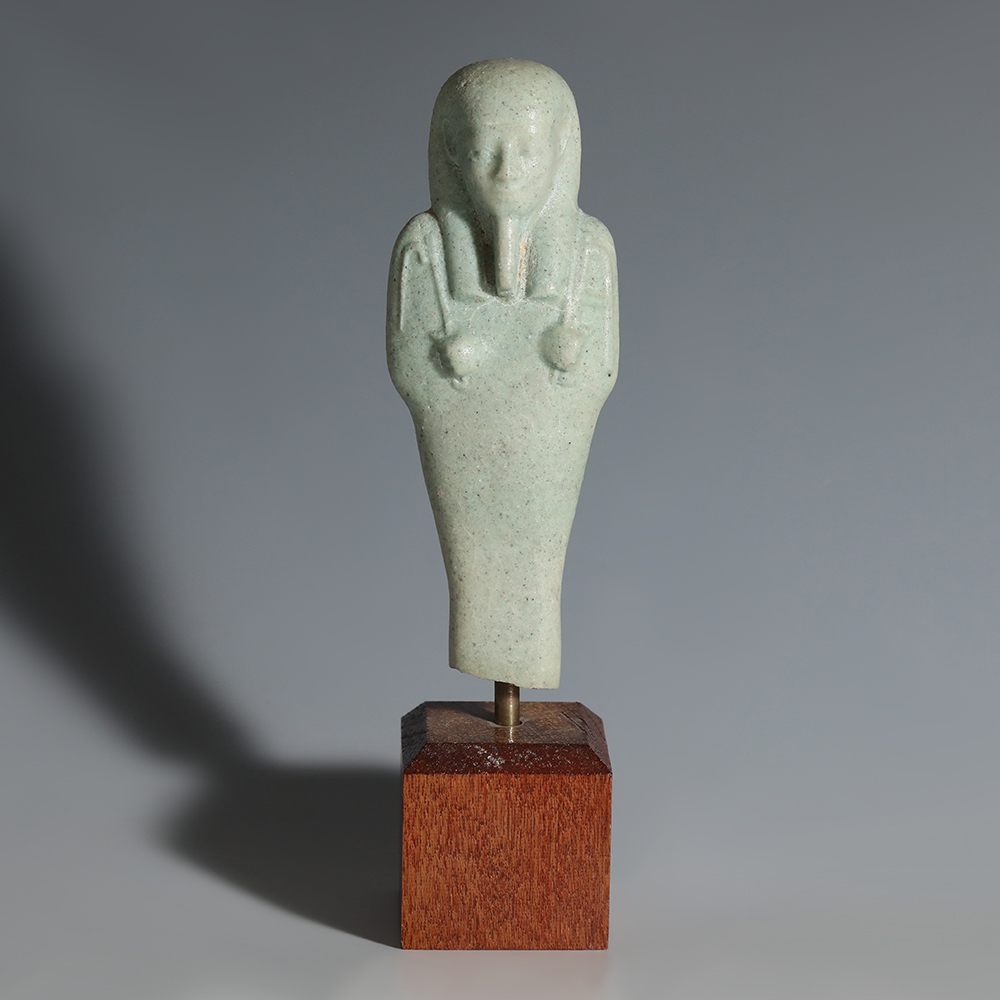
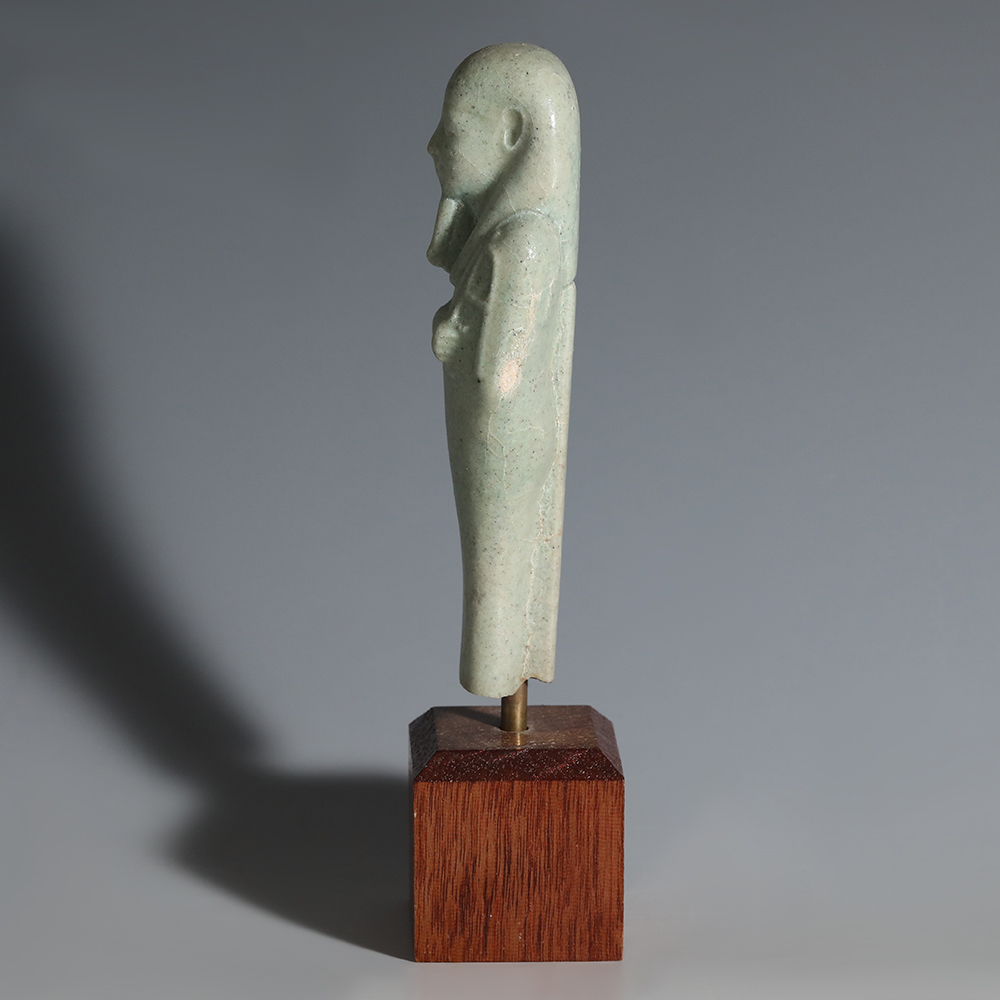
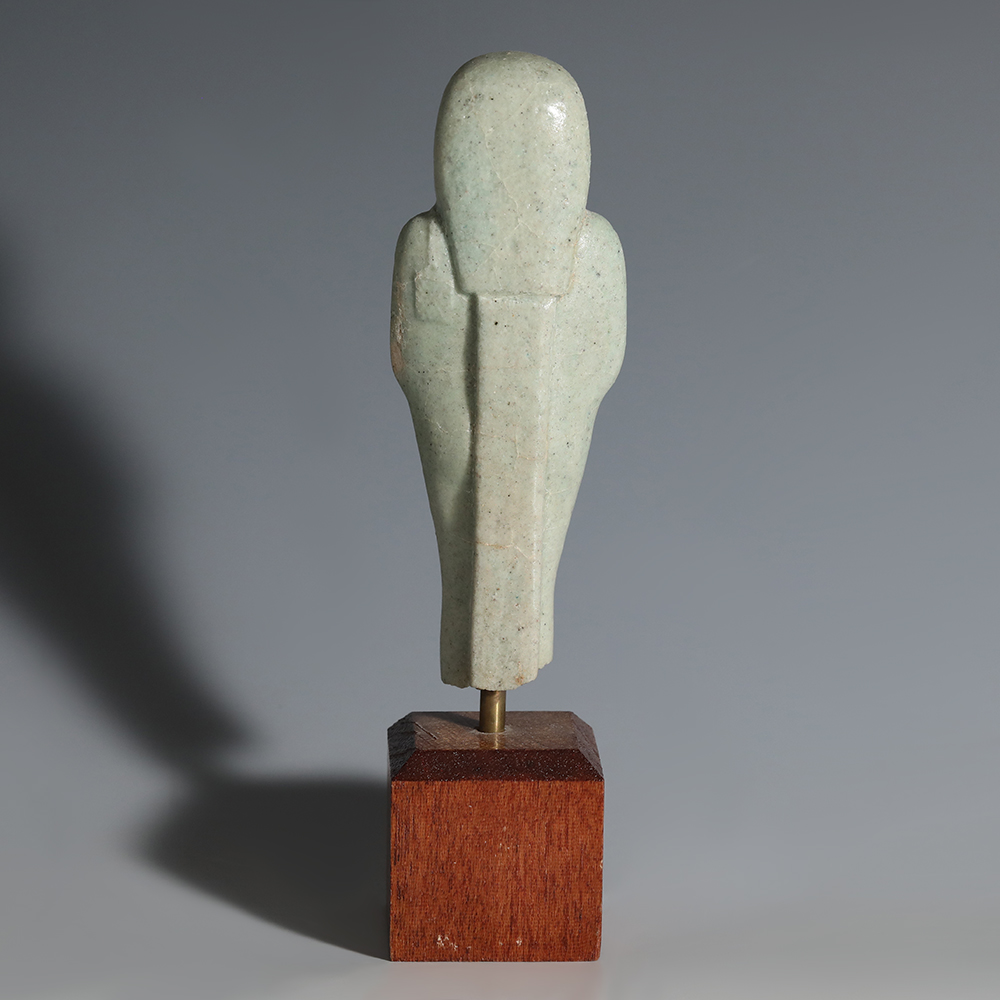
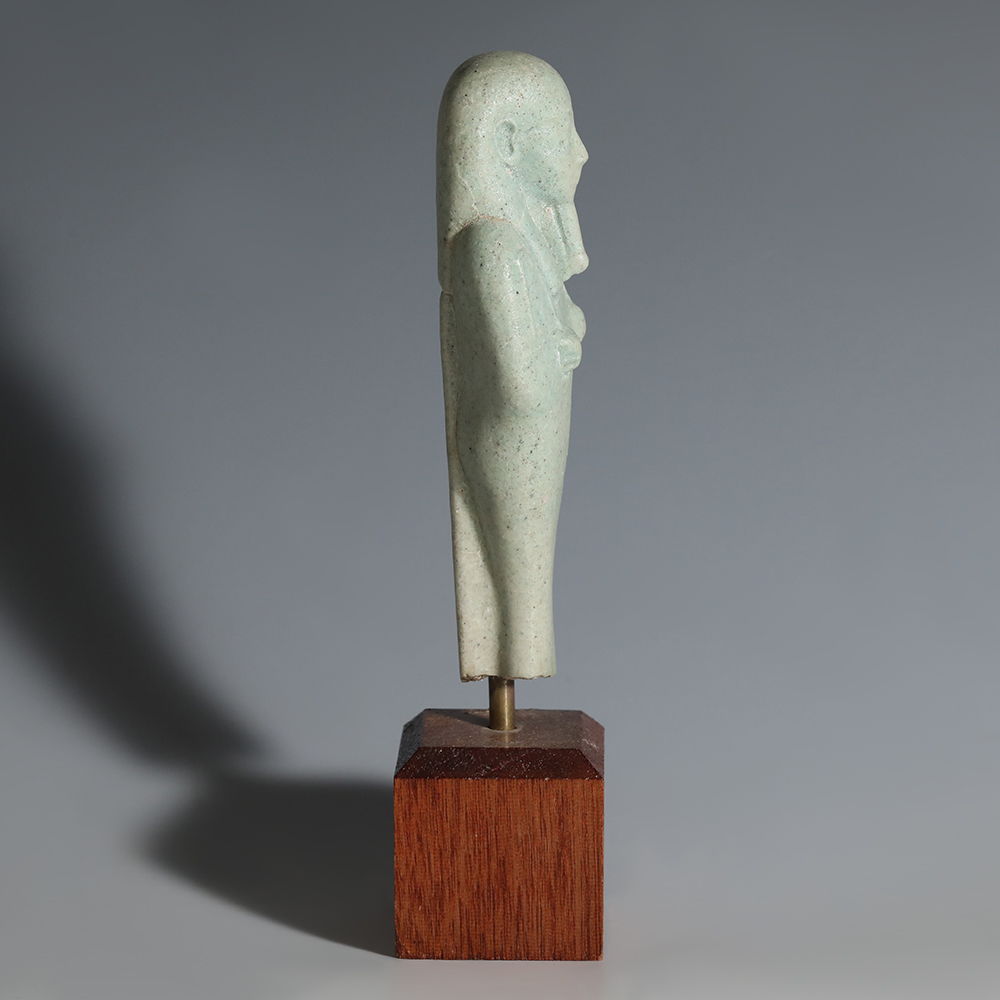
An ancient Egyptian, turquoise, glazed faience ushabti. The figure wears a plain wig with a plain beard. The face is finely modelled in relief with delicate features, highlighting the eyebrows, nose, mouth, ears, and hands. The hands are crossed above the waist, holding a pick and a hoe to the chest. A stylised seed-basket hangs over the left shoulder of the shabti, symbolising the work he was expected to carry out for his owner (the deceased) in the afterlife. A dorsal pillar, uninscribed, extends down from the wig at its rear. A modern wooden base has been attached to the area where its trapezoidal base, now broken, would have stood. The height of the figure is around 12 cm. Please note that the measurements below are inclusive of the modern stand.
Date: Circa 664–525 BC, 26th Dynasty
Period: Late Period
Provenance: Private UK collection, Alan Cherry, Bournemouth.
Condition: Fragment. Features still clear. Some loss of colour consistent with age. Mounted on a custom-made stand.
In stock
Shabtis or ushebtis (“answerers”) were small figurines buried with the deceased, intended to carry out menial labour on their owner’s behalf in the afterlife. To reflect this function, they are usually depicted in the form of a mummy holding tools in their hands – baskets, mattocks and hoes. Shabtis are among the most numerous of Egyptian antiquities, as they played a major role in funeral rites. A typical elite burial would contain hundreds of shabtis. They were sometimes placed in large shabti boxes but were perhaps more commonly stood in rows around the burial chamber, or placed in niches.
To discover more about Egyptian shabtis, please visit our relevant blog post: How Ancient Egyptian Shabtis and Funerary Statuettes Watched Over the Dead.