Egyptian Light Blue Faience Shabti with a Dedication

£ 395.00

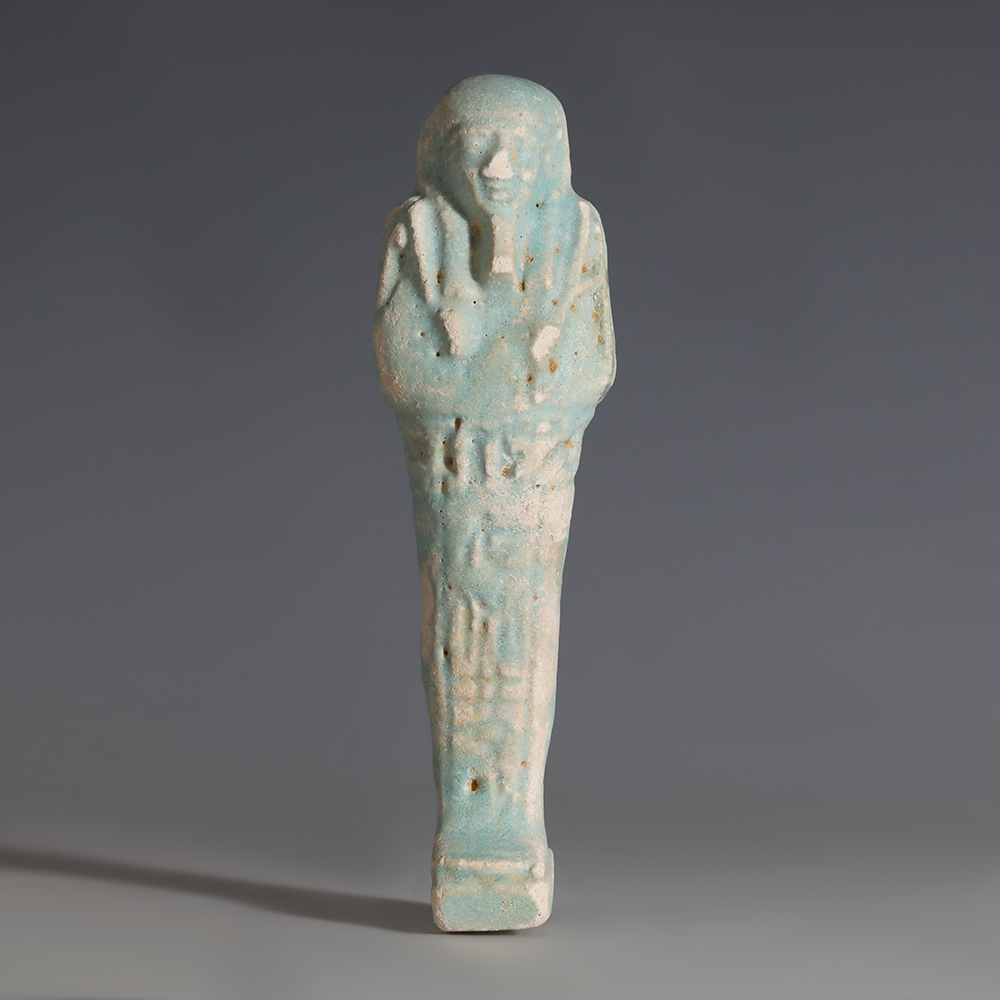
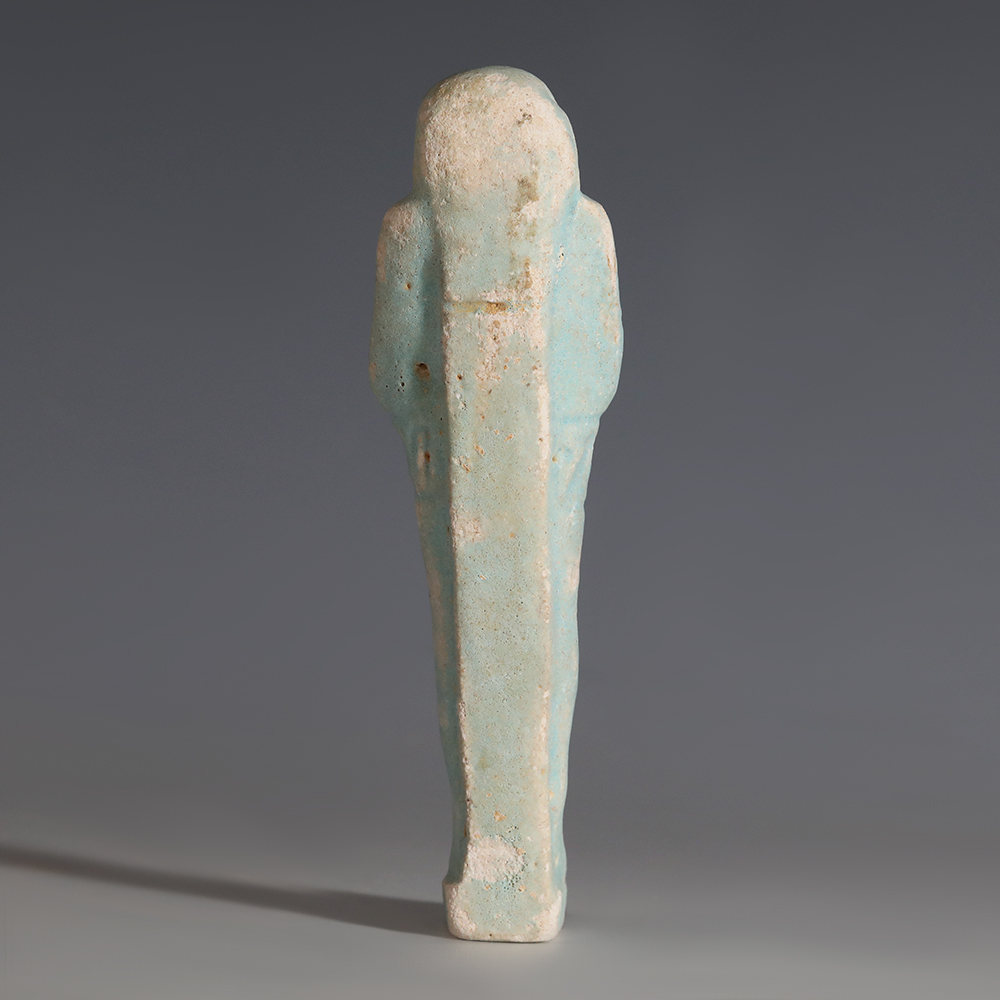
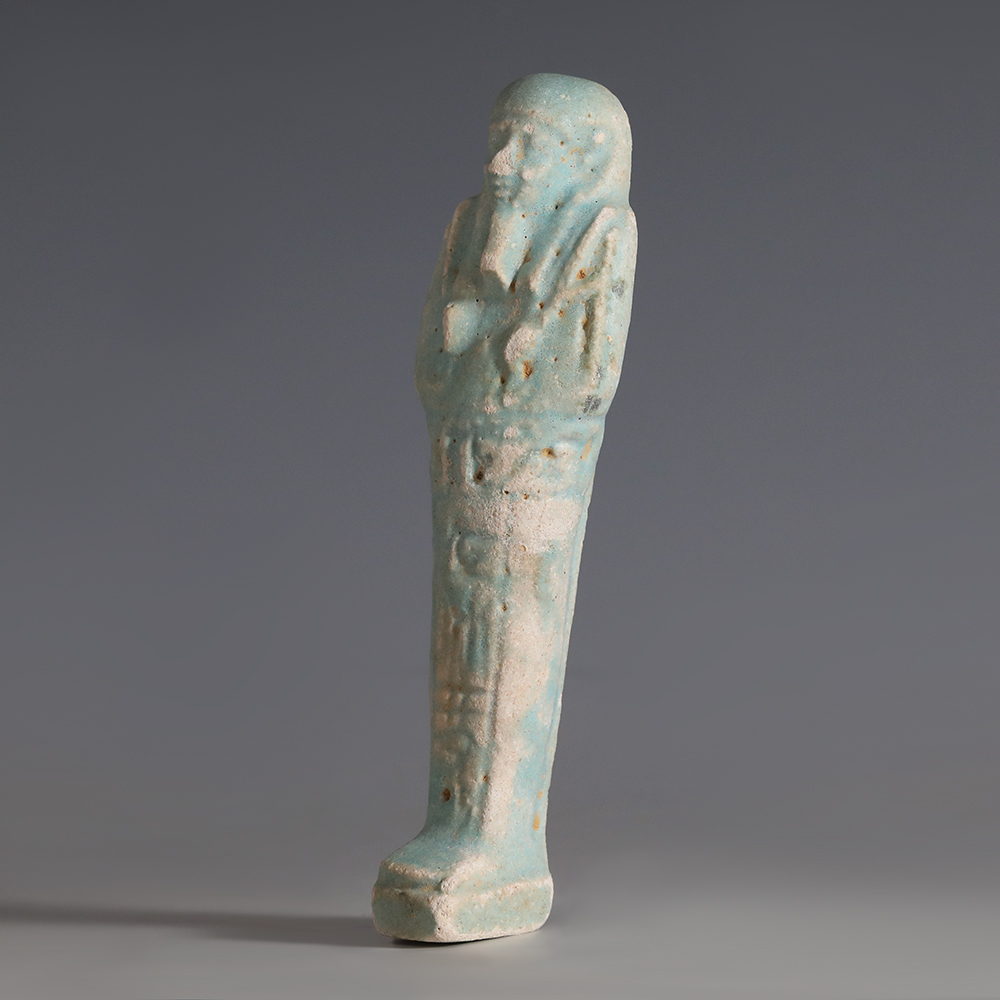
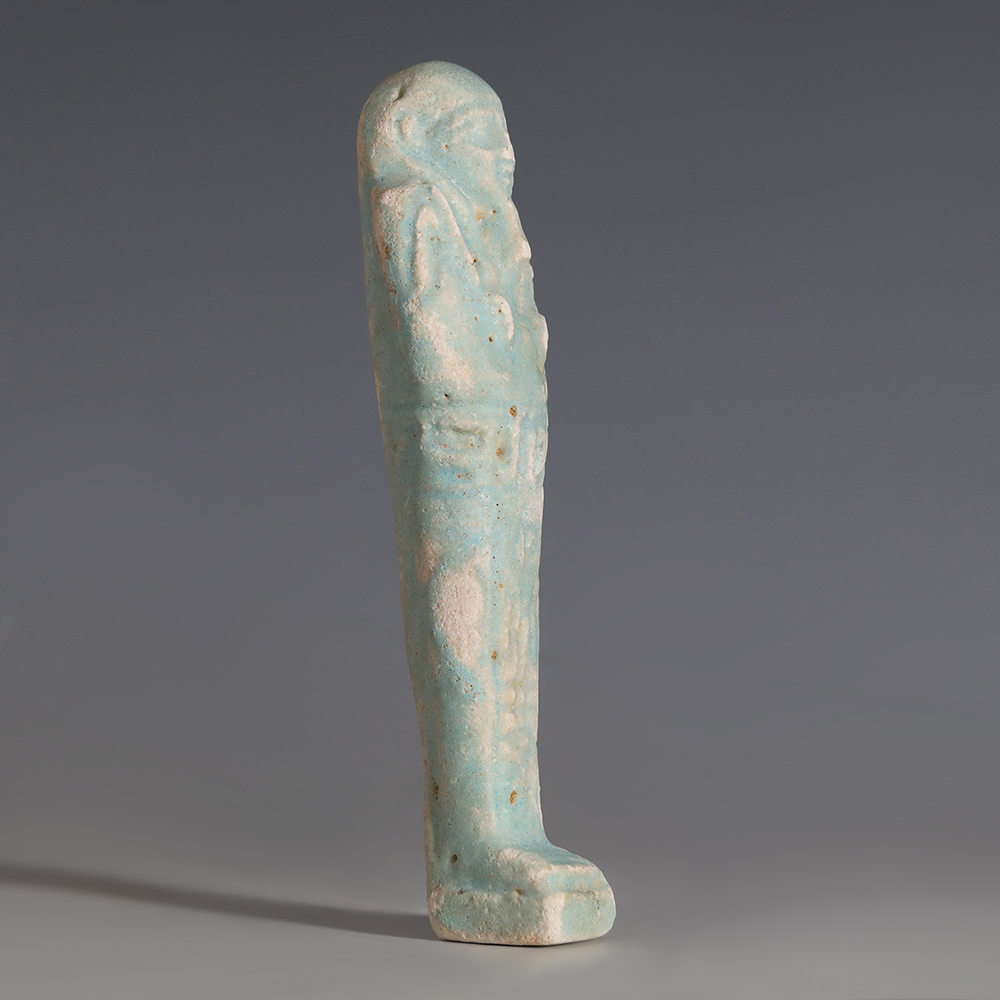
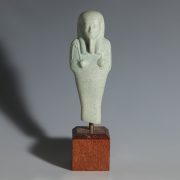
An ancient Egyptian light blue faience shabti featuring a hieroglyphic inscription. The shabti is depicted in typical mummiform fashion, standing upright on an integrated base with arms crossed over the chest. He holds upon each shoulder a piece of farming equipment, likely a hoe. The facial features have been carefully carved to portray large eyes, a straight nose and a closed mouth. A false, long, rectangular beard features to the chin and a tripartite wig is worn upon the head. The hieroglyphic inscription is constructed in a horizontal channel across the body, then in a vertical column down the legs. Though worn, the inscription likely reads as a dedication to Osiris and a wish for protection for the mummy’s owner. The reverse displays a flat dorsal column with a horizontal groove beneath the head depicting the end of the wig.

N.B. This piece cannot stand unaided.

Date: Circa 664-332 BC
Period: Late Period
Provenance: Private UK collection; London art market; formerly in R.H. private collection, Switzerland, 1980s-2007.
Condition: Fine condition with signs of wear as consistent with age. Slight chips to the nose, beard and hands.

In stock

SKU: CY-366 Category: Tags: , , ,

Ushabtis or Shabtis were figurines designed to be placed in tombs. They take the appearance of human mummified figures, usually with their arms crossed at their chest. They could be made using several materials, such as wood, clay and faience, which remains the most common, especially in its blue or green shades. Shabtis were intended to act as servants for the deceased and to perform any manual labour for them in the afterlife. For this to be possible, early shabtis would include the name of their master inscribed on it and also a summoning spell to which they replied. In fact, shabti translates as “the answerer”. Such figurines could also be inscribed with passages from the Book of the Dead, the intention of which was to secure safety for the deceased in the afterlife. In later periods, with the increased mass production of shabtis, the deceased would include a significant number with them in their tomb; even so many as 365 workers and 36 overseers to supervise.

To discover more about ancient Egyptian shabtis, please visit our blog post: How Ancient Egyptian Shabtis and Funerary Statuettes Watched Over the Dead
Weight 57.6 g
Dimensions W 3.2 x H 11.5 cm
Culture

Faience

Region

Reference: For a similar item,National Museums Liverpool, item 49.8.35

You may also like…