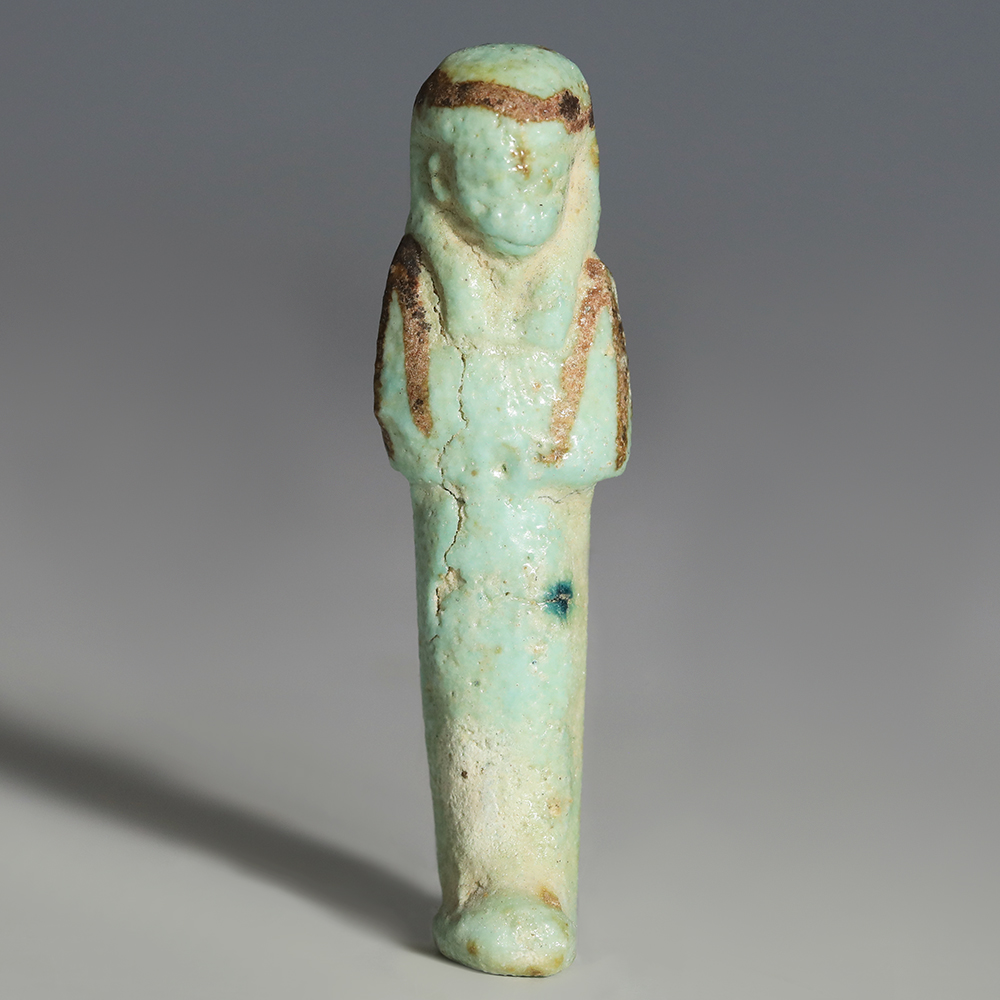
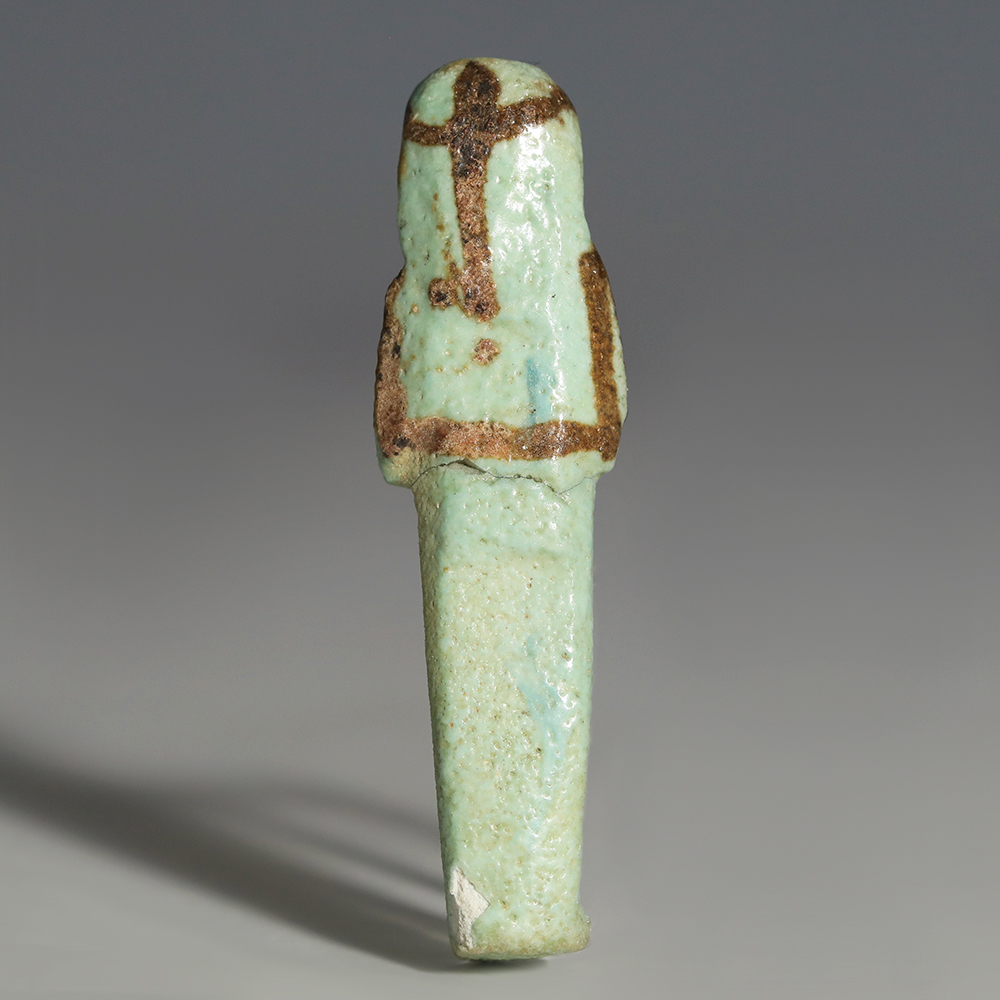
Shabtis (or Ushabtis) were figurines in mummified form, which were placed in Egyptian tombs to perform any manual labour required by the deceased in the afterlife. This particular statuette is a Worker Shabti, characterised by the agricultural equipment held in each hand. They were included in burials to provide labour in the afterlife, and display an array of tools including axes, hoes and baskets. During the Third Intermediate Period, the number of shabtis allocated to an individual increased substantially. A total of 401 shabtis were often included; 365 ‘worker’ shabtis and 36 ‘overseer’ types, with ten workers assigned to each overseer. With an increase in demand, shabtis became smaller in size and less defined. The figurines were mould-made with highlighted accents in black pigment and the backs were usually trimmed flat.
To discover more about Egyptian shabtis, please visit our relevant blog post: How Ancient Egyptian Shabtis and Funerary Statuettes Watched Over the Dead


