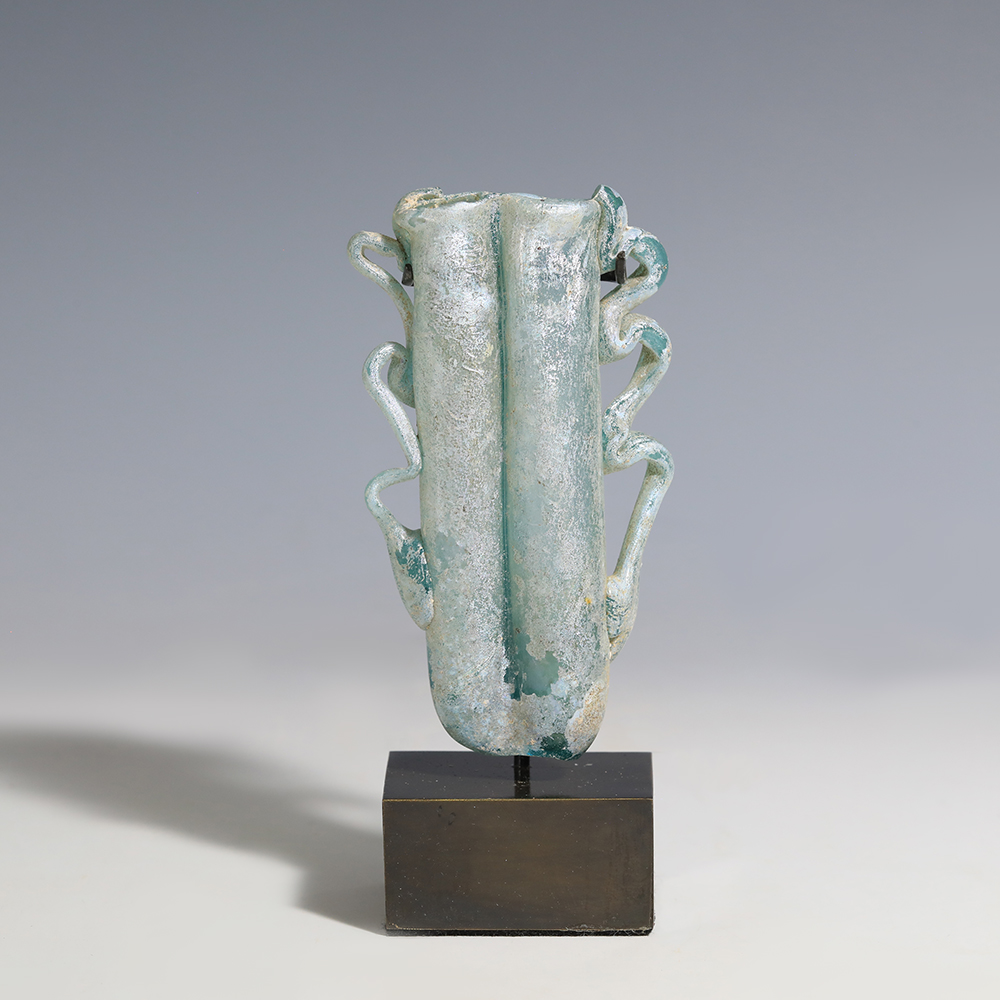
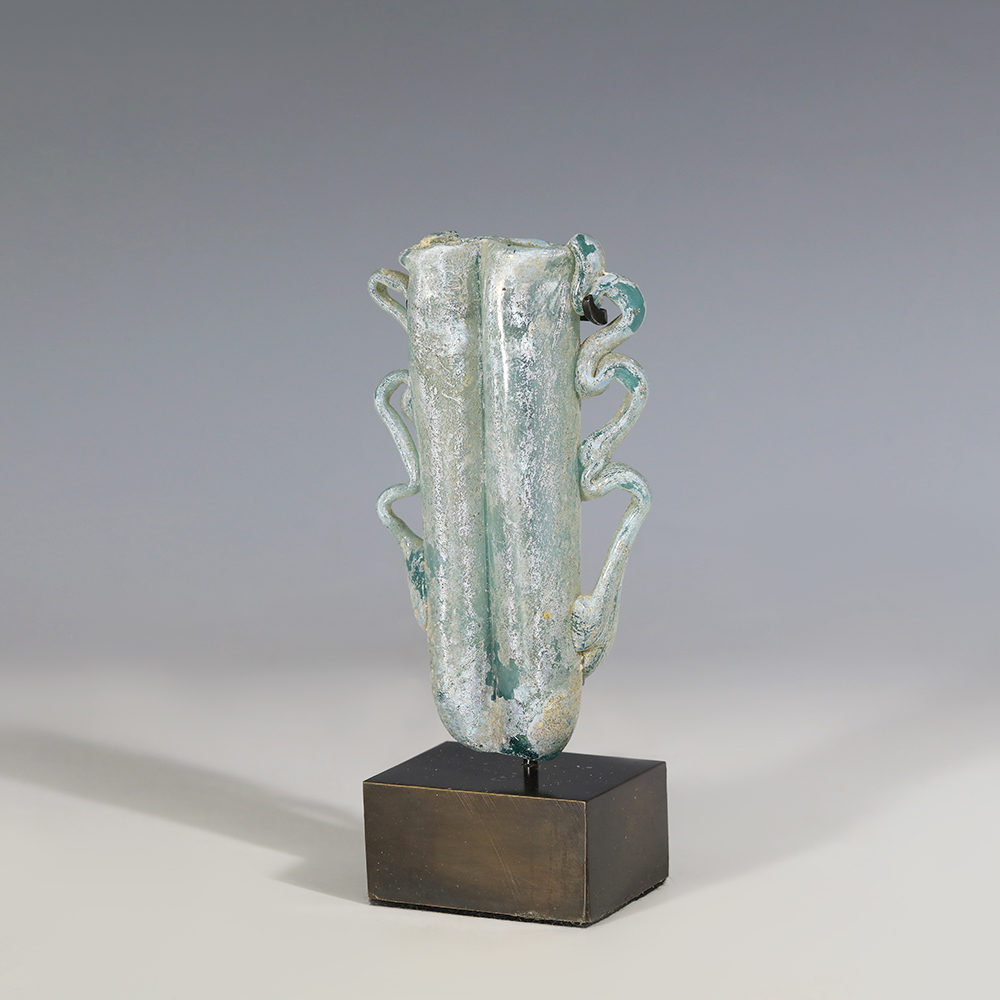
Roman Glass Double Balsamarium with Applied Handles

£ 495.00

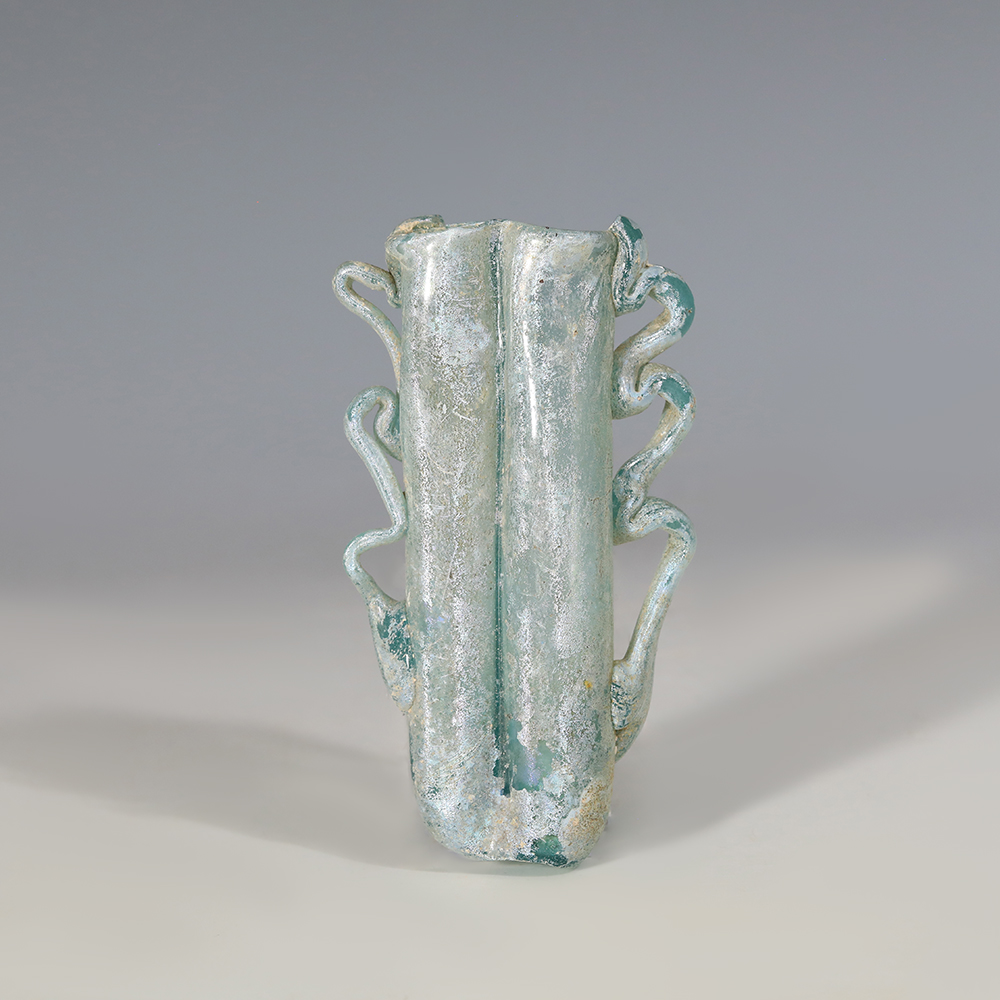
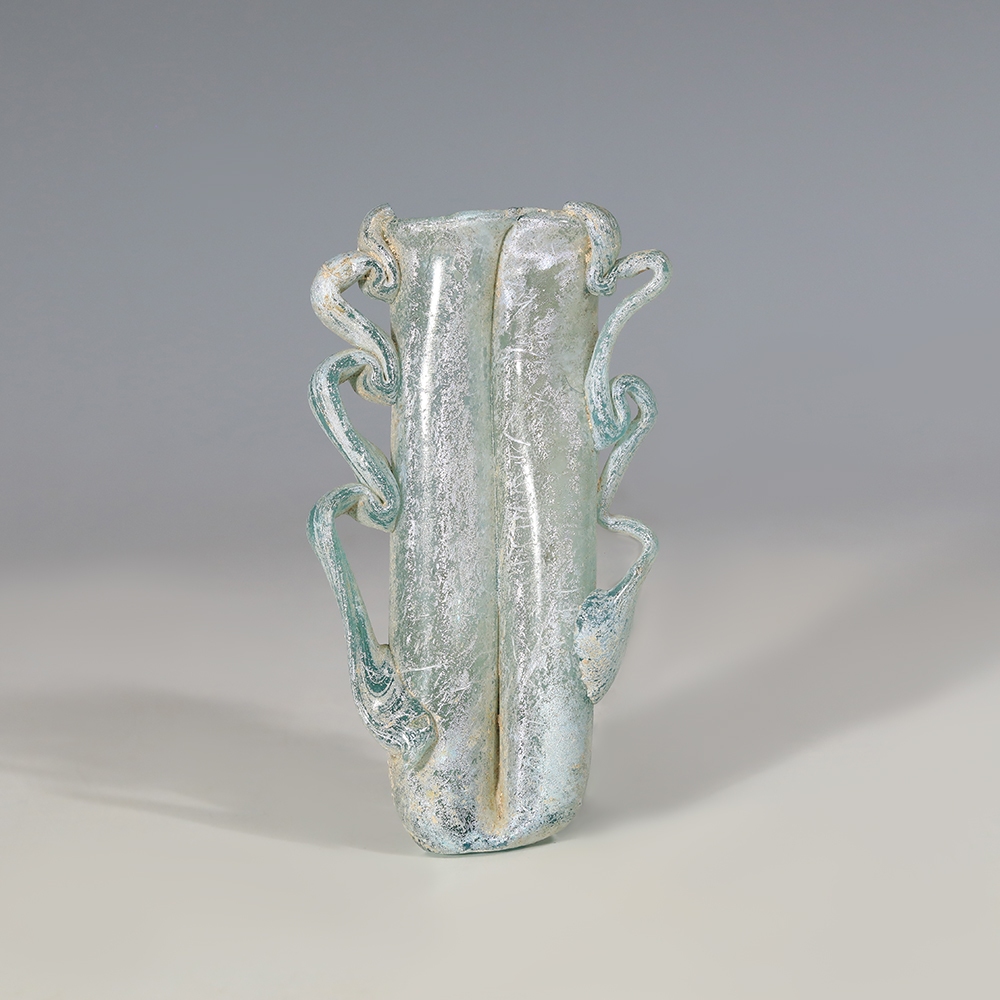
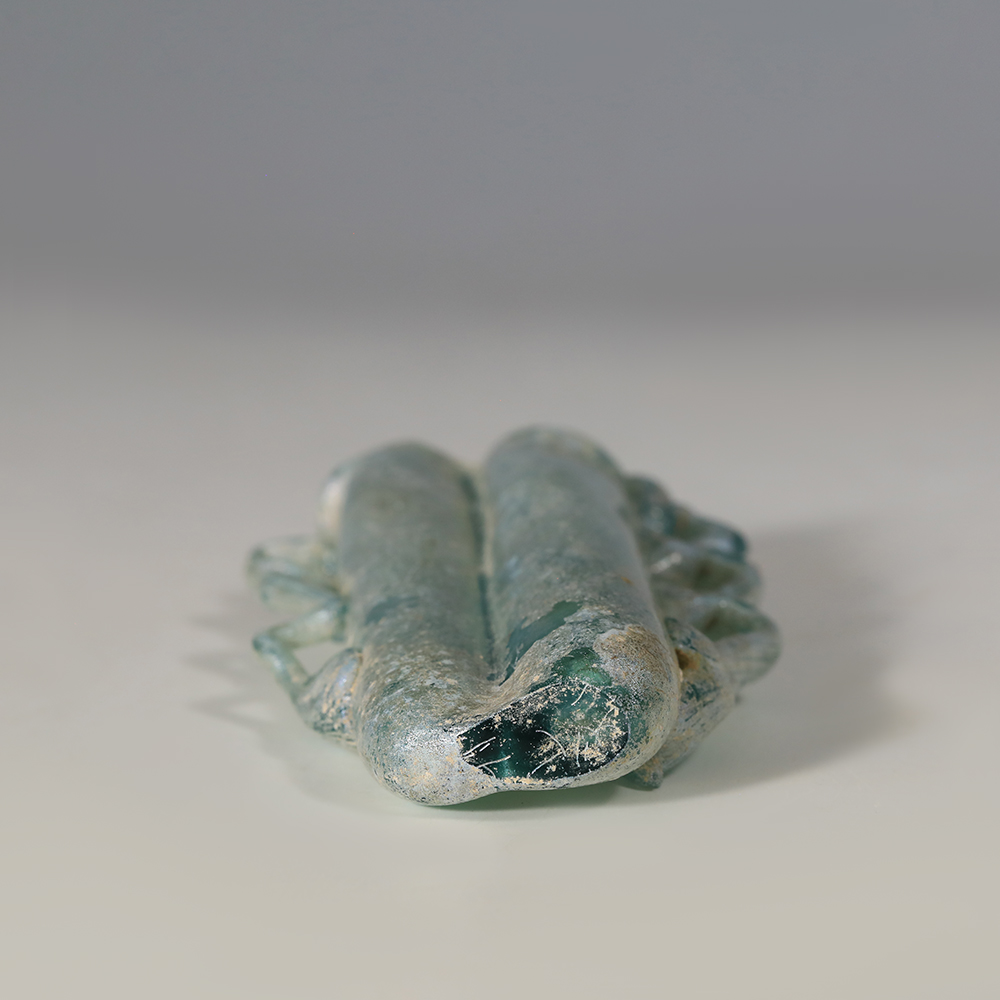
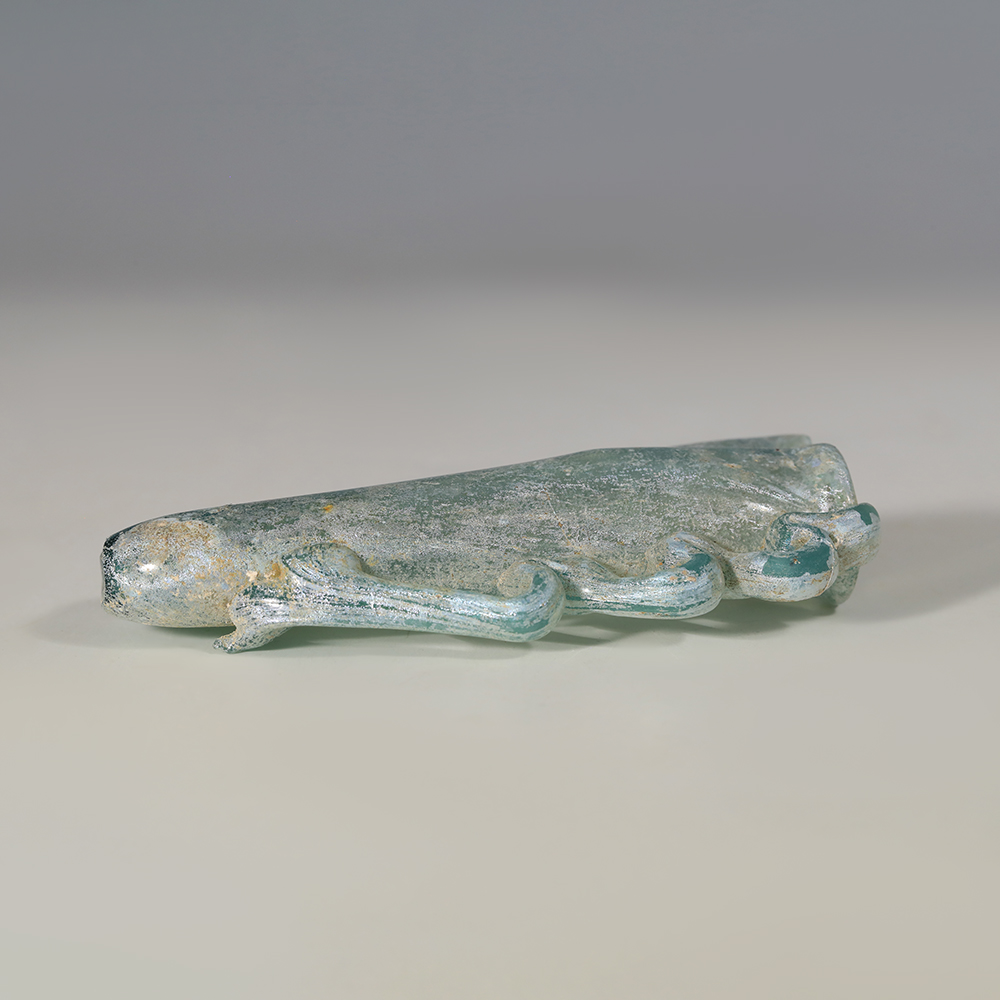
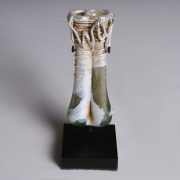
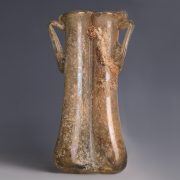
A beautiful Roman double balsamarium in light blue glass. The vessel has been formed as a pair of conjoined tubes, with slightly flared tops and thickened rims. Two long, curvy handles have been applied to the sides, starting near the base of the body and ending at the lip, though their use is more decorative than practical. There is a pontil mark at the base of the bottle. The surface of the glass is covered with fine vivid silvery iridescence. The vessel is mounted on a custom-made stand.

Dimensions of the vessel without the stand: H 10.6cm x W 5.5cm

Date: 3rd - 5th century AD
Provenance: Ex Mayfair, London, UK, gallery, 1990s-2000s. From an important collection of glass, the property of a London gentleman.
Condition: Very fine, complete and intact, minor earthy deposits. There is a short hairline crack on the interior of one of the tubes, near the rim. Hairline crack near the second loop of one of the handles. Minor scratches to the surface. Supplied with a custom-made stand.

In stock

SKU: SK-214 Category: Tags: , ,

The balsamarium is a variant of the typical Roman glass unguentarium. Produced in large numbers, they were items of every day use for holding and storing perfumed oils, as well as other expensive liquids and powders. The small body and mouth allowed the user carefully to pour and control the amount of liquid dispensed. By the 1st century AD, the technique of glass-blowing had revolutionised the art of glass-making, allowing for the production of small medicine, incense, and perfume containers in new forms. Glass was often the preferred material for storing oils because it was not porous. These small glass bottles are found frequently at Hellenistic and Roman sites, especially in cemeteries, and the perfumes which filled them would have been gathered from all corners of the expansive Roman Empire.

The iridescence on ancient Roman glass was unintentional, and was caused by weathering on its surface. The extent to which a glass object weathers depends mainly on the burial conditions; however, the humidity, heat, and type of soil in which the glass was buried also all affect its preservation.
Weight 136.7 g
Dimensions W 5 x H 14 cm
Glass

,

Region

Culture

Reference: For a similar glass vessel, The British Museum, item 1895,1115.2

You may also like…