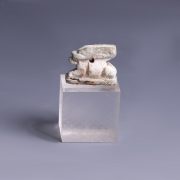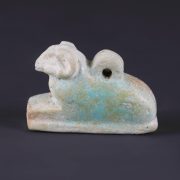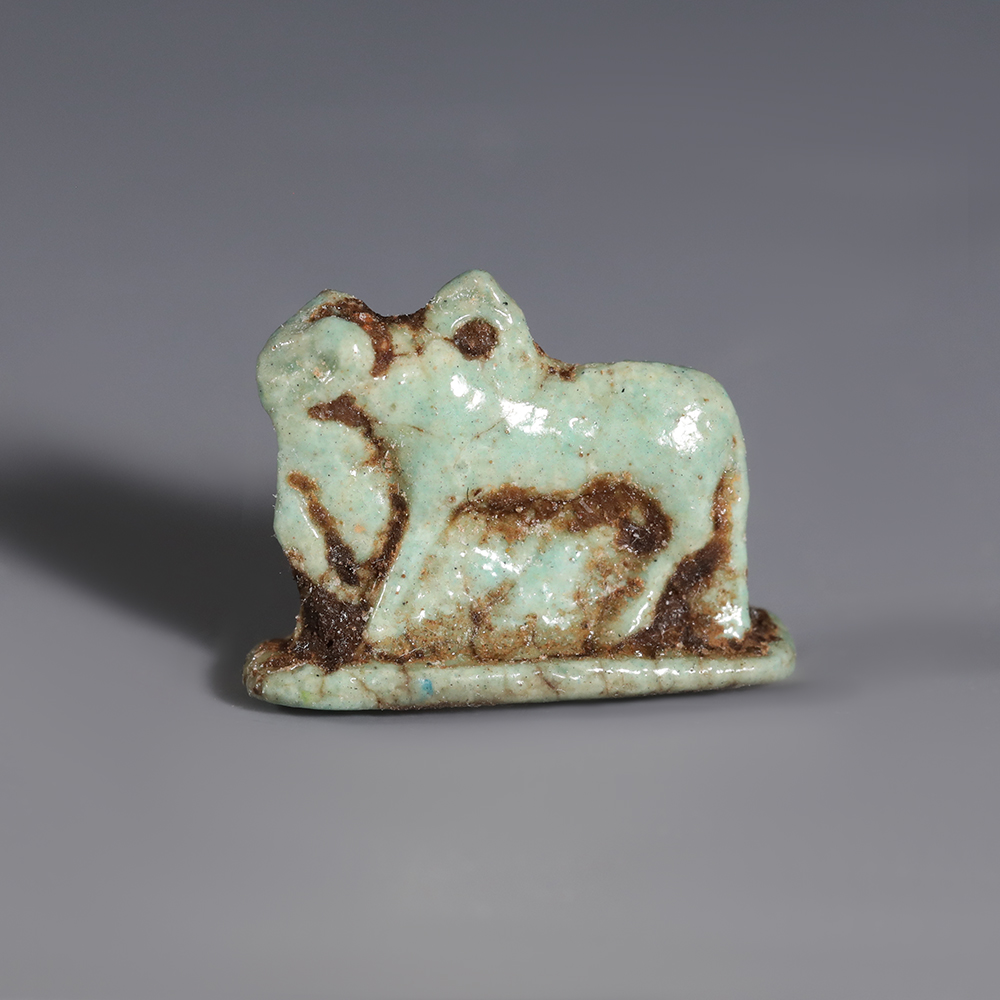
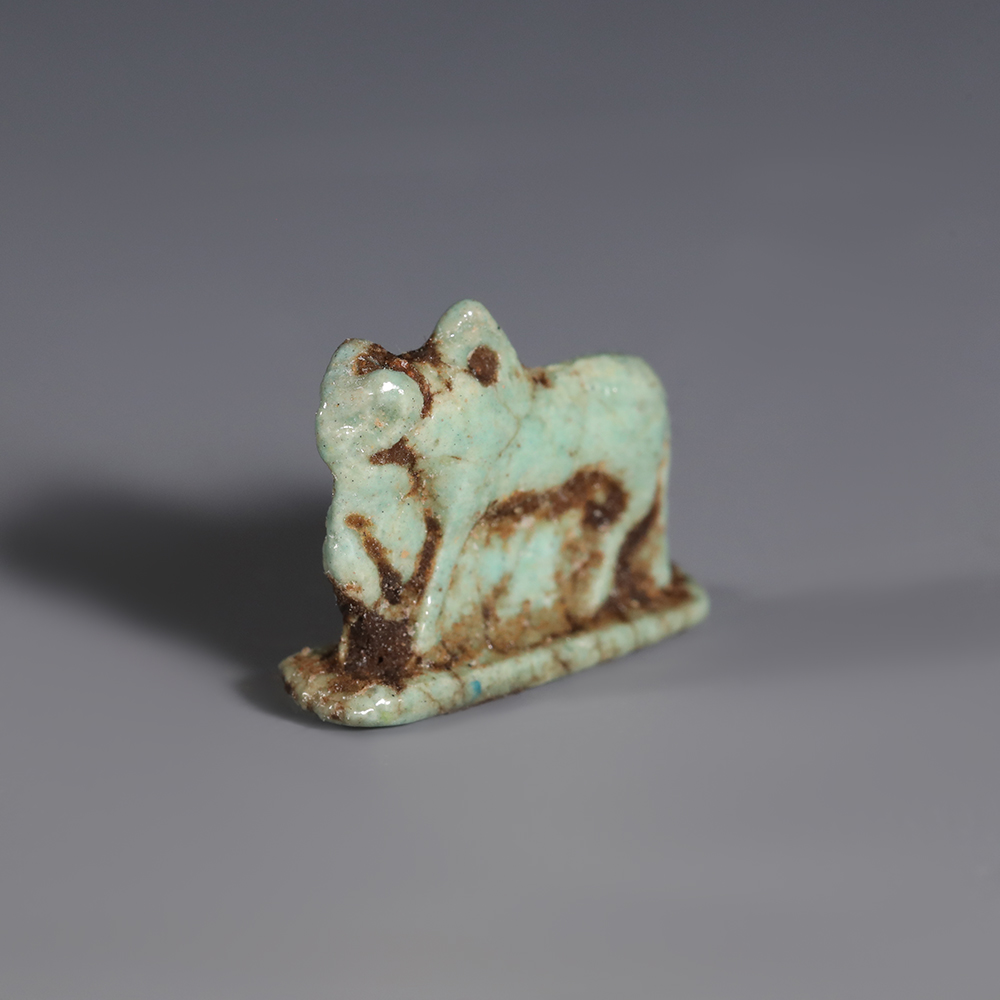
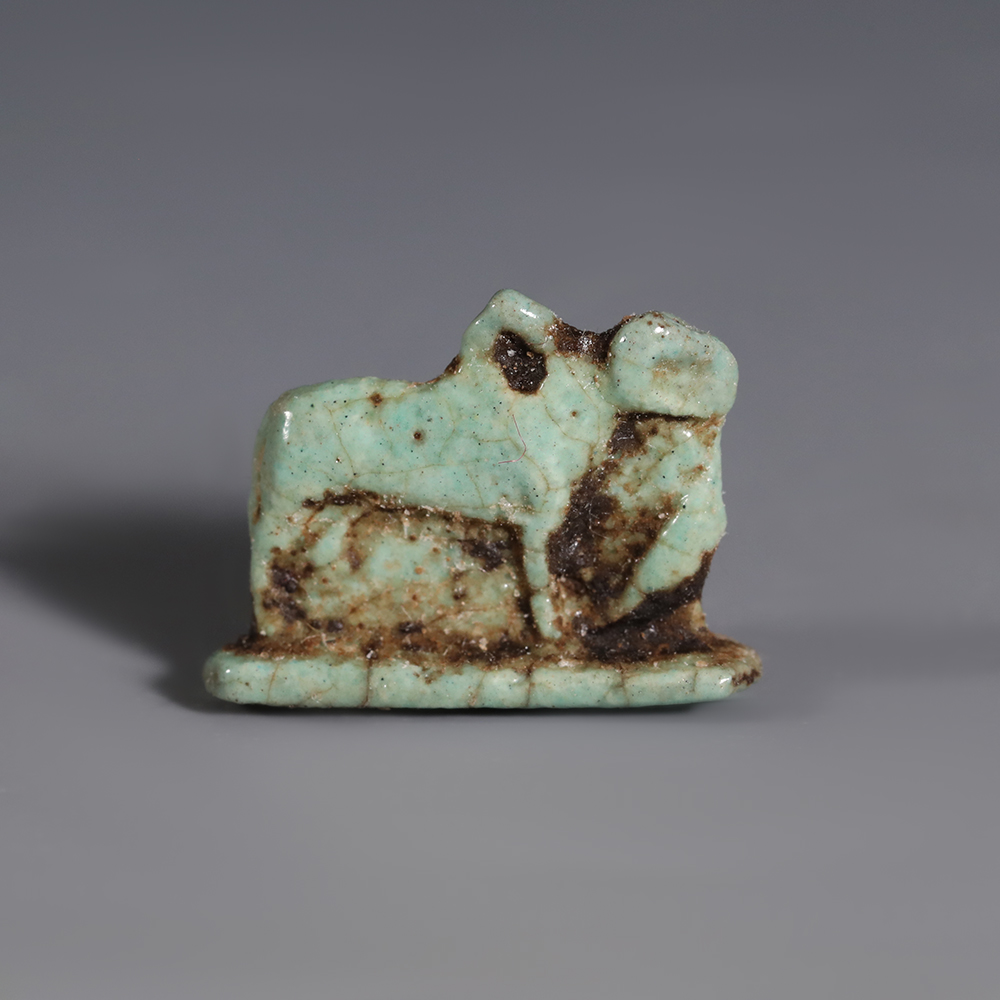
The Egyptians wore amulets alongside other pieces of jewellery. They were decorative, but also served a practical purpose, being considered to bestow power and protection upon the wearer. Many of the amulets have been found inside the wrappings of mummies, as they were used to prepare the deceased for the afterlife.
Khnum is most frequently depicted with a ram’s head. He was one of the earliest deities to be celebrated in Egypt, and was originally the god of the source of the river Nile. He was also a god of birth and creation, as it was believed that Khnum made babies out of clay, using his potter’s wheel, and placed them in their mother’s wombs. The river Nile, rich in nutrients and good soil, was a wonderful source of life and sustenance. Khnum was therefore known as a protector and guardian, especially in relation to children – hence the choice for his depiction on an amulet.
To find out more about Ancient Egyptian amulets please see our relevant blog post: Egyptian Amulets and their Meanings.