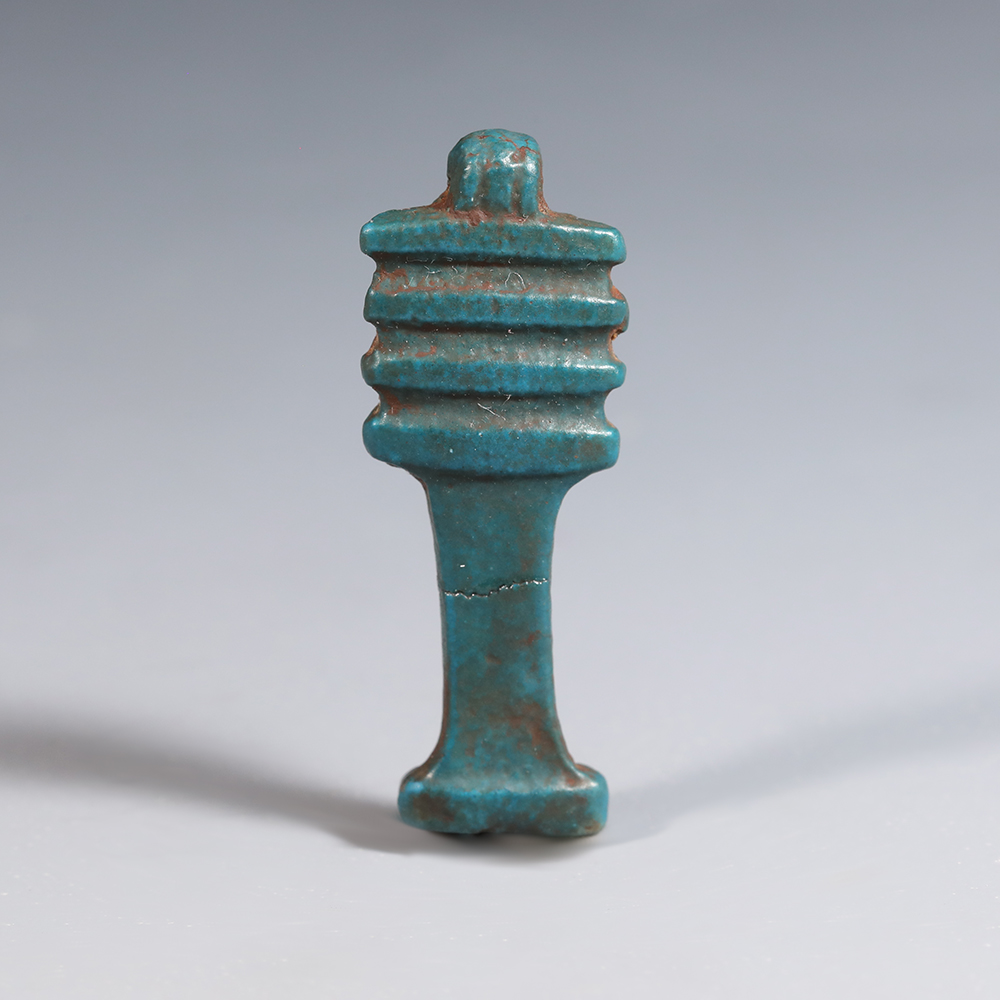
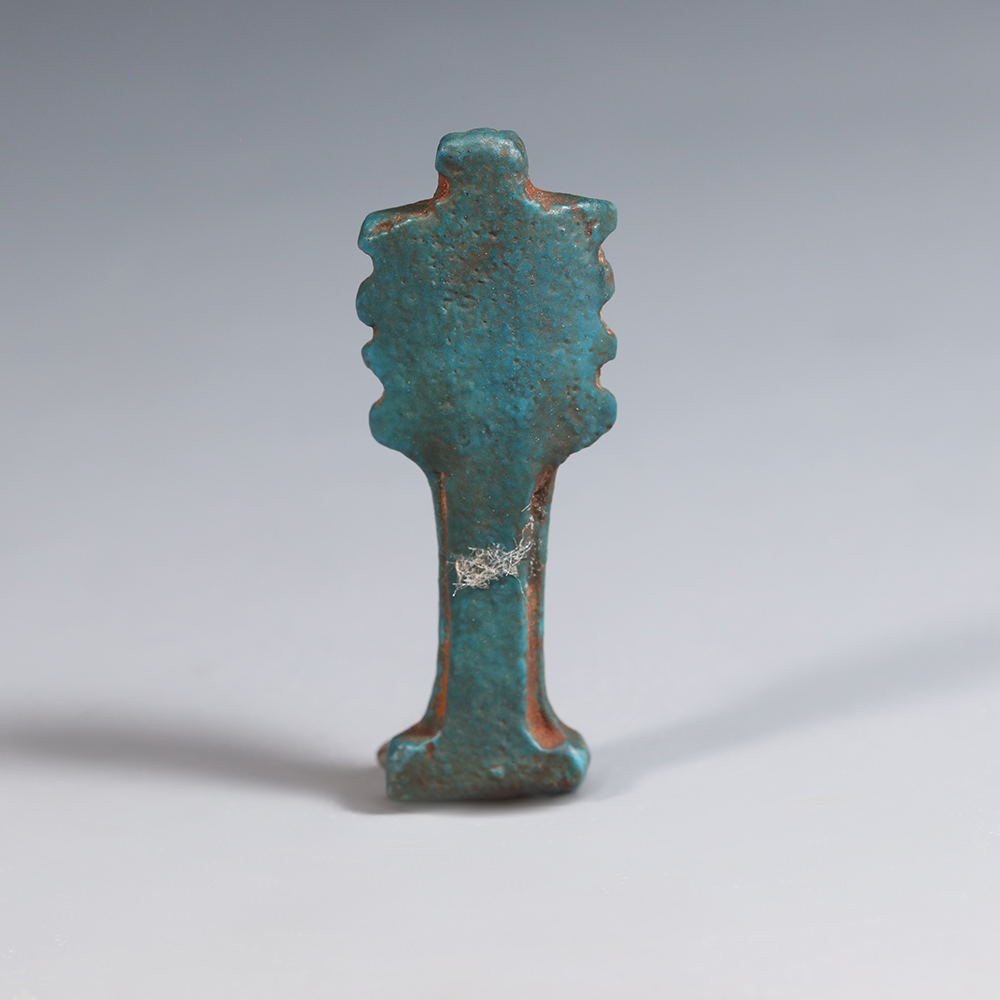
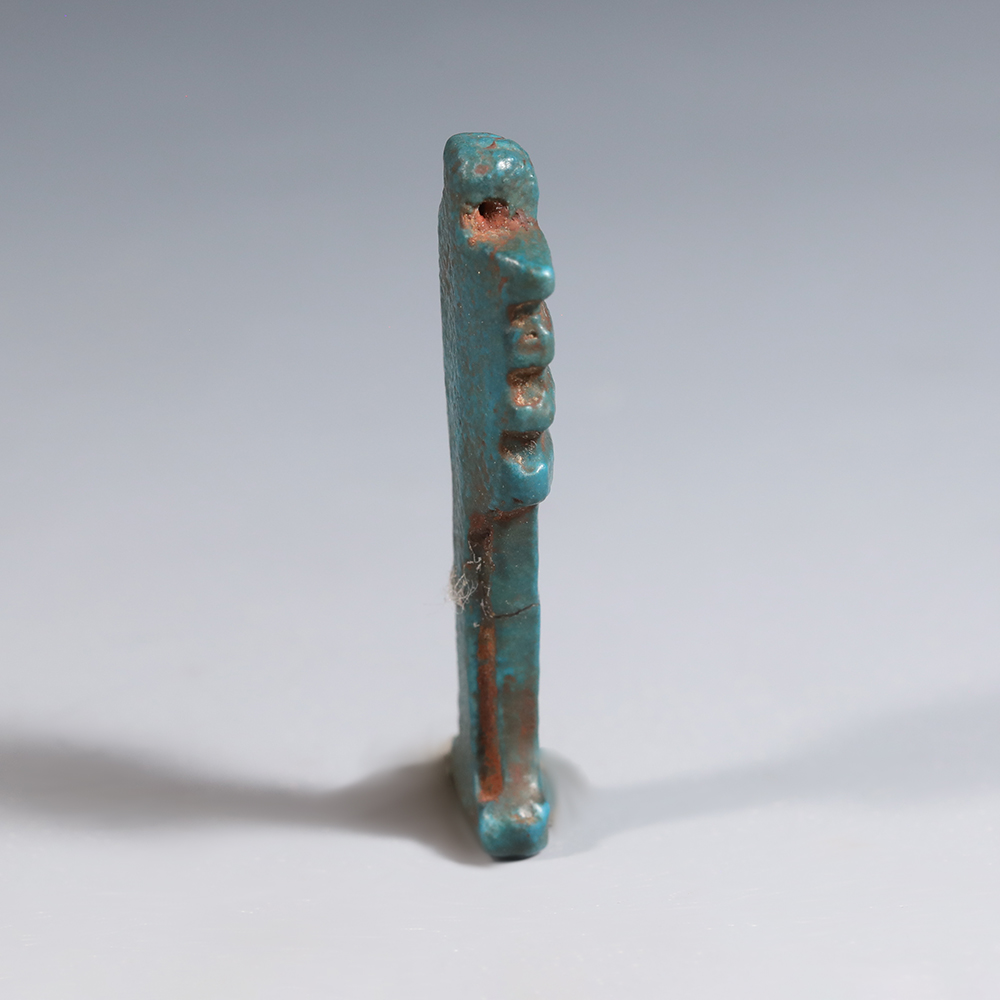
The Djed pillar amulet is one of the most recognisable symbols of ancient Egypt. It was associated with the god Ptah, but from the New Kingdom it was linked to the god Osiris. Originally thought of as a totem with grain suspended from it or a collection of reeds, it came to represent the spine of Osiris. From The Book of the Dead, spells 151 and 155 both make mention of a djed pillar in association with Osiris. Spell 155 specifically connects Osiris and the backbone symbolism. Entitled ‘words to be spoken over a djed-pillar of gold…and placed at the throat of the deceased on the day of burial’, the spell exclaims states ‘Raise yourself up Osiris! You have your backbone once more, O weary-hearted One; you have your vertebrae!’
With its link to Osiris, the djed symbolised stability, rejuvenation and regeneration. Thus, it was used by both the living and the dead and formed from a variety of materials. As spell 155 states, a djed pillar of gold was ideal, however this was ultimately expensive. Yellow faience was often used, as well as blue tinted materials. Blue faience, lapis lazuli and turquoise were common materials for djed pillars. The colour blue was further associated with regeneration and rebirth.
To find out more about Ancient Egyptian amulets please see our relevant blog post: Egyptian Amulets and their Meanings.


