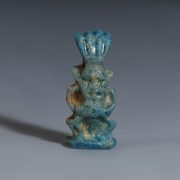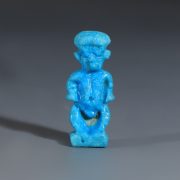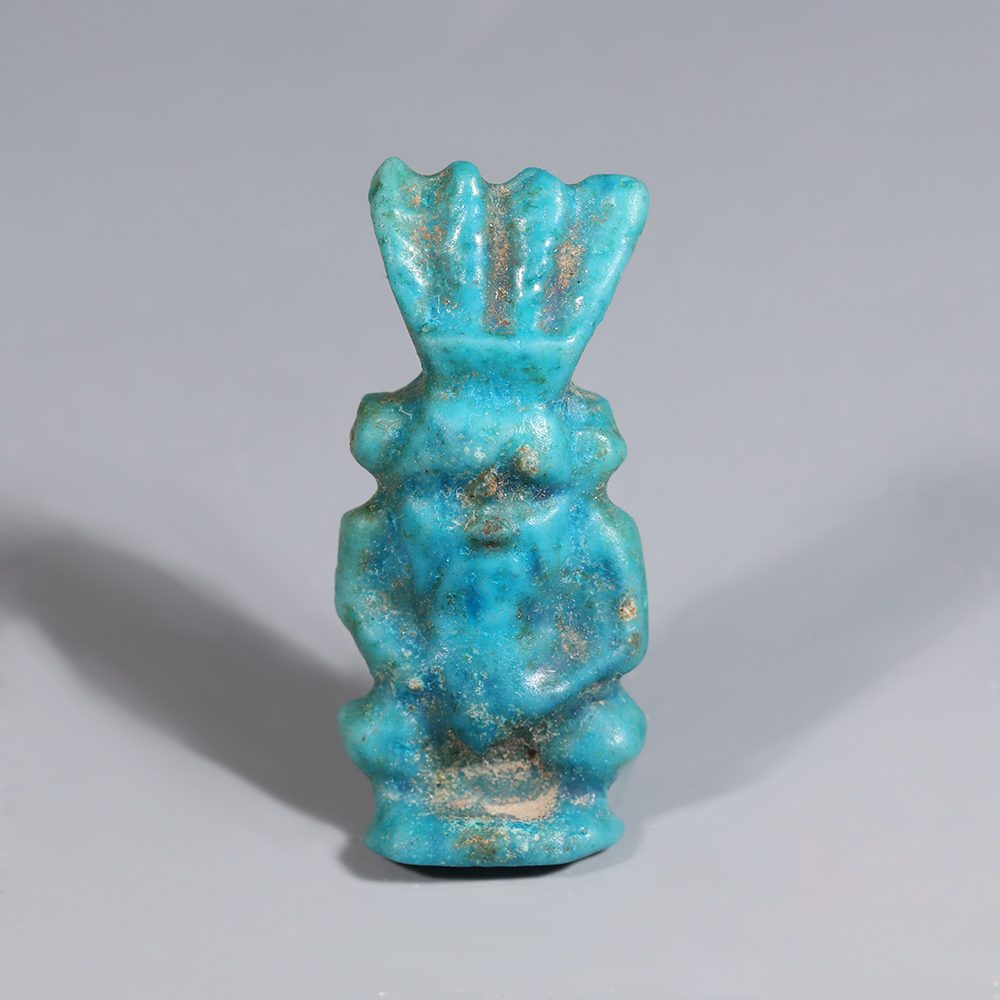
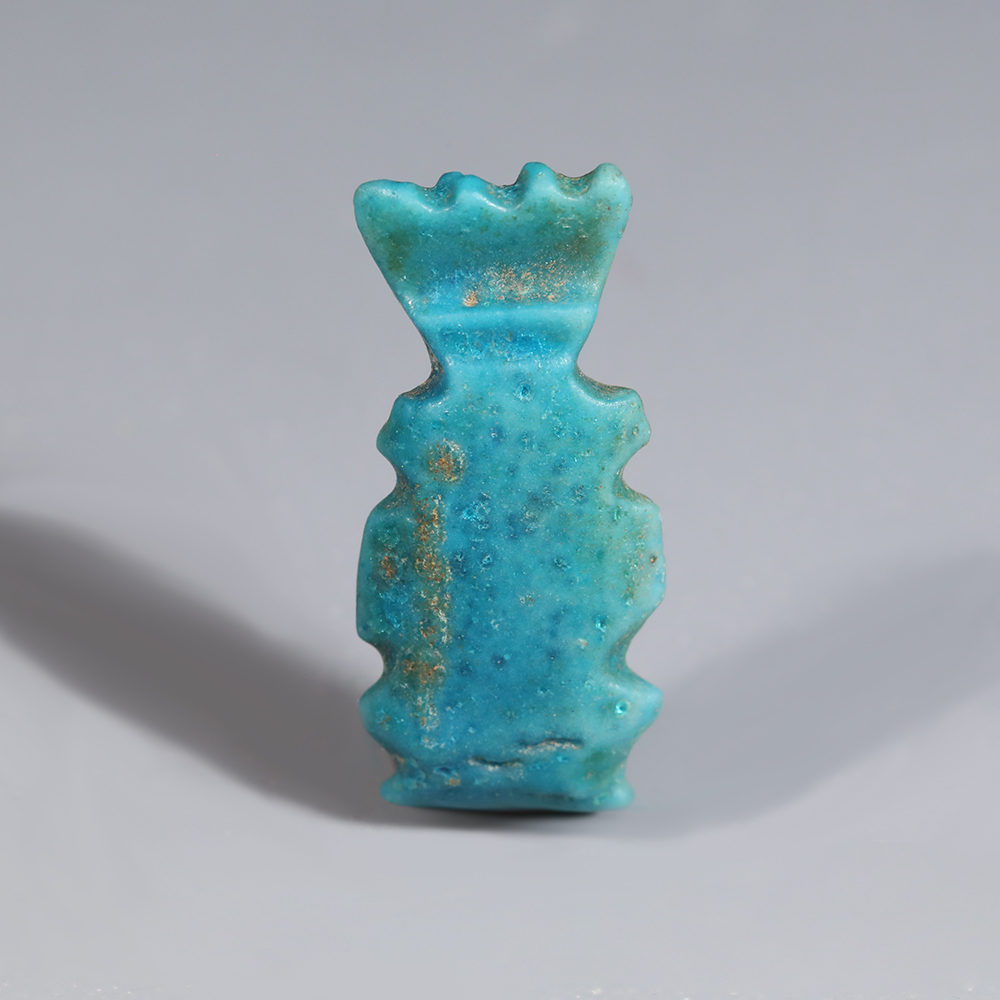
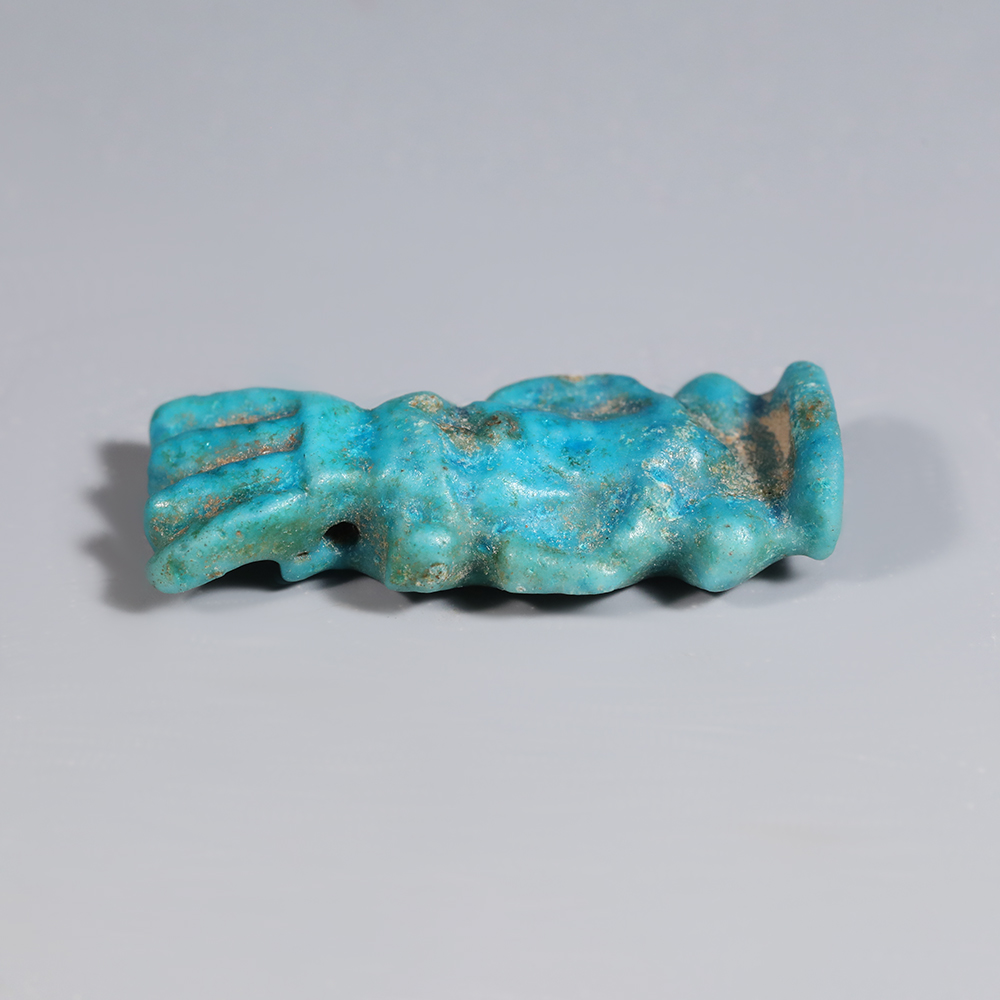
Amulets held different meanings, depending on their type or form. Small amulets depicting gods and goddesses seem to have induced the protective powers of the deity. On the other hand, small representations of anatomical features or creatures suggest that the wearer required protection over a specific body part, or that he/she desired the skills of a particular animal.
Bes was an Egyptian deity, worshipped initially as the protector of households, mothers, children, and of childbirth, and later on becoming regarded as the defender of good. His ugly physique and appearance were used to repel any enemies and evil spirits. As a household protector, his image was kept in homes on household objects, such as furniture, toiletries, bottles, and game pieces, tasked to kill snakes, fight off evil spirits, watch over the children, and aid women in labour. Amulets with his image became very popular amongst pregnant women, he was believed to ward off any demons that may corrupt the unborn child. Although the deity was presented in a grotesque, intimidating way, Bes came to symbolise the good in life, such as music, dance, and pleasure.
To find out more about Ancient Egyptian amulets please see our relevant blog post: Egyptian Amulets and their Meanings: Ancient Egyptian Gods.