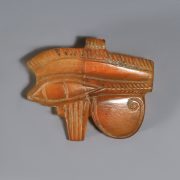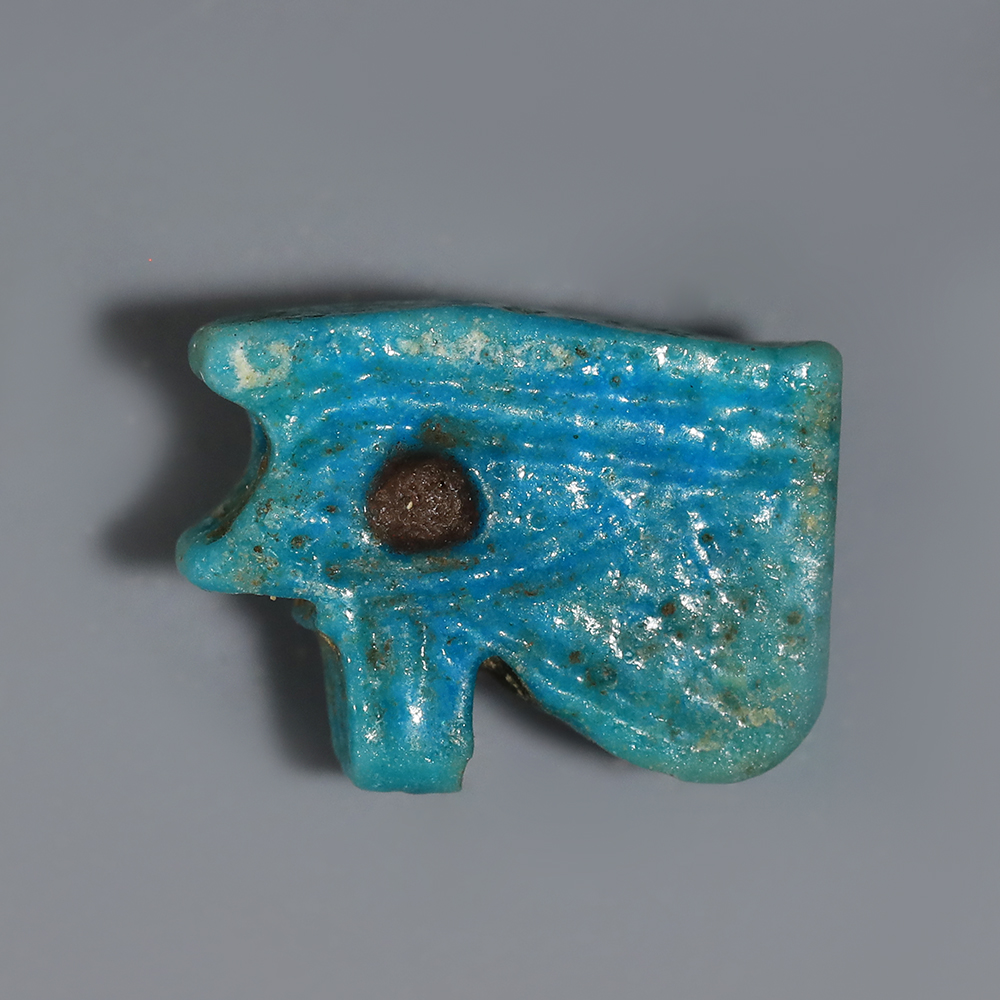
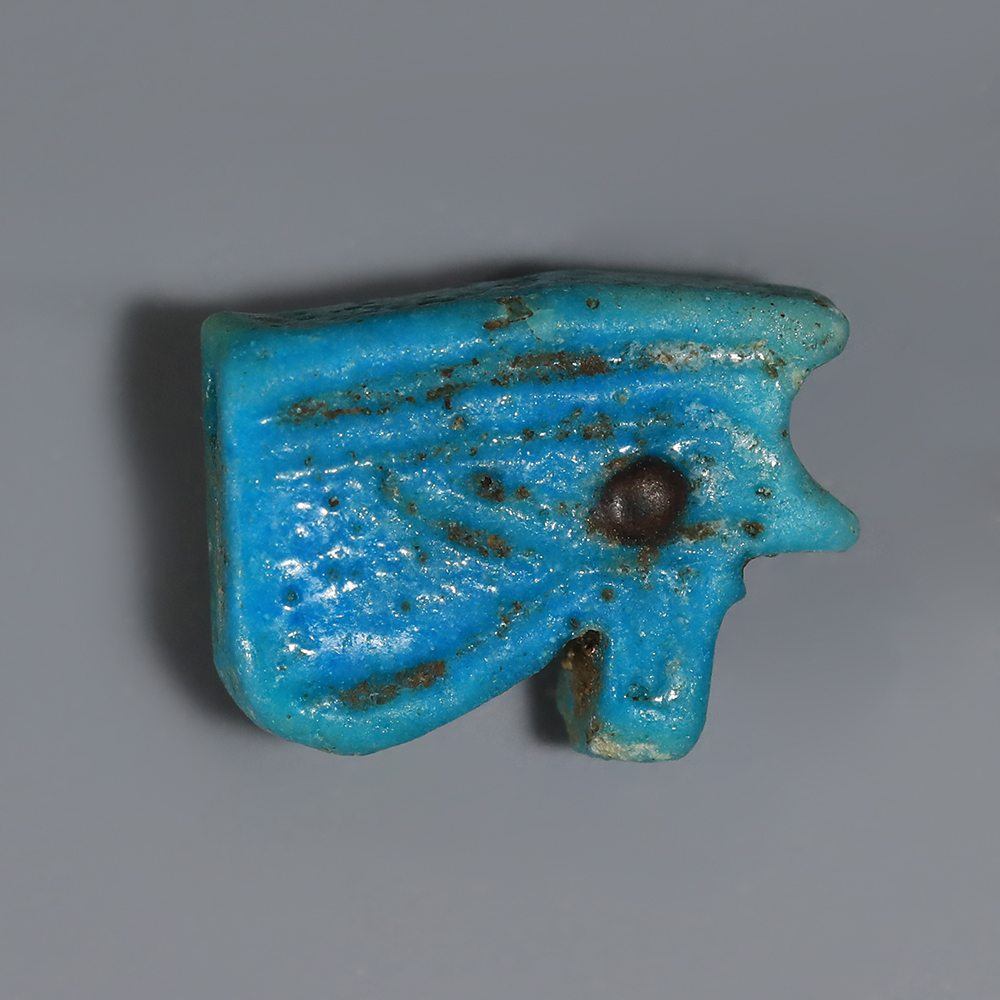
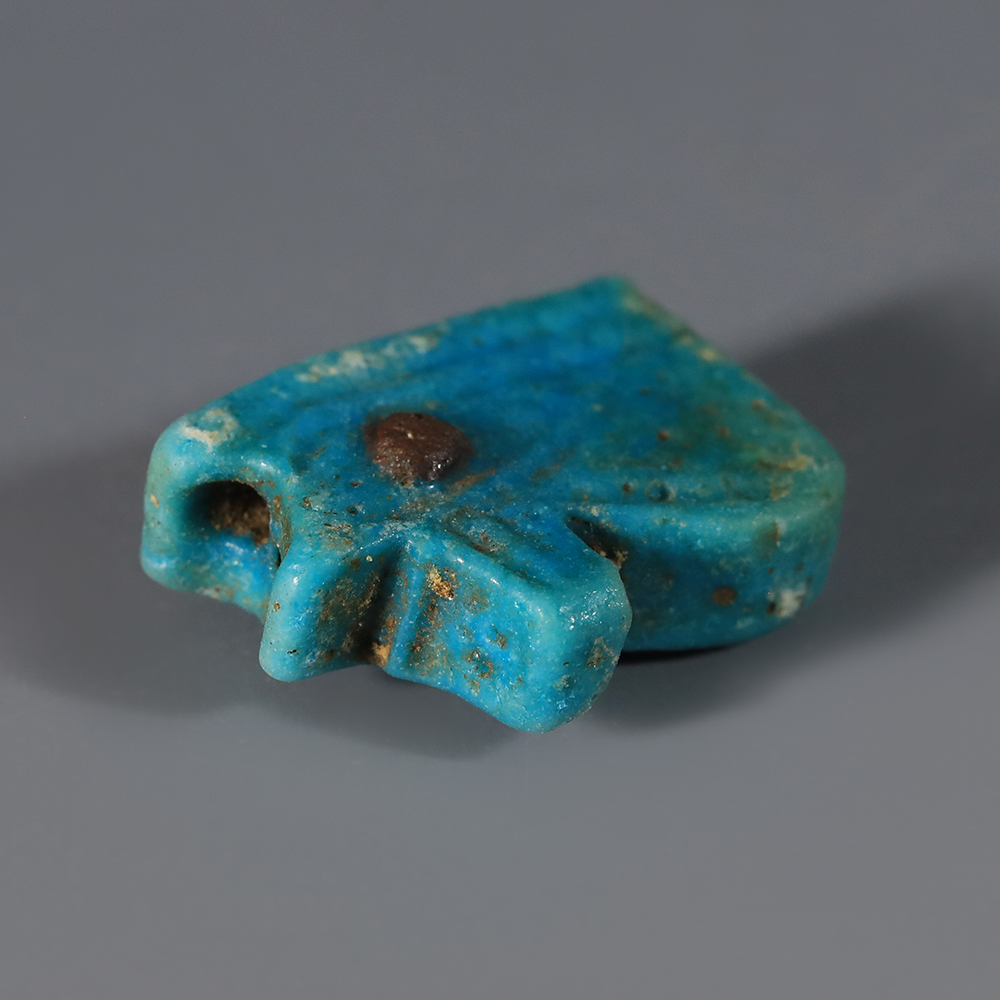
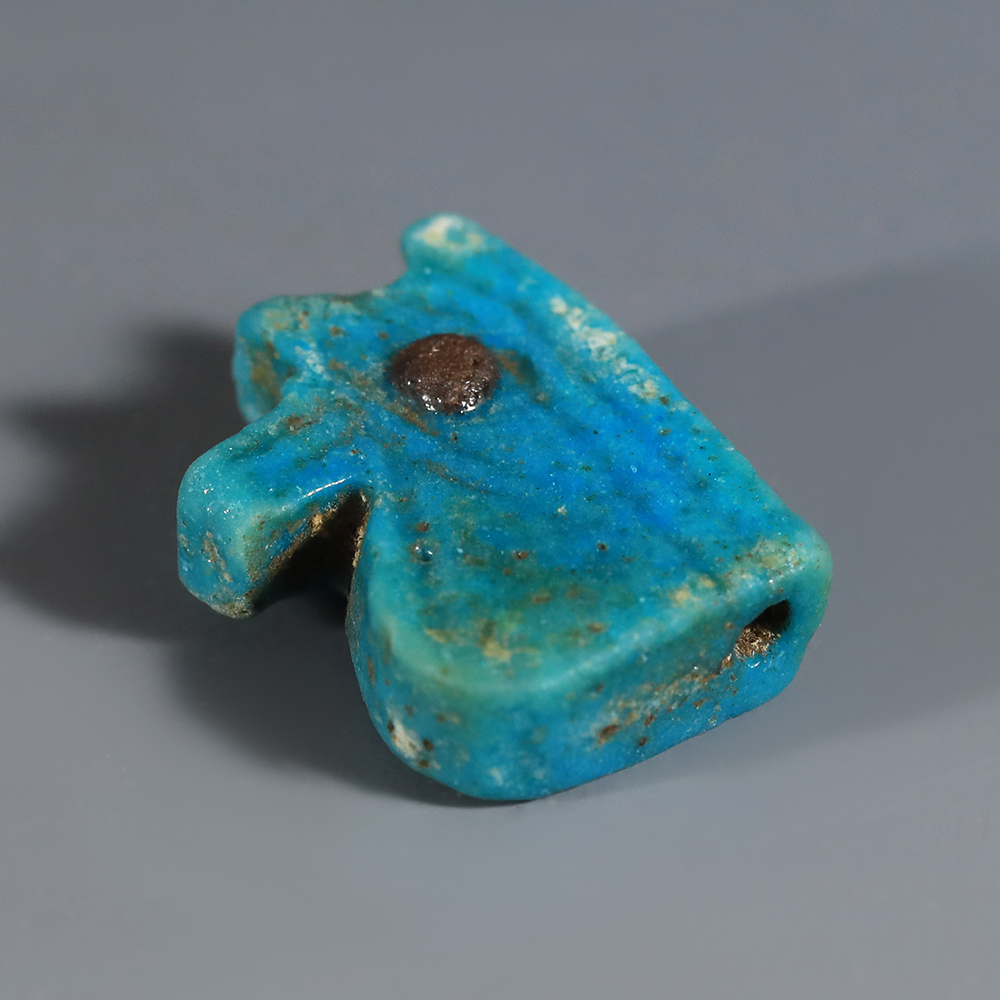
The wedjat, as the Eye of Horus, is one of the most popular amulets of ancient Egypt. The amulet combines elements of both human and falcon ocular imagery, as Horus was often depicted as a falcon. Its name comes from the ancient Egyptian ‘wḏꜣt’, meaning “the one that is complete”. The wedjat was highly apotropaic and associated with a number of Egyptian myths. The eye depicted could be either left or right, representing different imagery. Horus’ left eye was the sun and the right eye was considered the moon. In one creation myth, Horus’ eye was injured or stolen by the god Seth and then restored by Thoth. Hence the wedjat eye was thought to possess healing powers and symbolise regeneration. This healing and regenerative association is further enhanced by the properties of the lunar eye of Horus. As it waxes and wanes like the moon, it is thought to bring health and safety to its wearer. In another myth, Horus presents his healed eye to his father Osiris, to help him pass safely into his afterlife. Hence wedjat eye amulets were commonly placed within mummy wrappings to help the dead to help them pass safely into the afterlife.
To find out more about Ancient Egyptian amulets, please see our relevant blog post: Egyptian Amulets and their Meanings