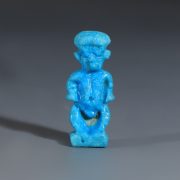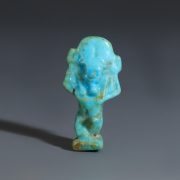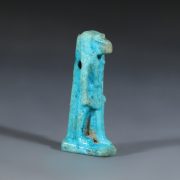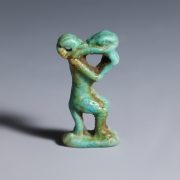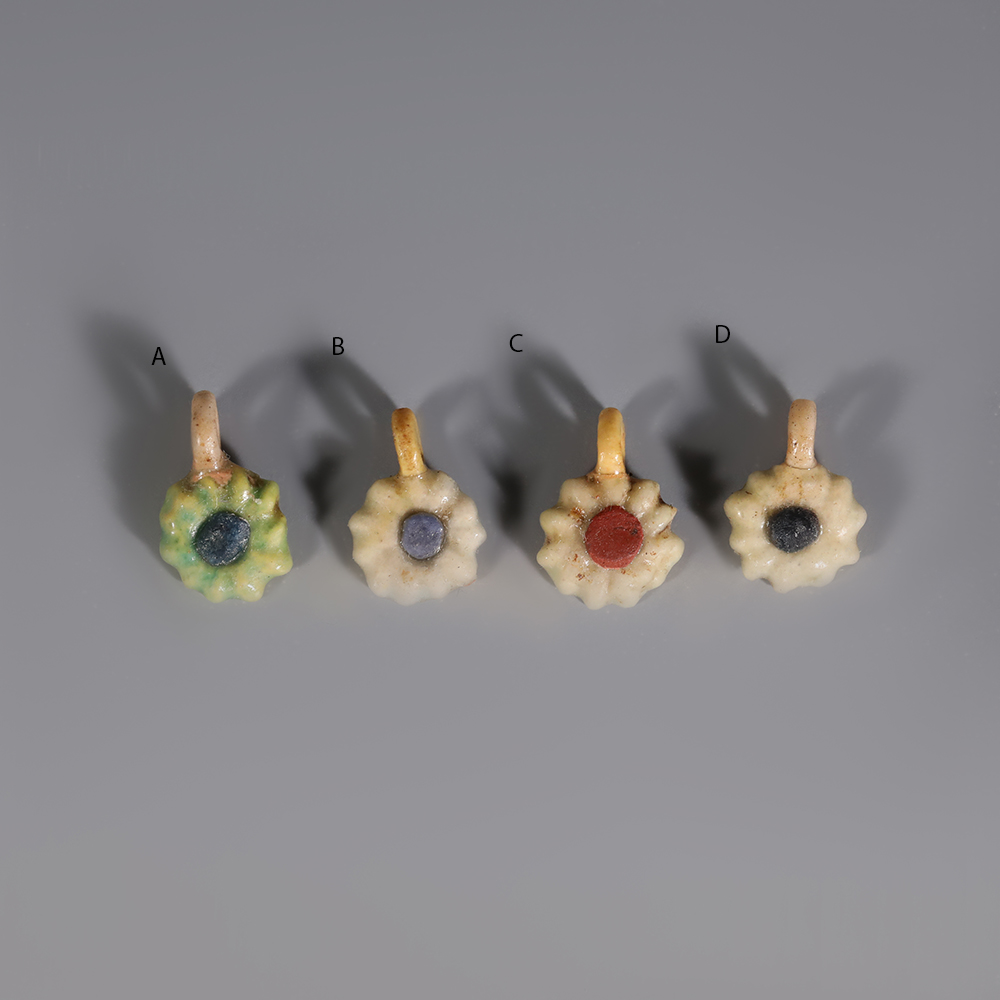
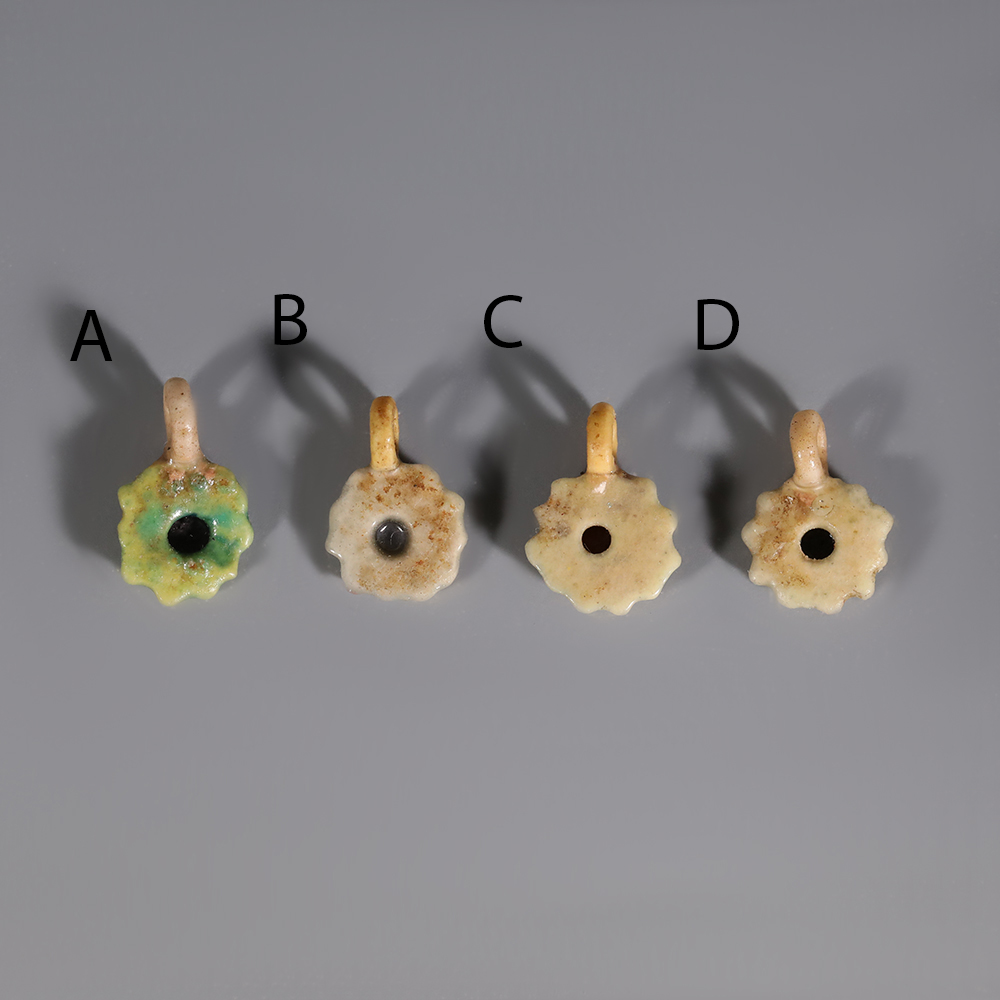
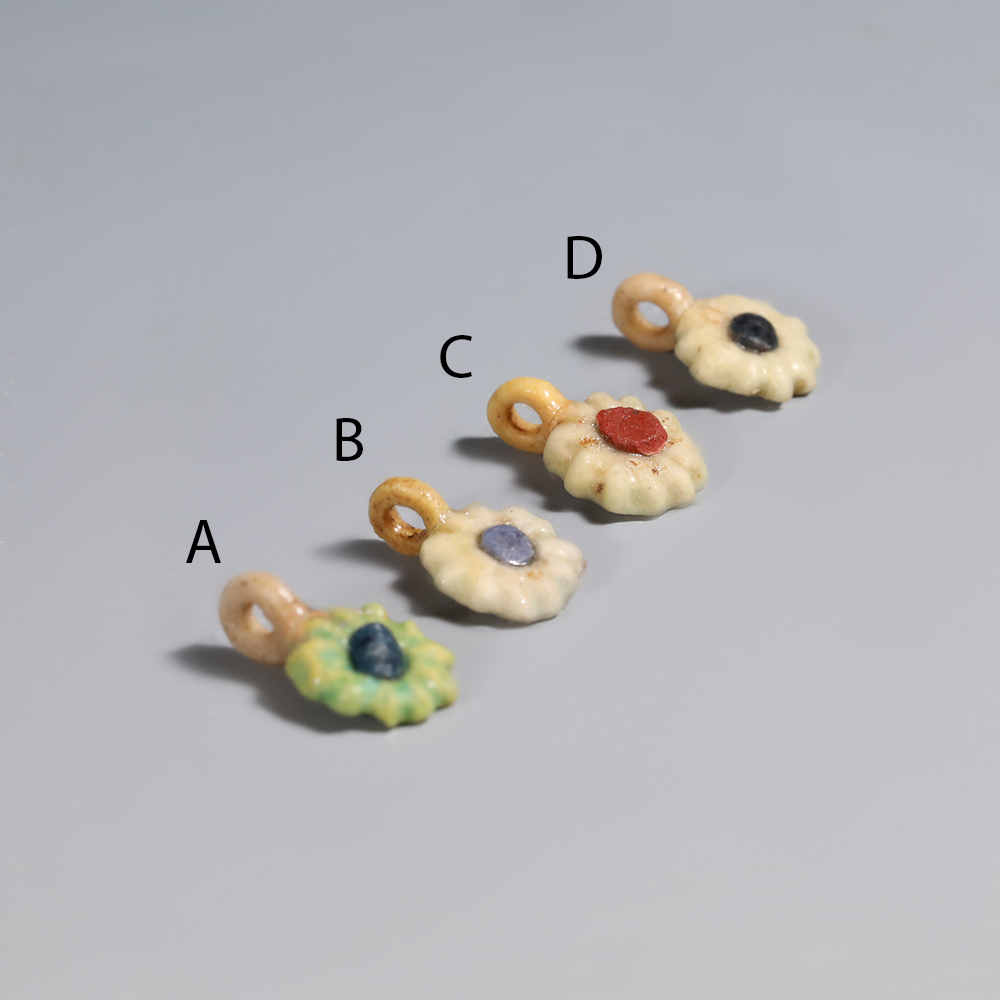
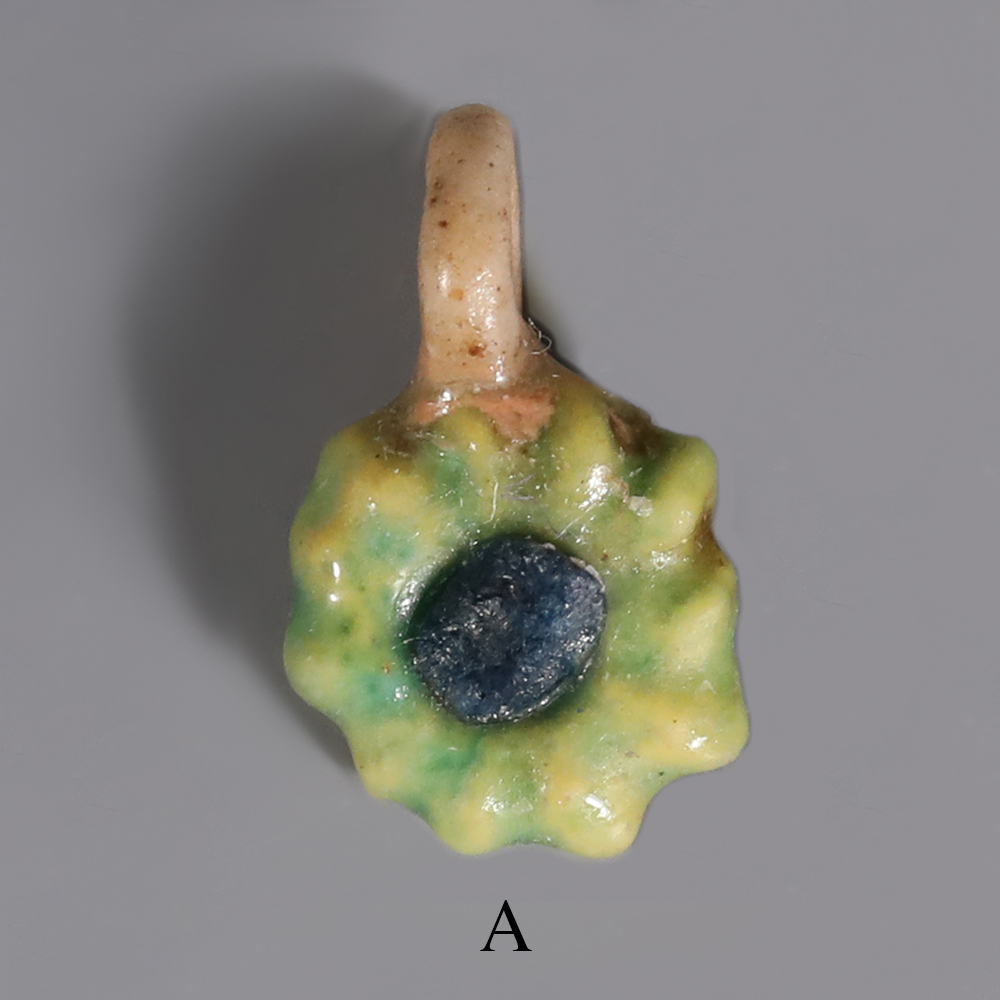
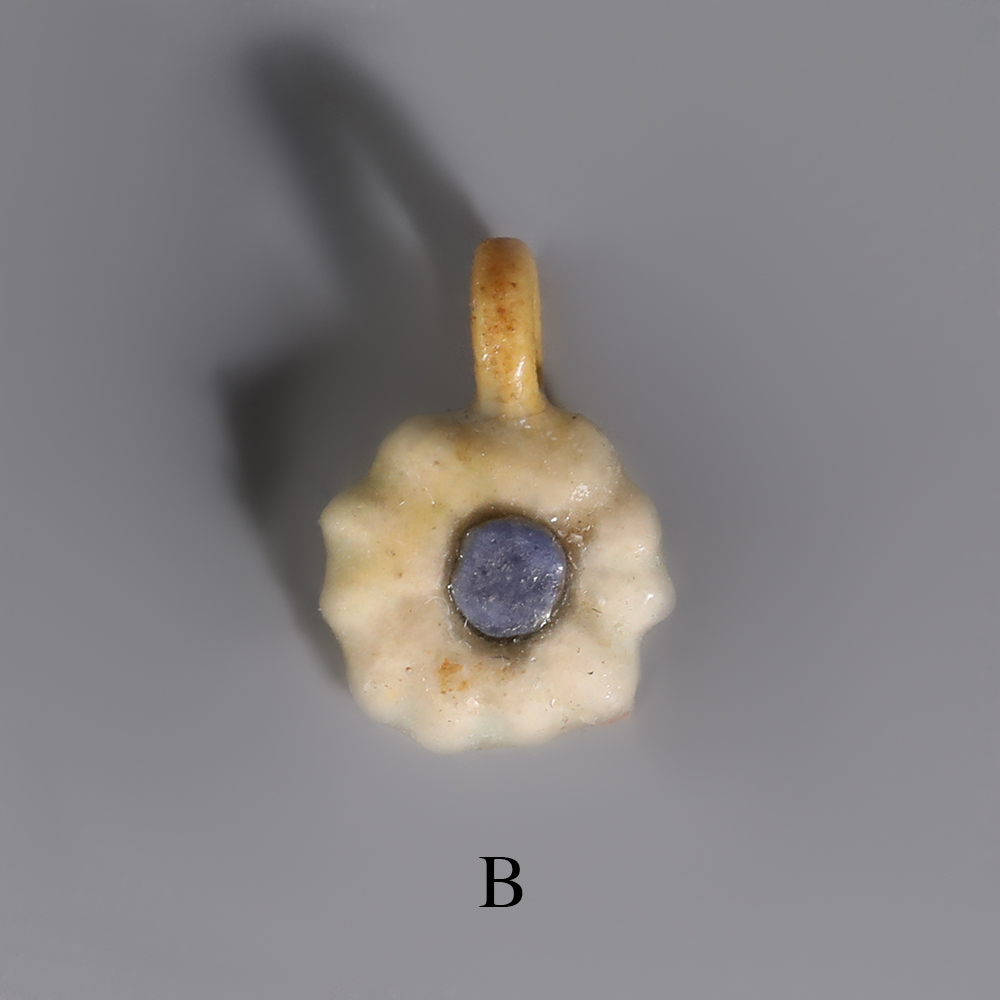
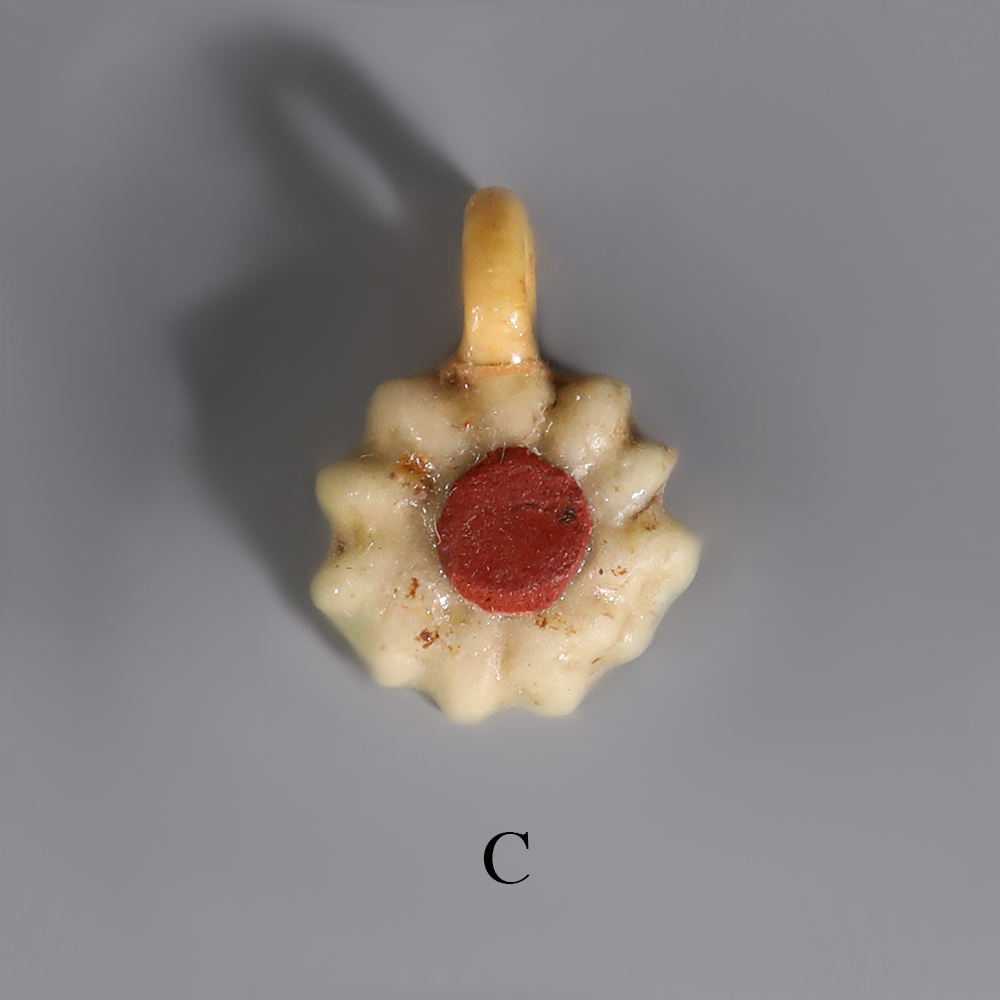
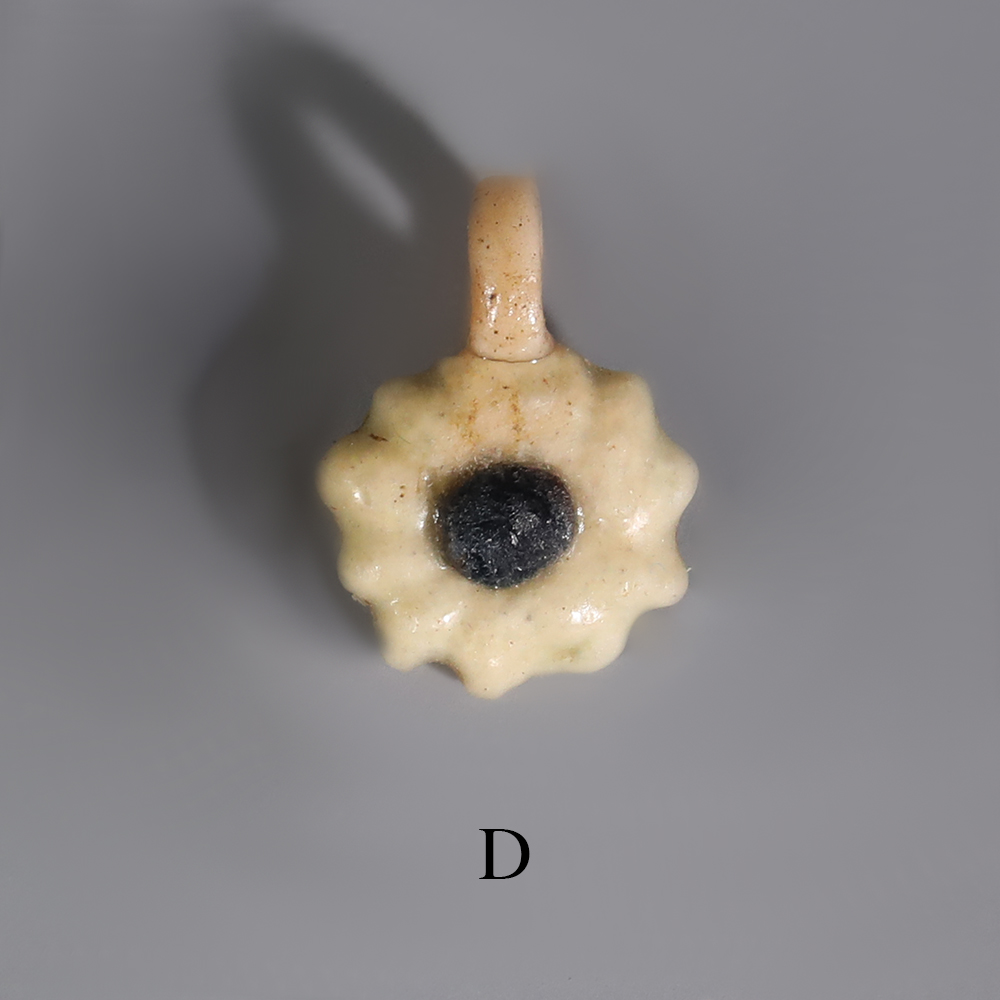
The daisy, or chamomile flower, was a popular motif in Egyptian art. It was used in funerary art, amulets and inlays. The chamomile plant, which grows in the Nile delta, features a small flower, usually white in colour. Its petals opened with the rising sun and closed at dusk. Heliotropic flowers were especially linked to rebirth, as they mimicked the pattern of the rising sun. Flower amulets naturally were also associated with new life. Such amulets were used mostly as part of single strand necklaces if they had one suspension loop, or as part of a broad collar if they had two suspension loops. They came in a range of colours, mostly to reaffirm their apotropaic qualities.
To find out more about Ancient Egyptian amulets please see our relevant blog post: Egyptian Amulets and their Meanings.