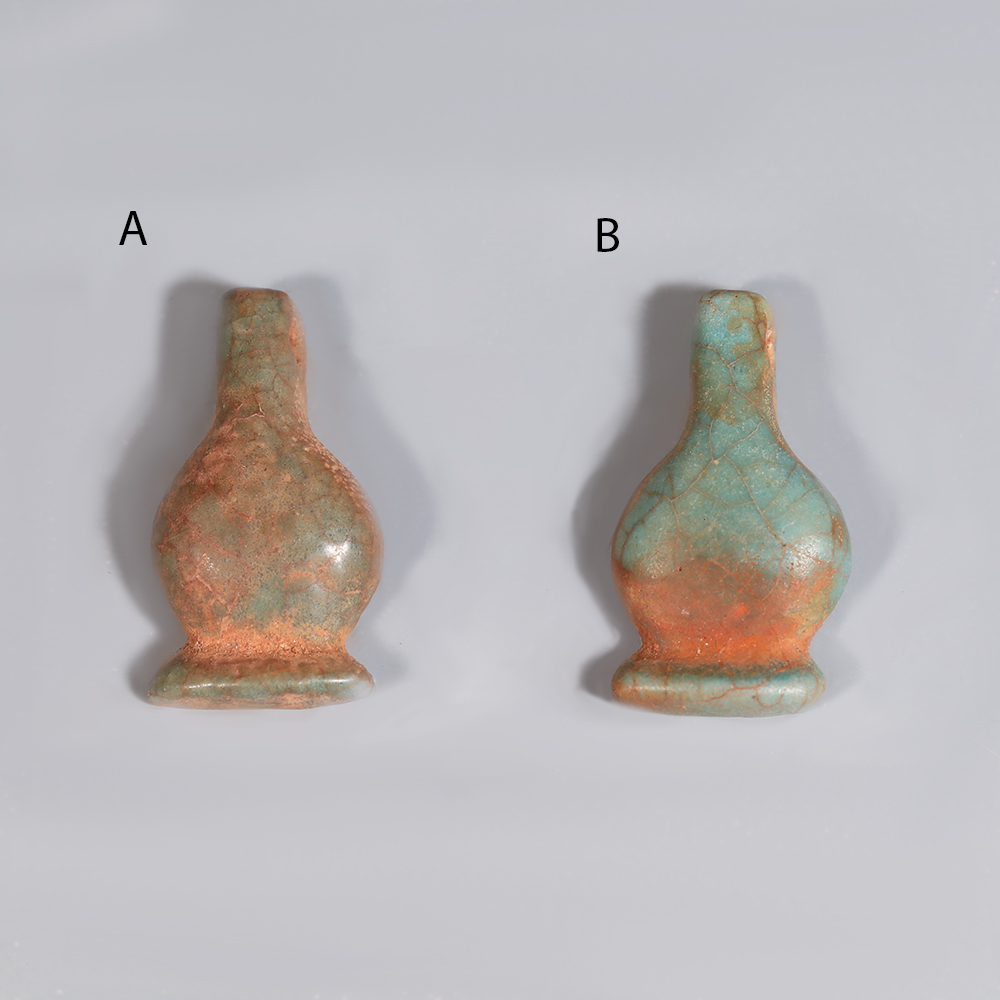
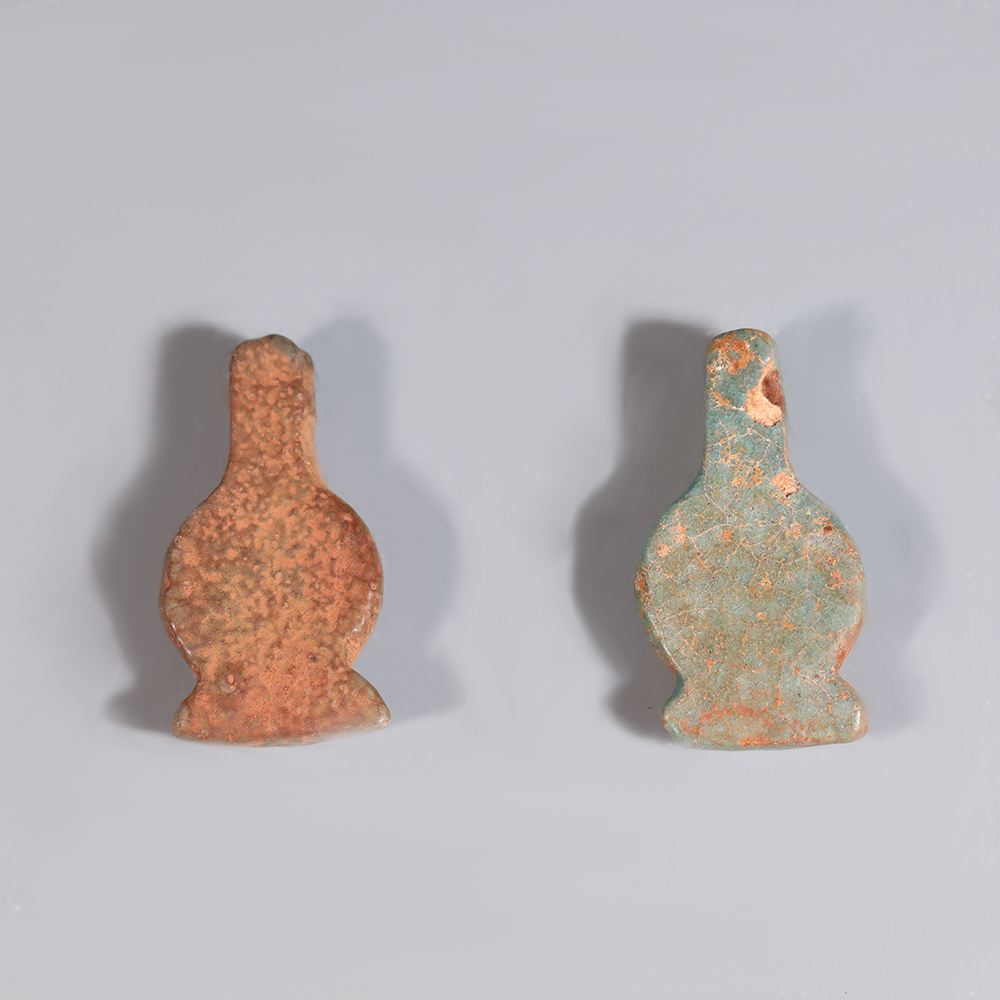
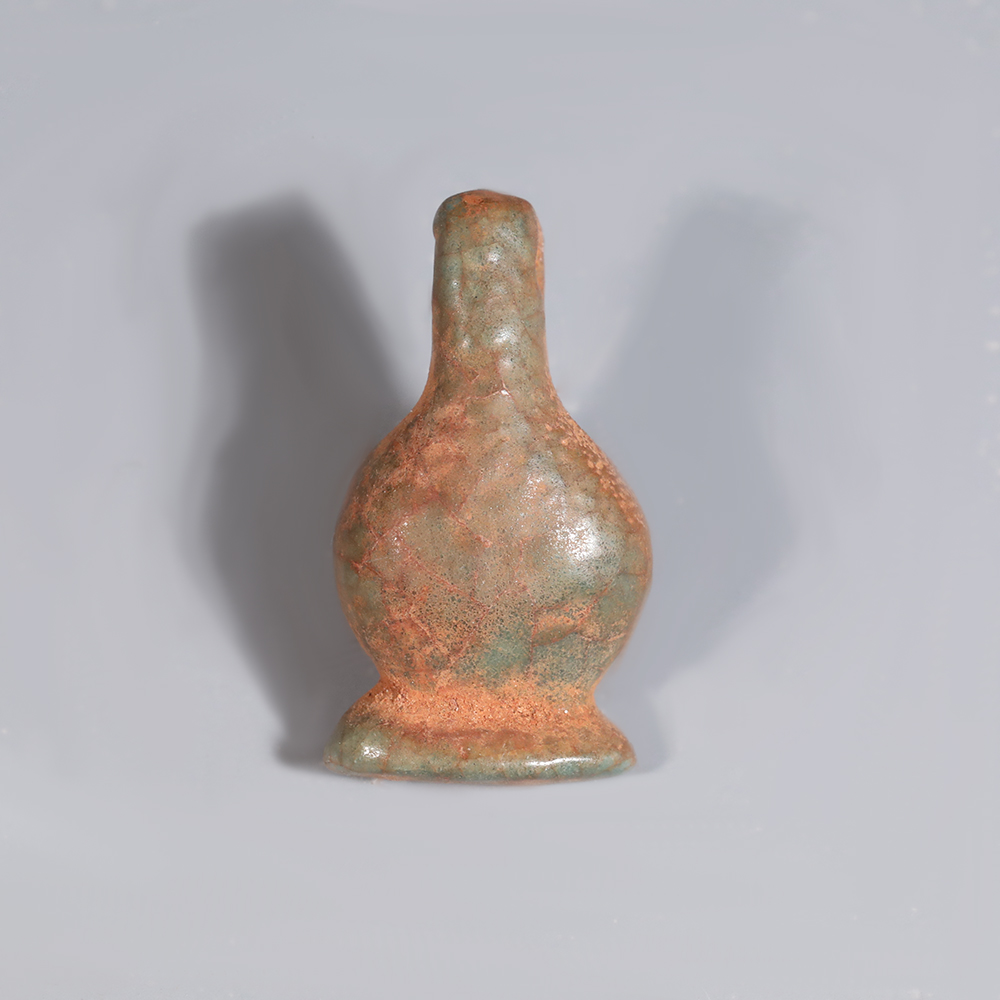
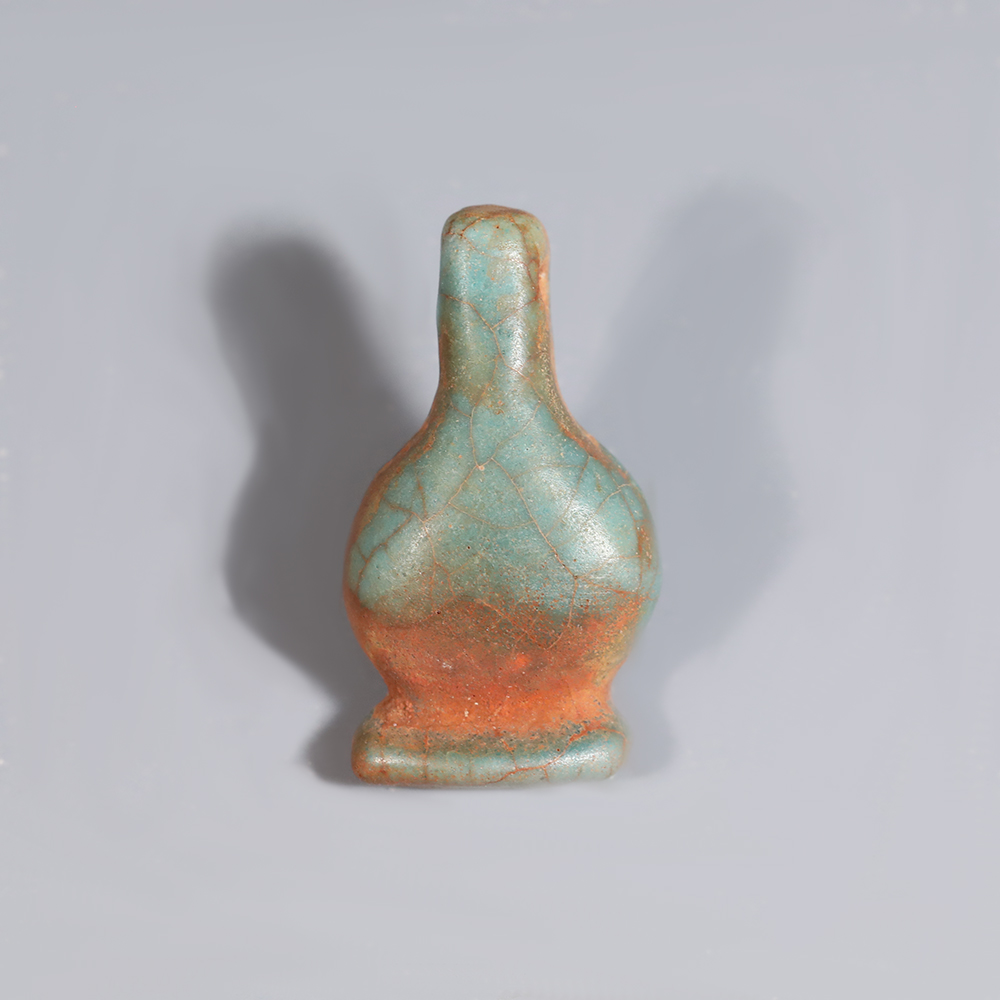
The Egyptians wore amulets alongside other pieces of jewellery. They were decorative, but also served a practical purpose, being considered to bestow power and protection upon the wearer. Many of the amulets have been found inside the wrappings of mummies, as they were used to prepare the deceased for the afterlife. Poppy or cornflower amulets often appear in association with the healing, removal of pain and death. Amulets of this type were also associated to the Egyptian god Osiris, who was the god of agriculture as well as death and the afterlife. Both flowers were common all over Egypt, but especially around the Nile. As in modern symbolism, poppies also carried associations with rebirth and resilience due to the hardy nature of the plant. Due to their similar shape it is often hard to distinguish between the representation of each amulet. Poppy amulets were often made of carnelian to represent the actual flower and we could assume the cornflower was often represented in lapis or blue faience. However, semi precious stones had their own significance and it is not unlikely that amulets were made in varying materials to depict the symbolism of the medium.
To find out more about Ancient Egyptian amulets please see our relevant blog post: Egyptian Amulets and their Meanings.