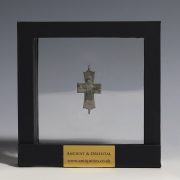
Enkolpia were small pendants worn around the neck, with examples found dating back to Late Antiquity. The cross shape was the most popular symbol for such amulets, as a symbol of Christianity, believed to have apotropaic qualities. Many enkolpia were designed to hold reliquaries, as can be seen here by the opening function of the pendant. The reliquary was believed to work in tandem with the talismanic qualities of the cross-shape to protect the wearer from harm and evil. The popularity of these reliquary enkolpia suggests that not all held primary relics such as a piece of the True Cross or a bone of a Saint, but likely held secondary relics, for example earth from a holy site, locks of hair, or cloth touched by a saint. They were made in an assortment of materials, from gold and silver, to bronze and lead. Worn as a talisman and a symbol of the owner’s faith, such pieces were very popular in Byzantium, providing an intimate look at the material culture of piety in the Byzantine Empire.
To discover more about Byzantine art, please visit our relevant blog post: The Byzantine Empire, Art and Christianity.