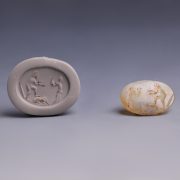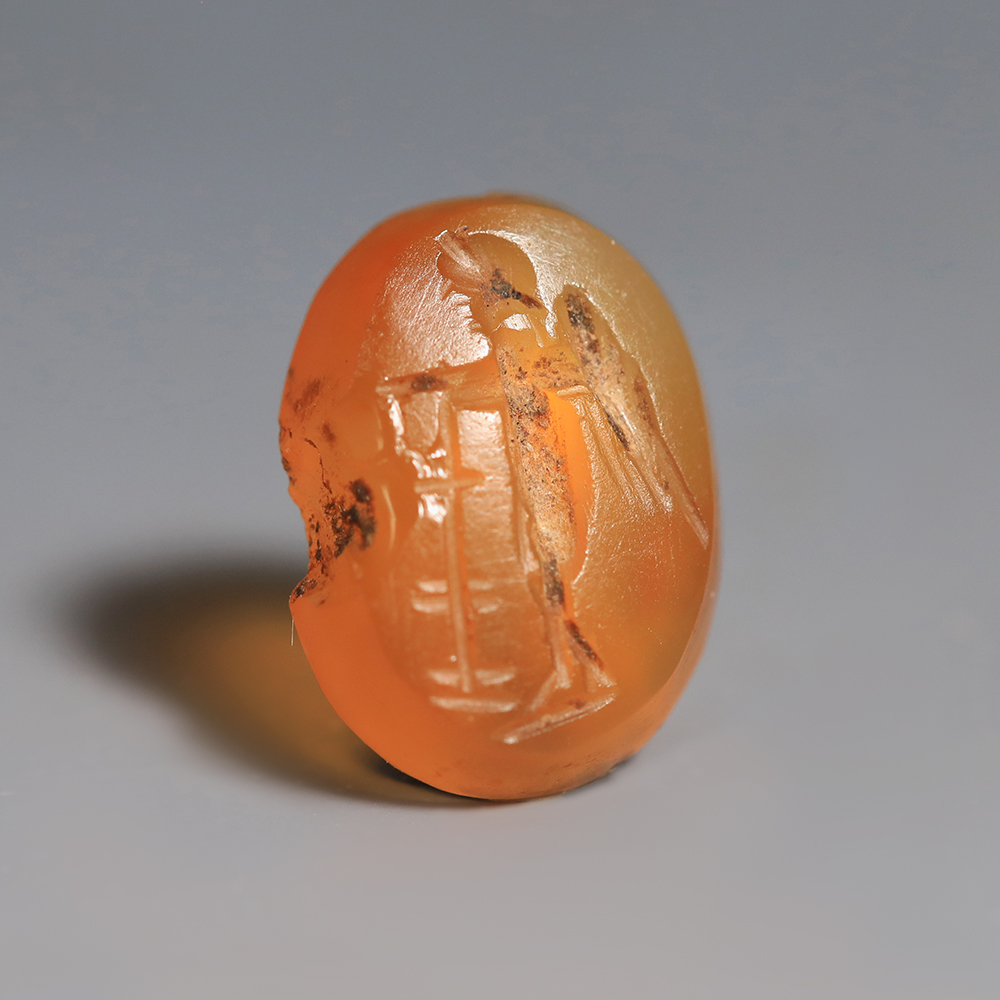
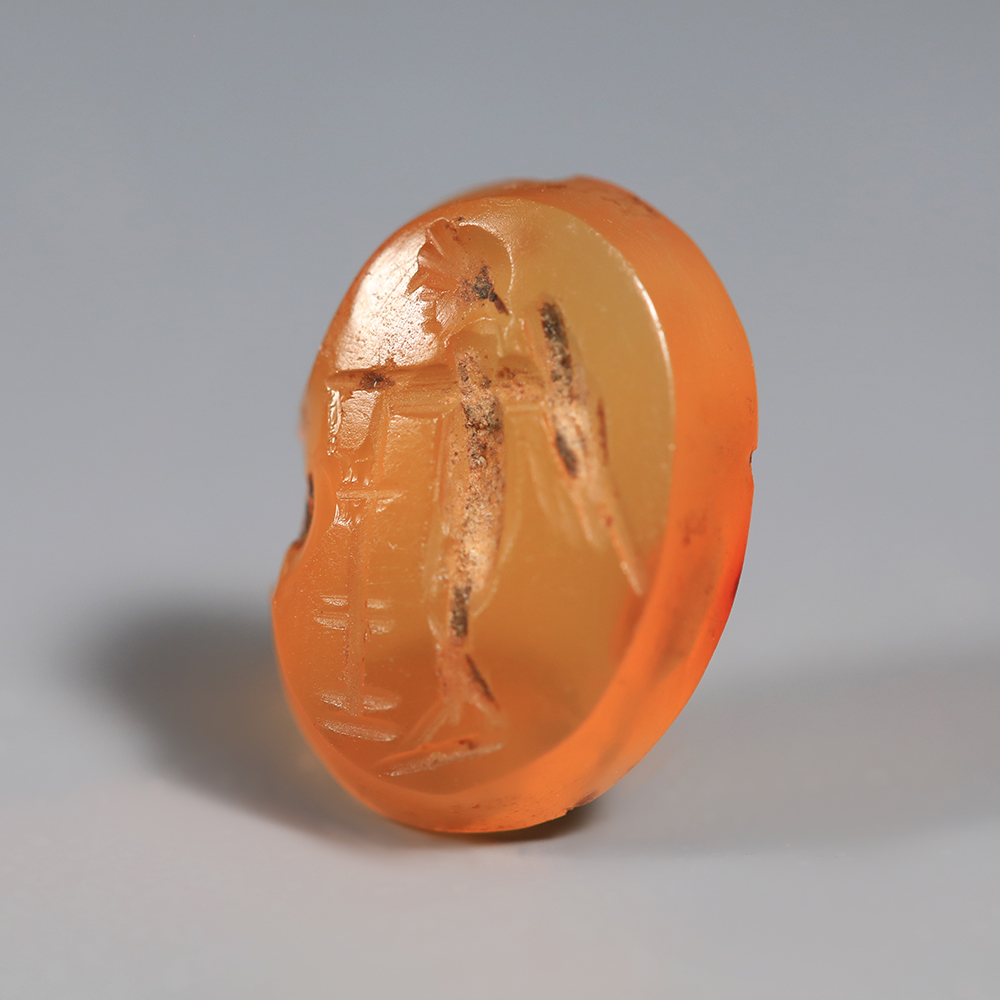
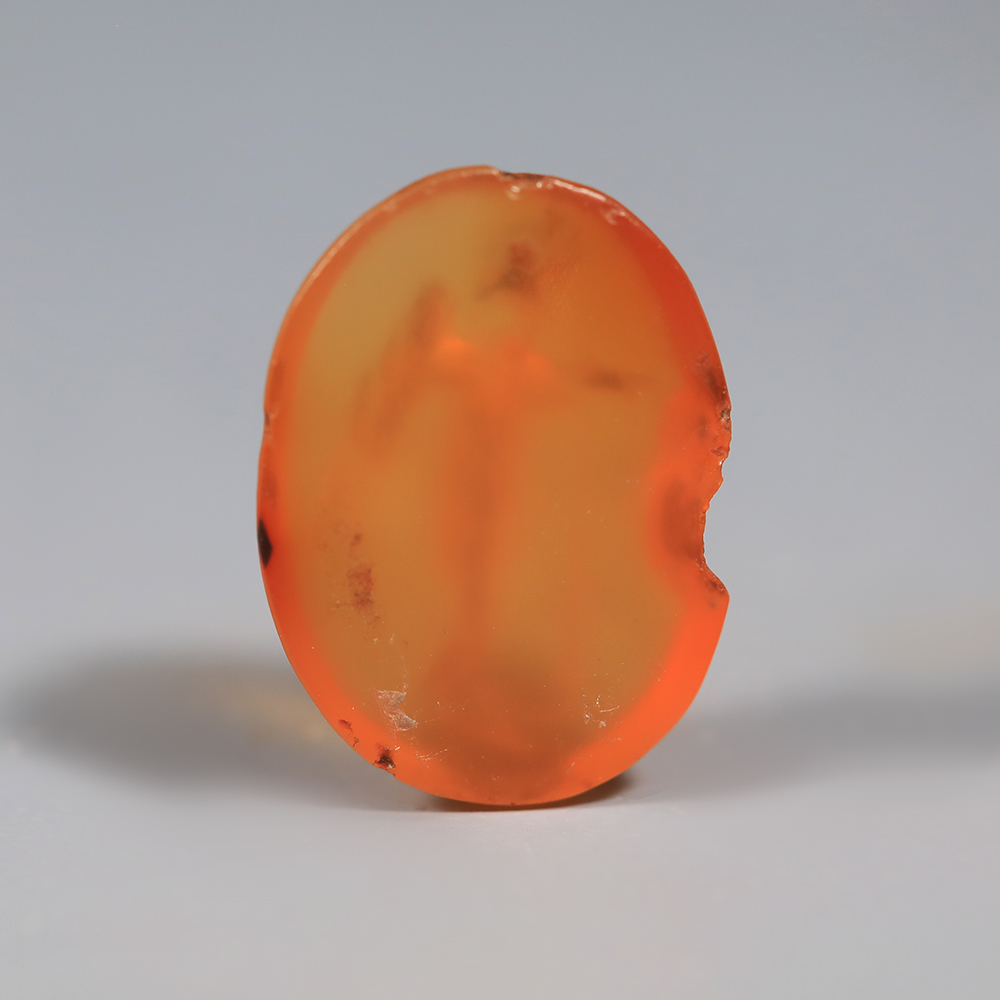
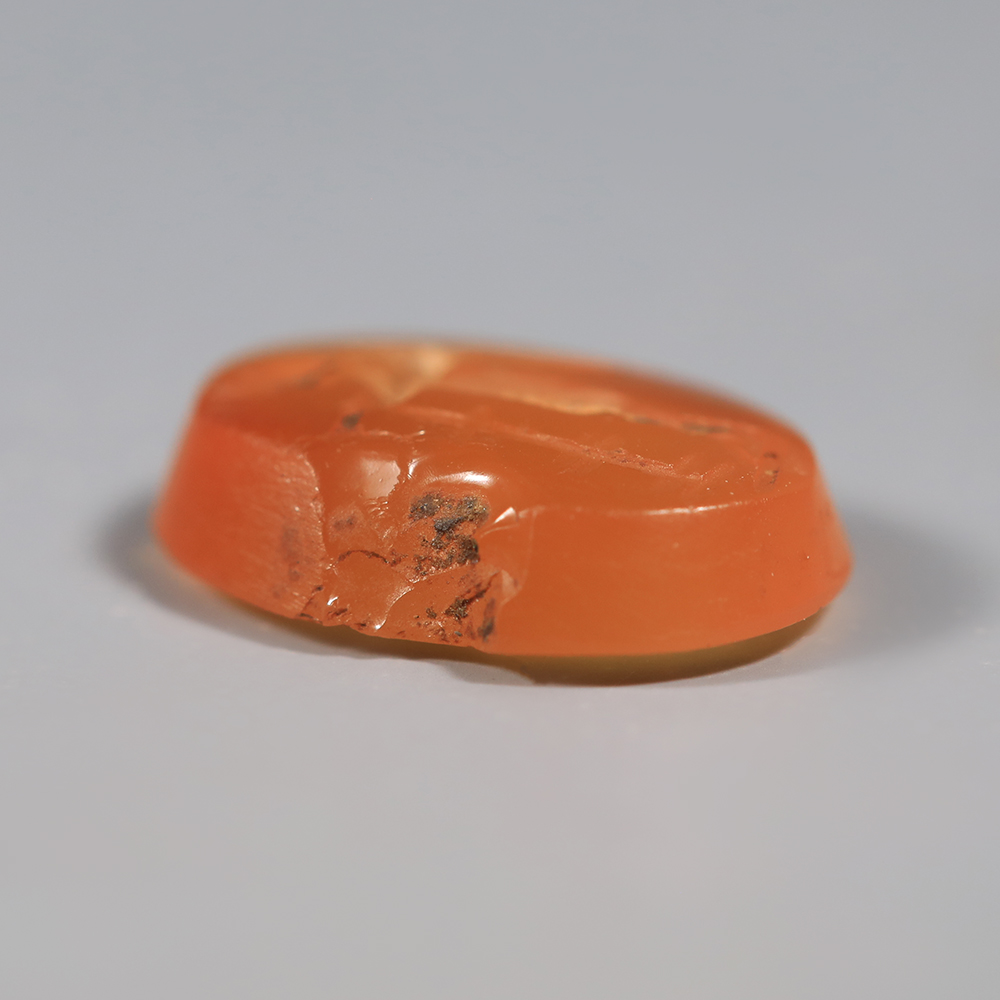
The term intaglio refers to a small image that has been engraved into a gemstone and is usually set in a piece of jewellery, most commonly a ring. Such an artistic form has its origin from Sumer in the 4th millennium BC, with the appearance of cylinder and stamp seals, whereby decorations and patterns were engraved into soft stones. During the Hellenistic period and the early Roman Empire, the art of intaglio reached its apogee, with there being a steady decline in craftsmanship in late Imperial Rome, until a revival of interest with the Byzantine and during the Renaissance.
The subjects used for intaglios are diverse, with depictions of deities and mythical creatures being a favourite theme. In Ancient Roman culture and mythology, Cupid was the youthful god of erotic love, desire and affection. He was depicted in numerous ways; from the chubby and joyful child, to the slender and older youth and finally as a wizened man.