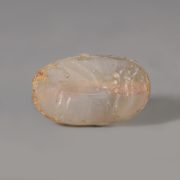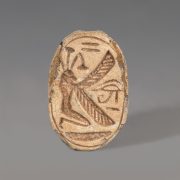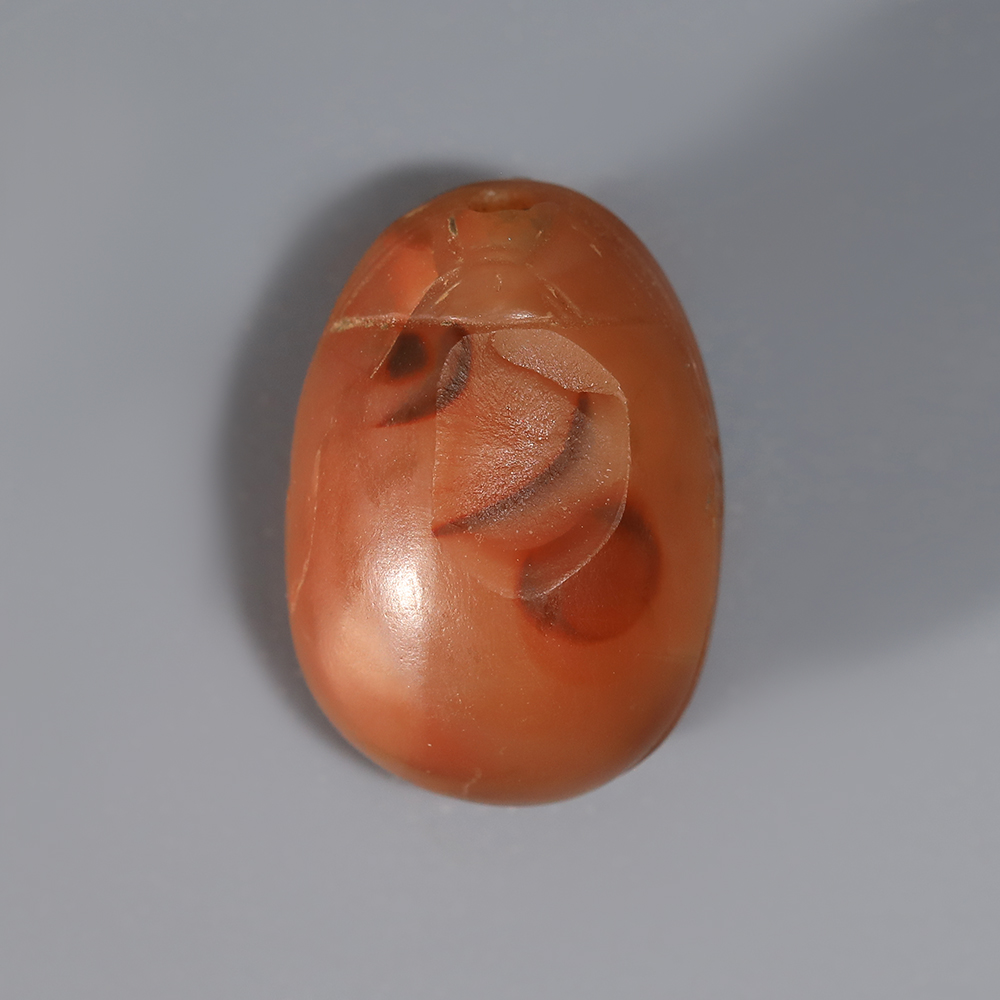
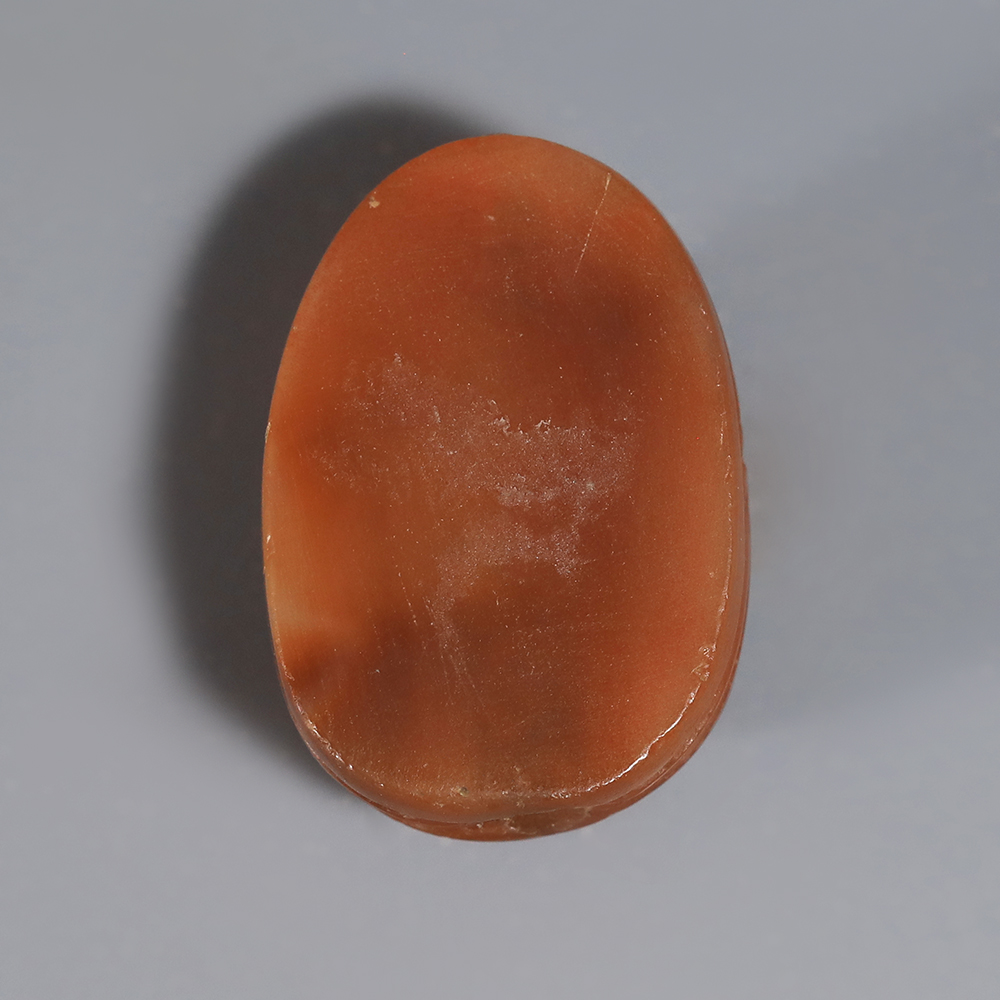
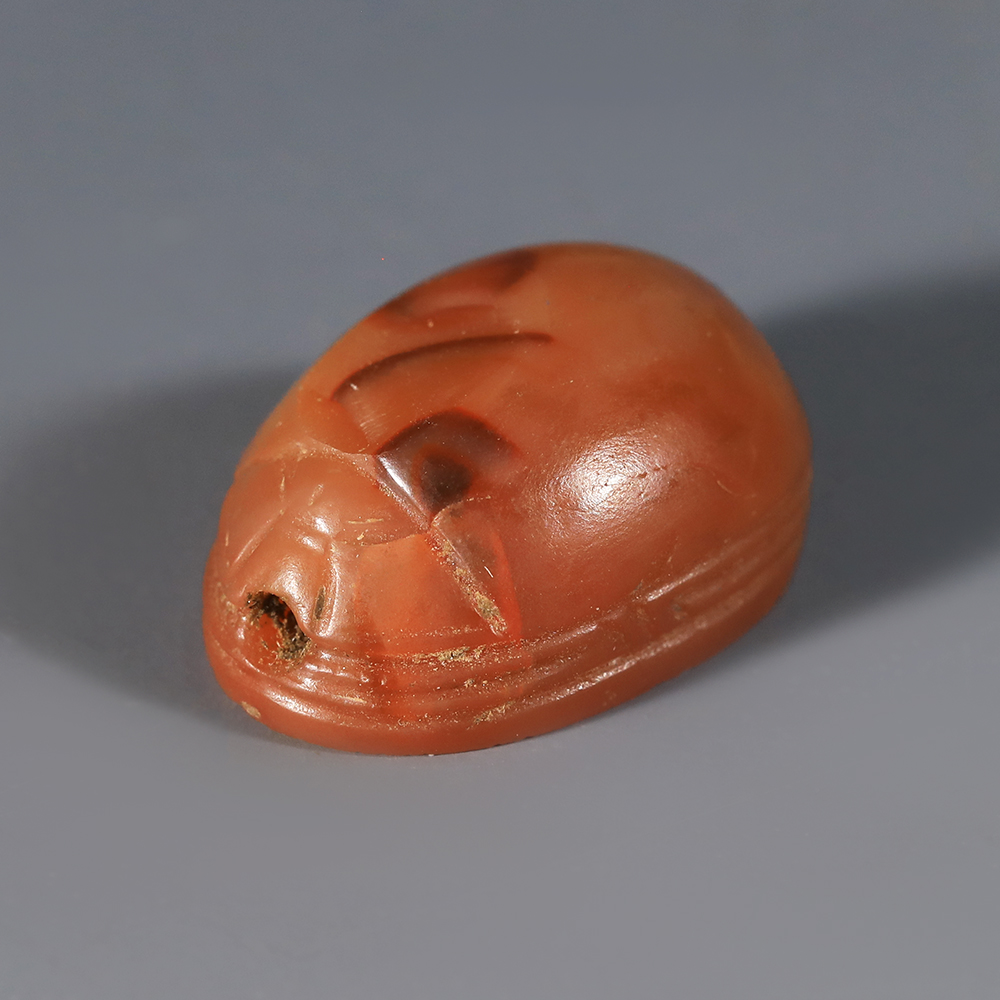
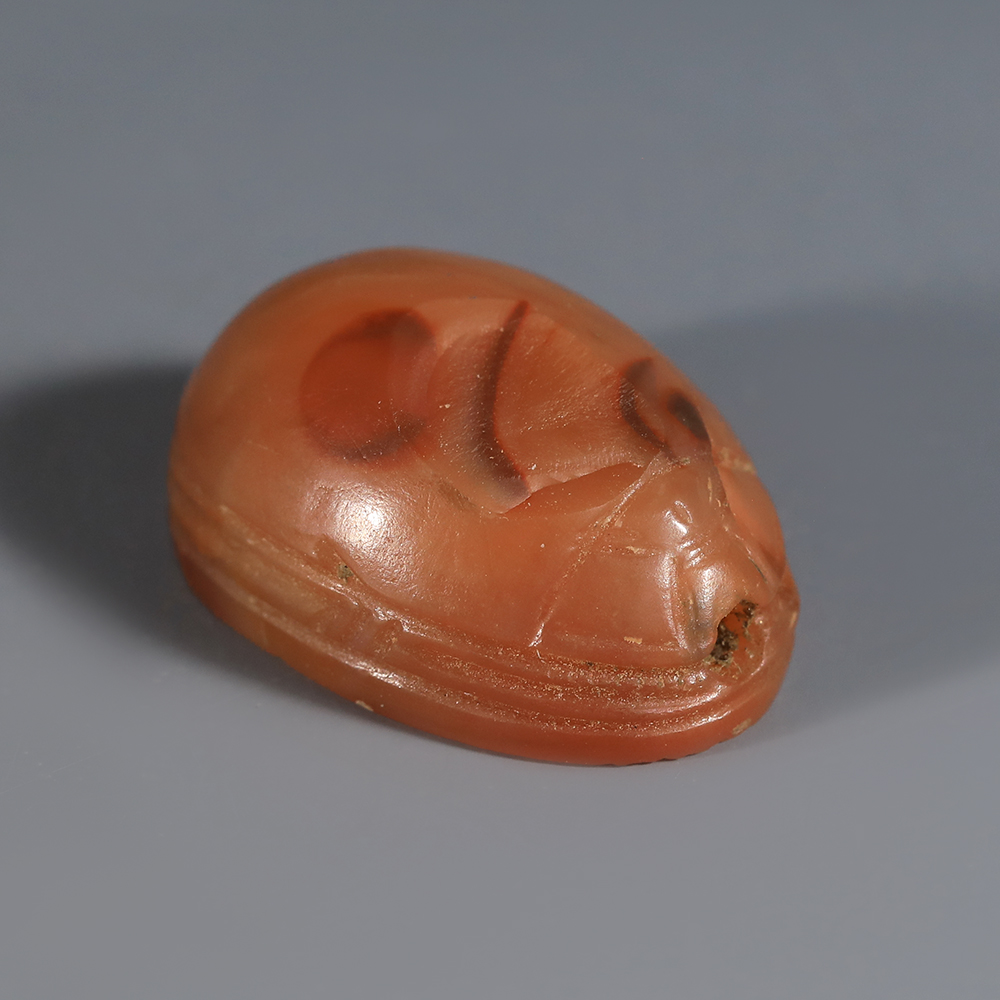
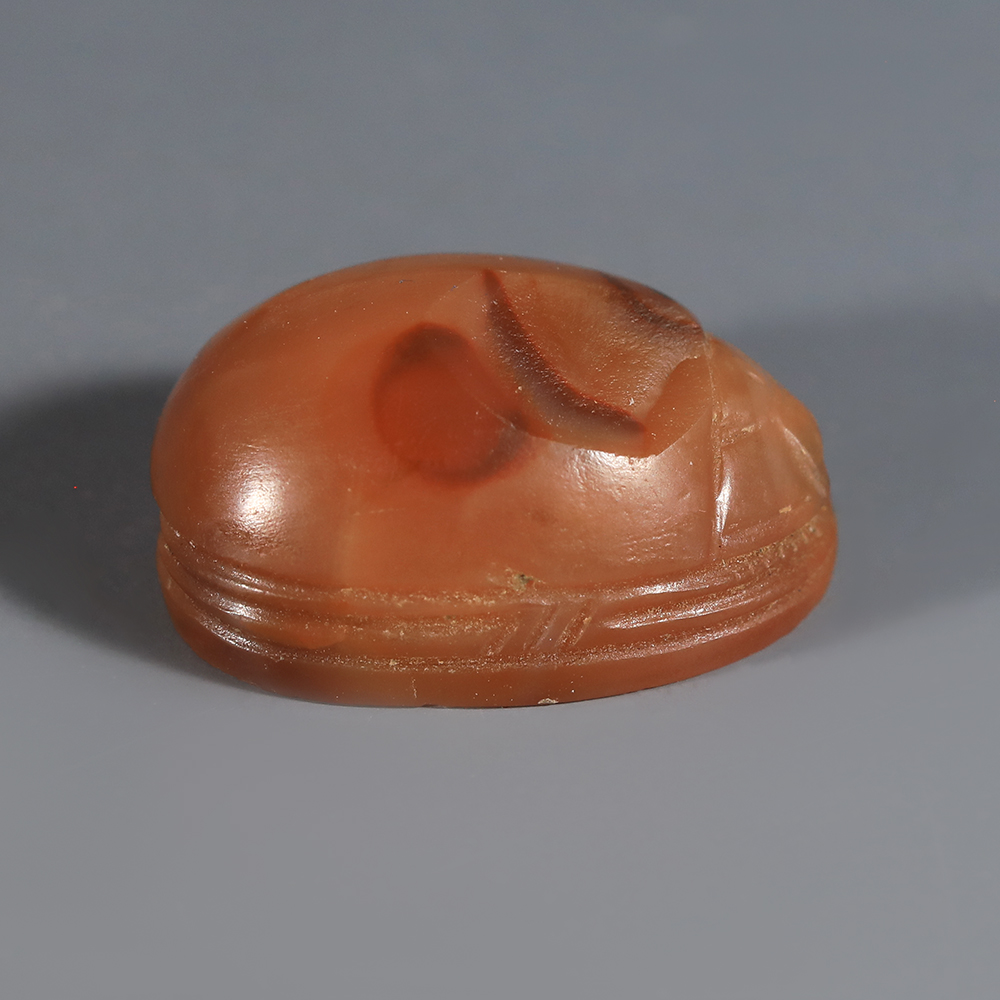
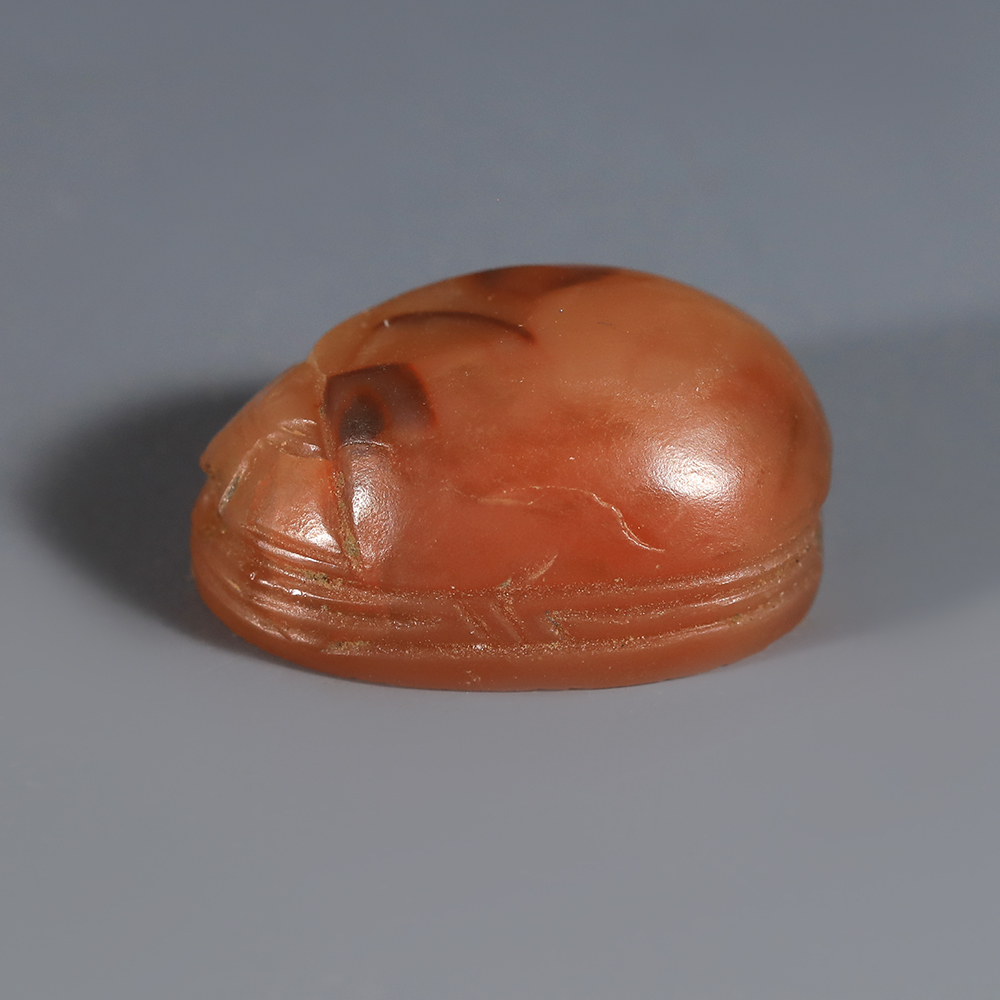
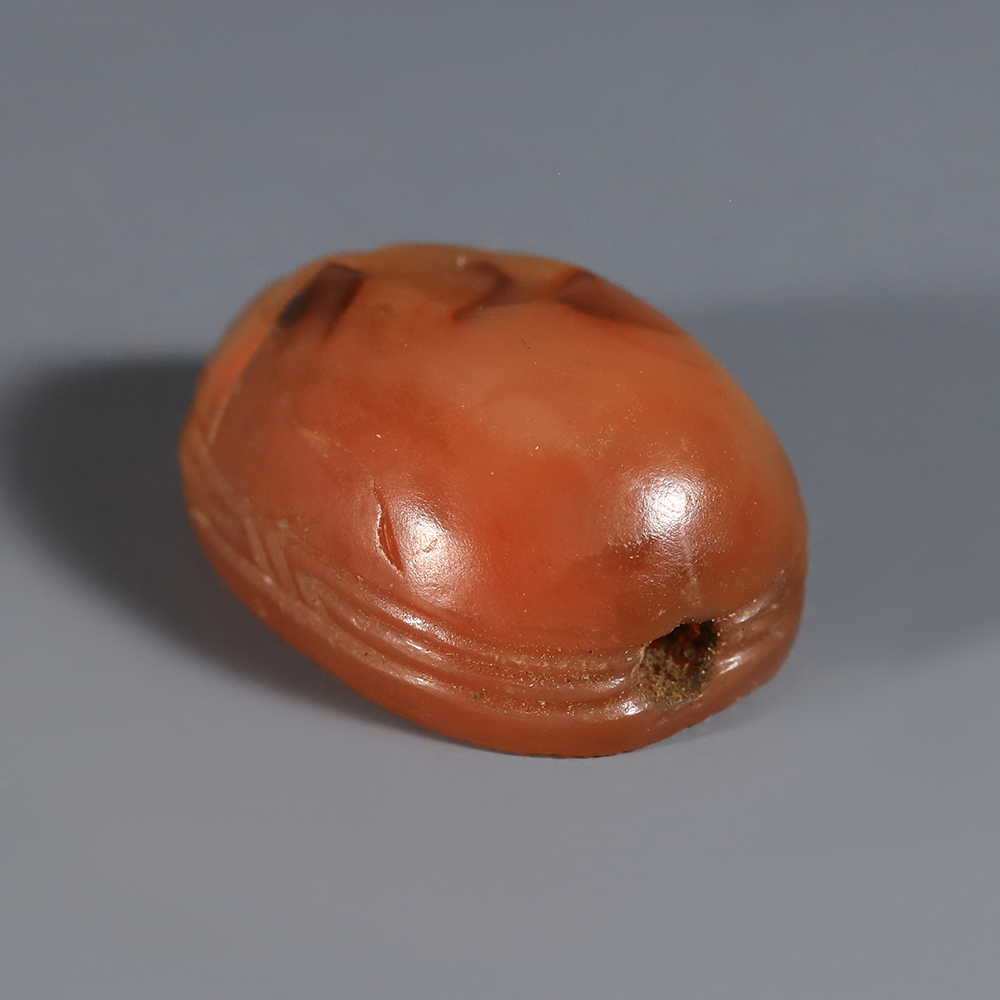
The scarab beetle was an exceedingly popular symbol in the art of Ancient Egypt, thought to represent the sun god, Ra. Ancient Egyptians believed that the scarab beetle rolling its ball of dung across the dessert mirrored the journey of the sun across the sky from day to night. As the beetle laid its eggs within the dung, it became a symbol of rebirth and regeneration. The use of carnelian as a material also linked to the sun god, Ra, as the stone’s fiery colour was connected to the solar cult.
Carnelian is a semi-precious stone that was used frequently by the Egyptians of all social classes, through Dynastic Egypt until the Roman period. It was used abundantly for amulets, beads, small figurines and inlay works and it was prized despite its ample use. Referring to Ancient Egyptian texts, carnelian, because of its fiery colour, was often associated with the blood-lust and rage of Egyptian deities. Furthermore, carnelian was also closely connected to the sun god, Re. It was a stone used often in jewellery for sun disks and to represent the eye of Horus. It was also frequently paired with two other semi-precious stones; turquoise and lapis lazuli. Together, the three stones with their vivid colours of red, green and blue all alluded to ideas of re-birth, resurrection and regeneration.
To find out more about the use of carnelian in ancient Egypt, please see our relevant blog post: The Significance of Carnelian in Ancient Egyptian Culture.