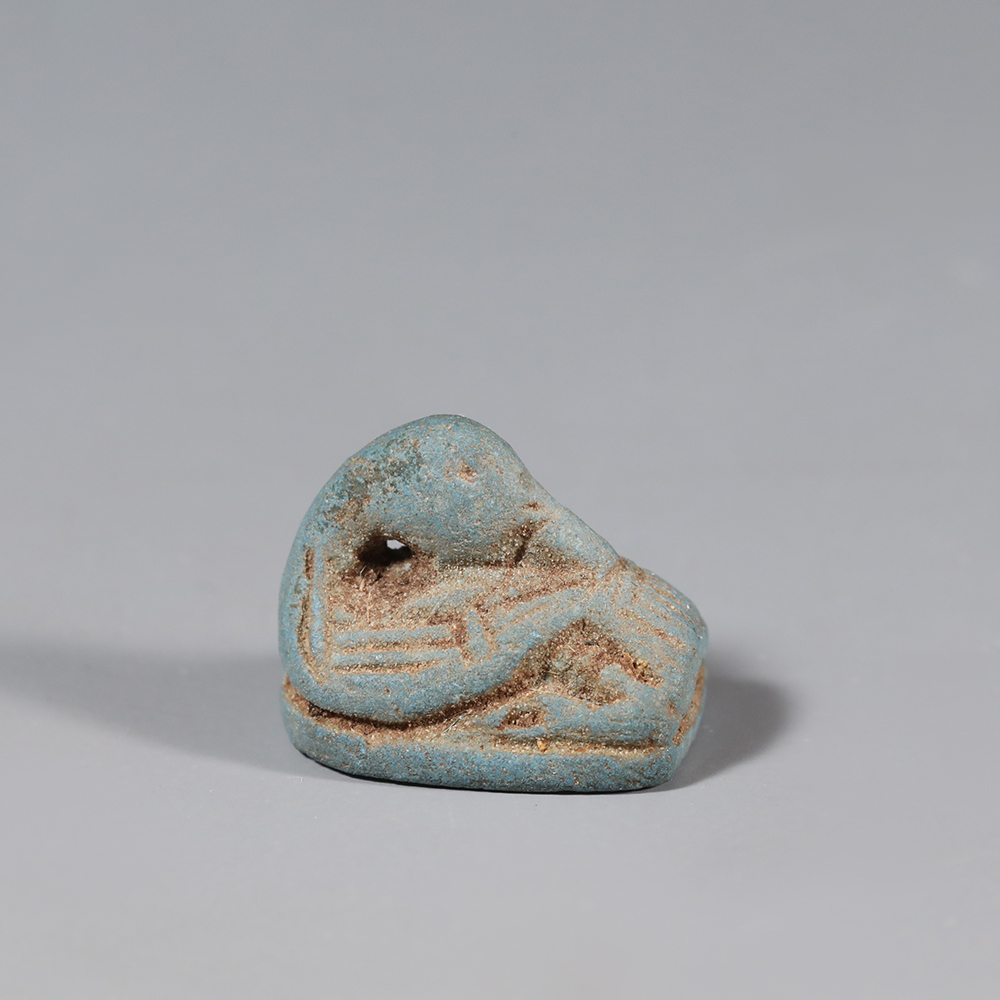
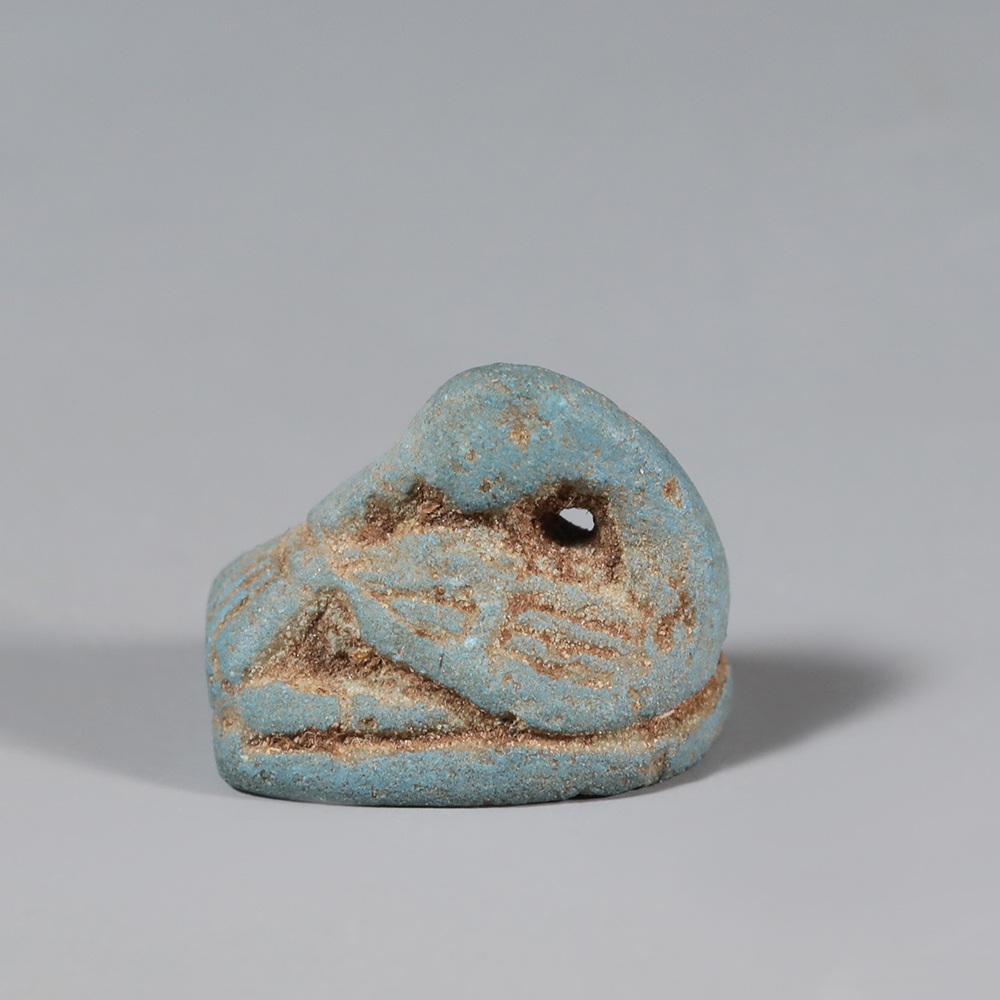
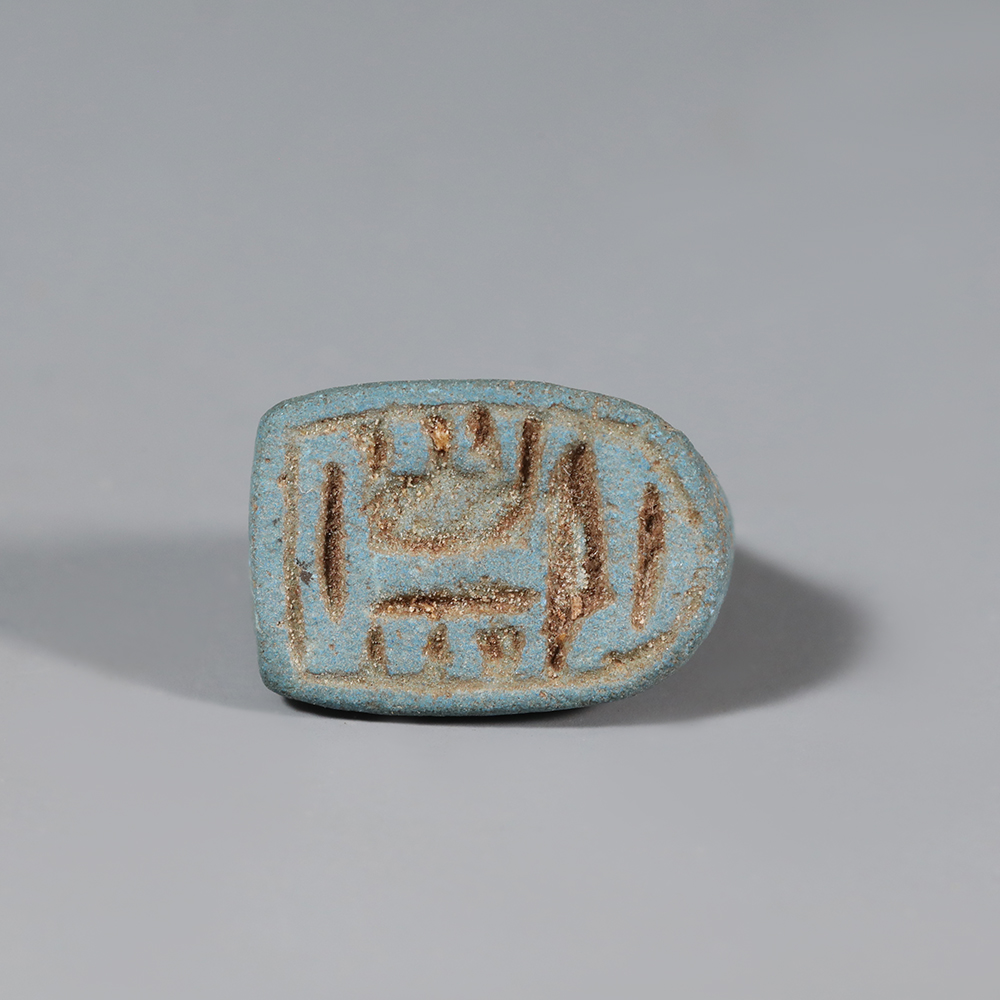
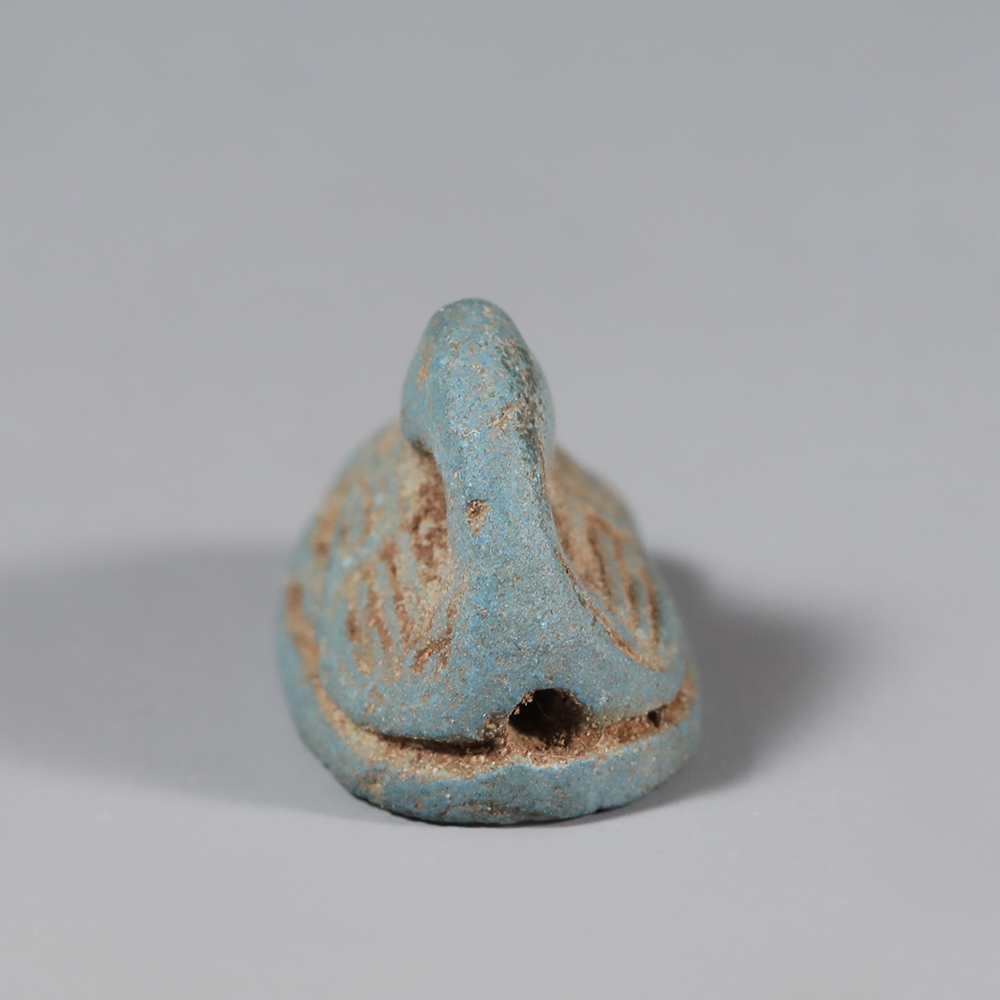
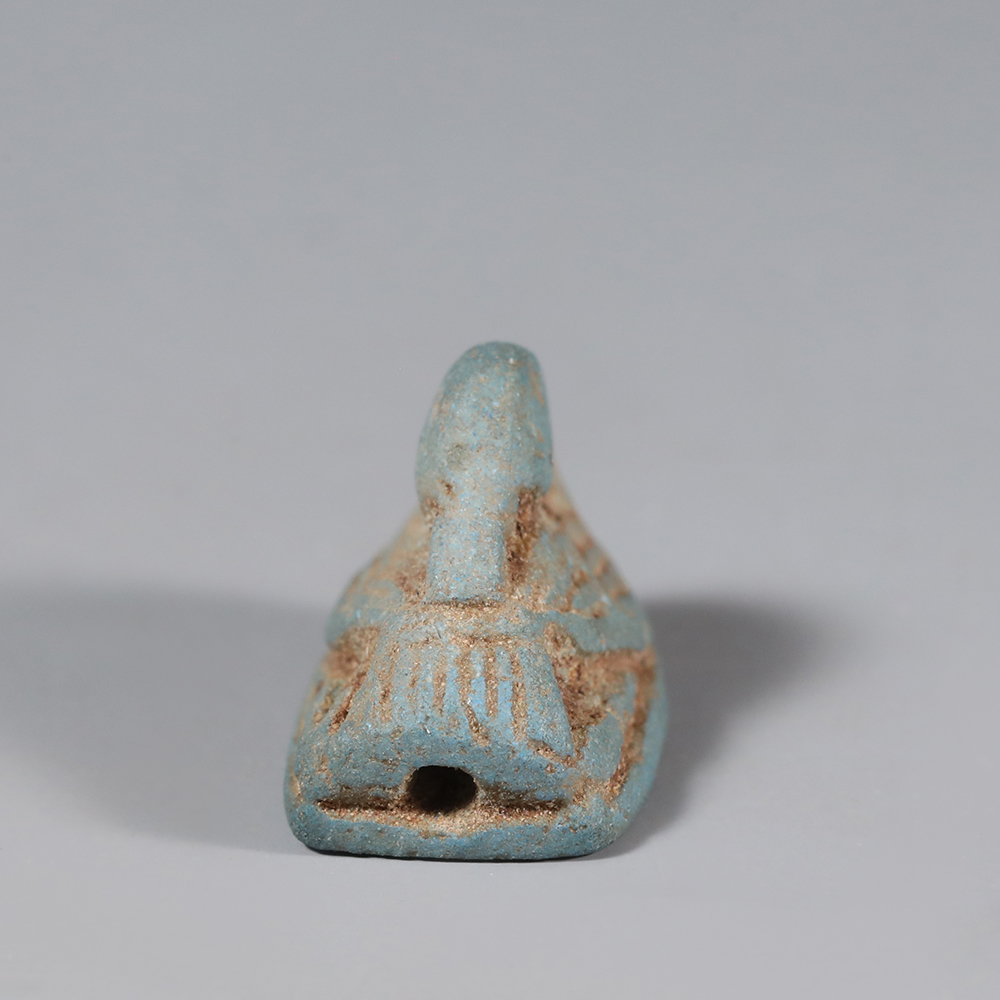
From the early periods of Egyptian history, ducks formed a part of the Ancient Egyptian diet, easily hunted on the marshlands of the Nile, which formed a natural habitat for waterfowl, and, over time, were domesticated. As well as serving as a popular food source, the duck was often featured in Egyptian art in various forms, including amulets, cosmetic jars, perfume bottles, and tomb ceilings. In combination with the bird itself, amulets of ducks, were also buried with the dead, perhaps as a symbol of the awakening tied to rebirth and the afterlife in Egyptian religion, or as a representation of a duck prepared for feasting to sustain the dead. The trussed duck also appears as a determinative hieroglyphic symbol, translated as ‘offer’. Additionally, it has been suggested that the duck was a symbol of fertility and renewal, and their offerings were believed to bring blessings of abundance.
The Egyptian god, Amun-Ra, was a highly important deity in the Egyptian pantheon. Originally, he was worshipped as two gods, the creator of the universe, Amun, and the sun-god, Ra. He gained national importance after the defeat of the Hyksos at Thebes in the 16th century, and it is from this date that Amun and Ra were conjoined into one god. As his position grew, Amun-Ra’s worship was almost monotheistic in nature, with the other gods considered manifestations of him. So great was his influence that he was theologically fused with the Greek god Zeus from the Ptolemaic period, to form Zeus Ammon. Alexander the Great claimed divine descent as the son of Amun.


