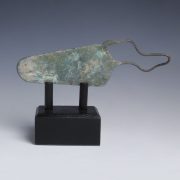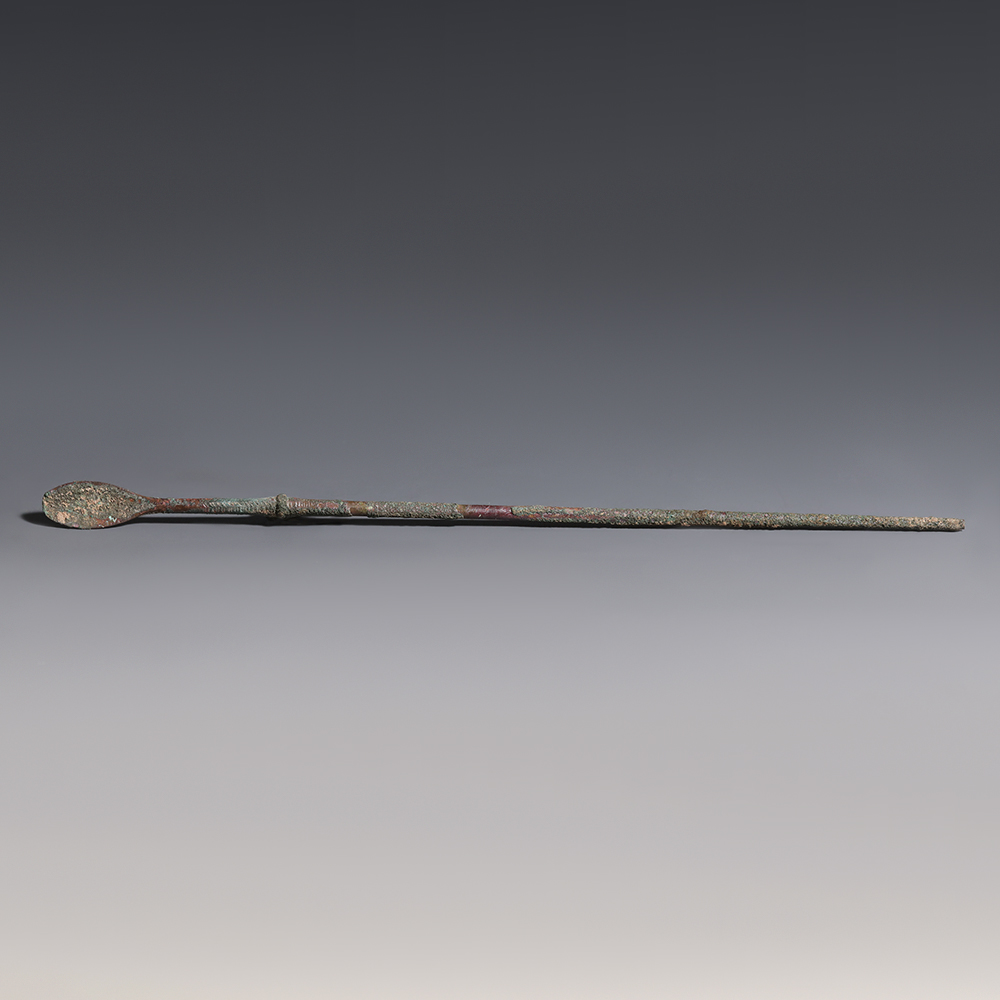
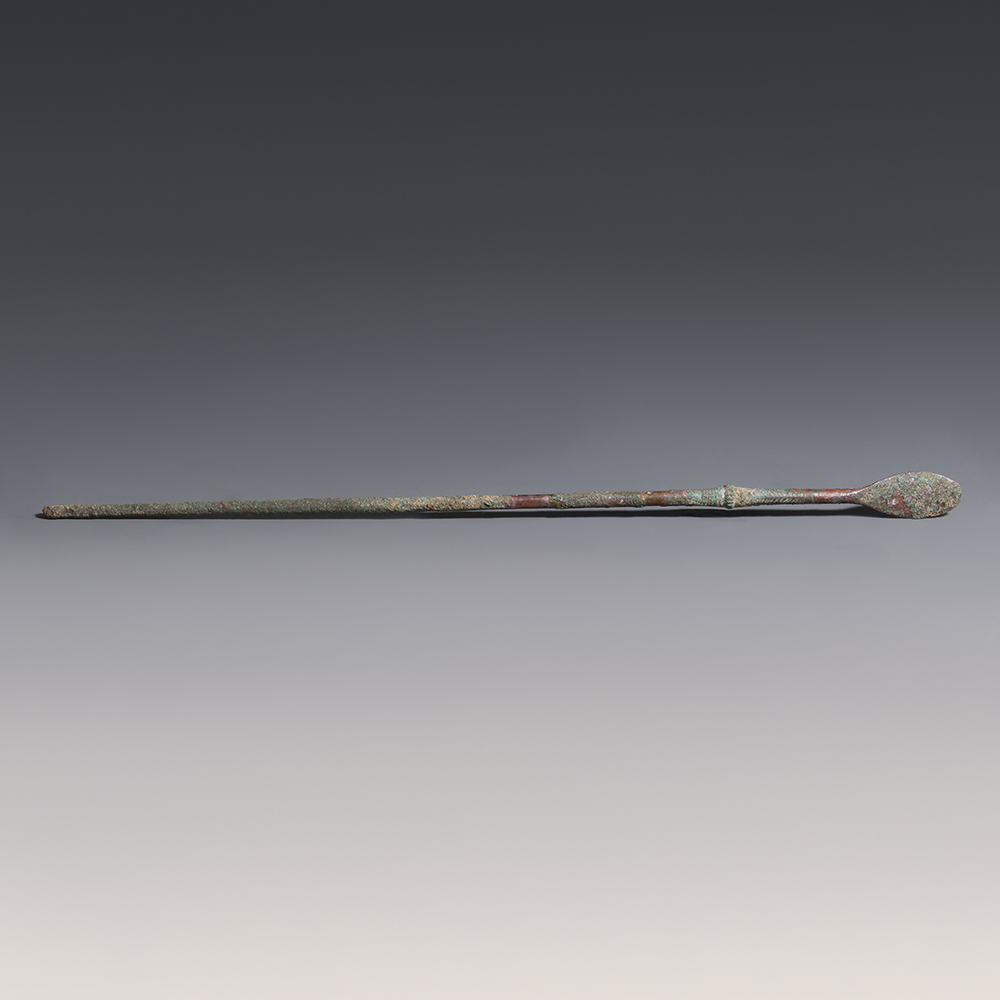
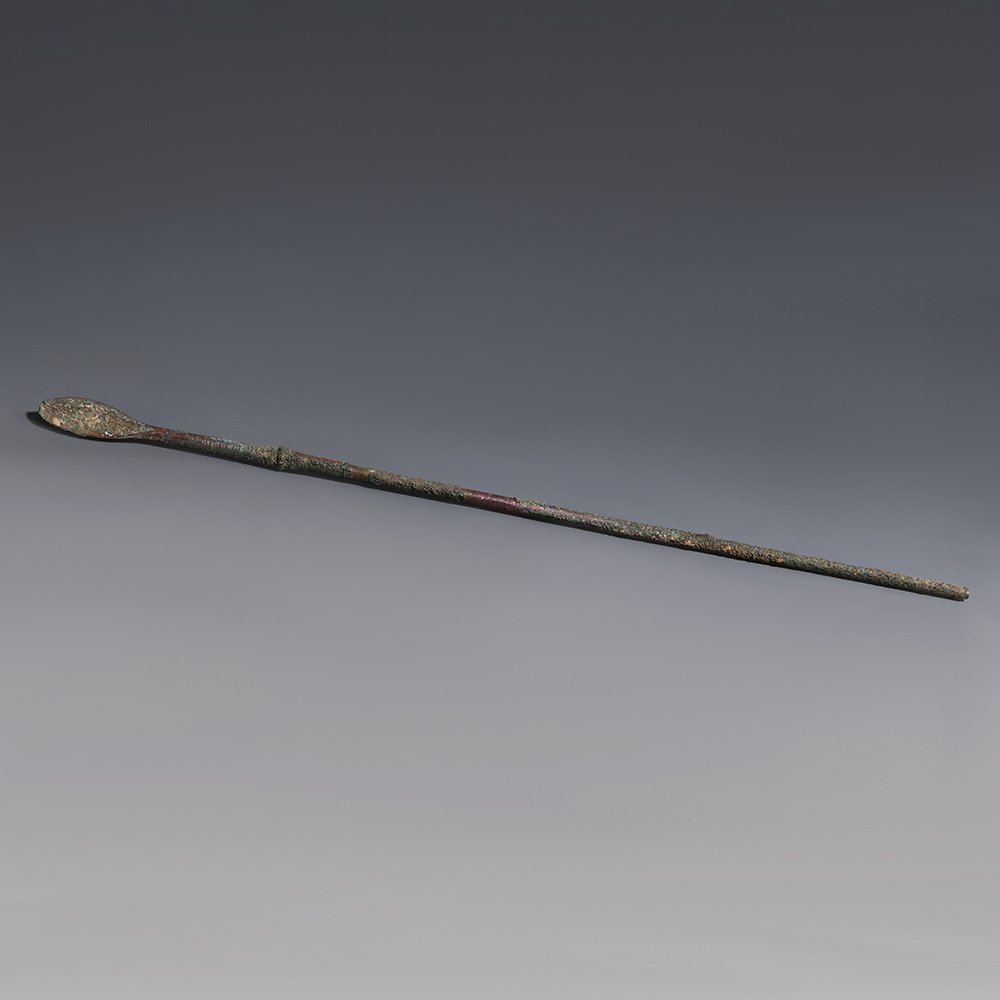
Spatula probes were a very common tool in Ancient Roman medicine, as we know from their frequent mention in contemporary medical texts. The spatula probe was a multipurpose tool. Although thought to be primarily for mixing and applying medicines and ointments, it could also be used in surgery and examination, and there is even records that it could be used to cauterise the umbilical cord. It is also thought that their uses were not confined exclusively to medicine, and that perhaps they were used in cosmetics, or other more domestic uses. This spatula probe is made from a bronze, a highly typical material for medical tools from this time. Although we know that iron was also used, Hippocrates specifically recommends the use of bronze as the norm. Bronze also survives very well in the archaeological record, meaning today we have many more surviving examples of bronze medical tools.
To find out more about Roman medical tools, please see our relevant blog post: Roman medicine and Medical Tools