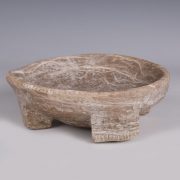
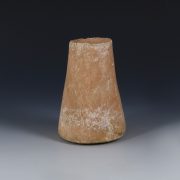
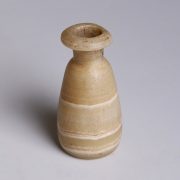
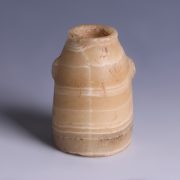
In Ancient Egypt, alabaster jars were used as containers for ointment, perfume, and other cosmetic products, such as kohl. The alabaster used by the ancient civilisations in the wider Middle East (which includes Egypt and Mesopotamia) is also referred to as ‘oriental alabaster’, which is a type of calcite. Alabaster was commonly used in Ancient Egypt for decoration as it was easy to carve and could be treated in such a way that it resembled marble (a much harder material to work with). Although its soft and porous features made it easier to carve, this also meant that it would not survive for significant periods of time when exposed to the elements. The name ‘alabaster’ is thought to have derived from the Ancient Egyptian ‘a-labaste’, which refers to the vessels of the goddess, Bast.
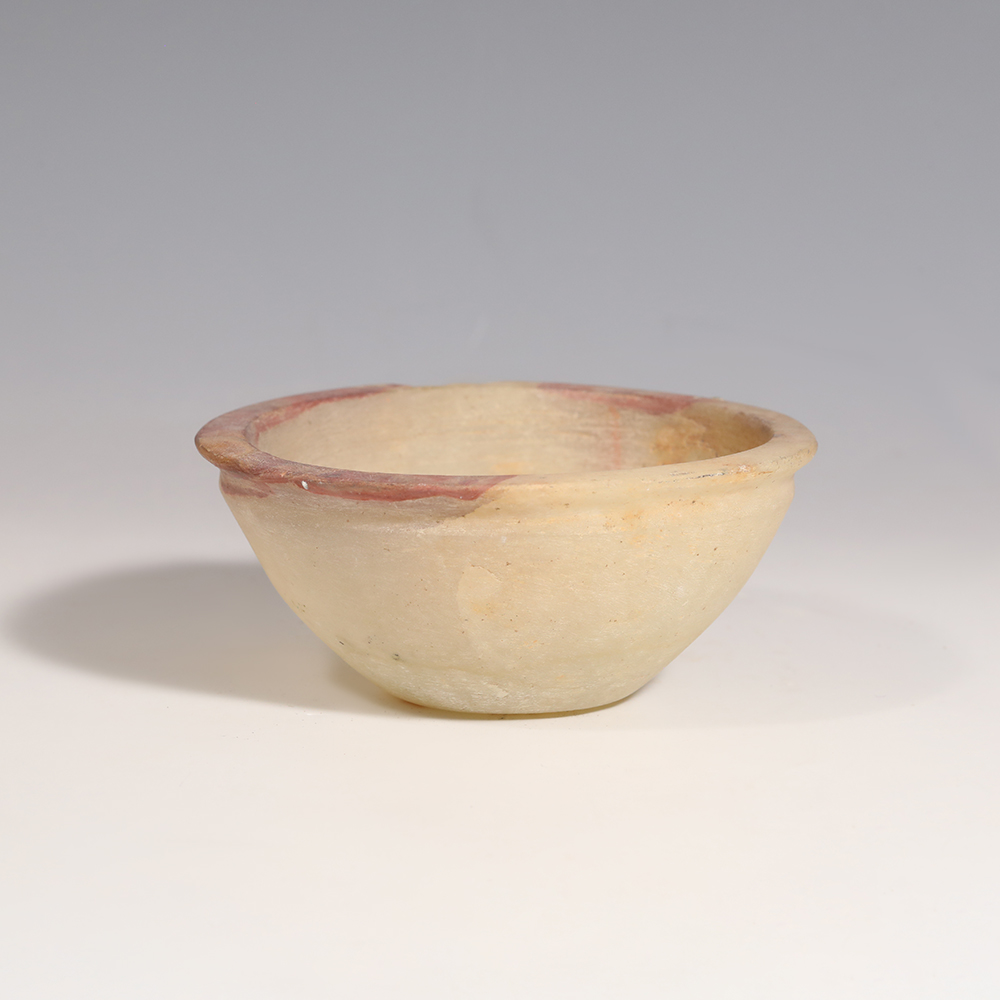
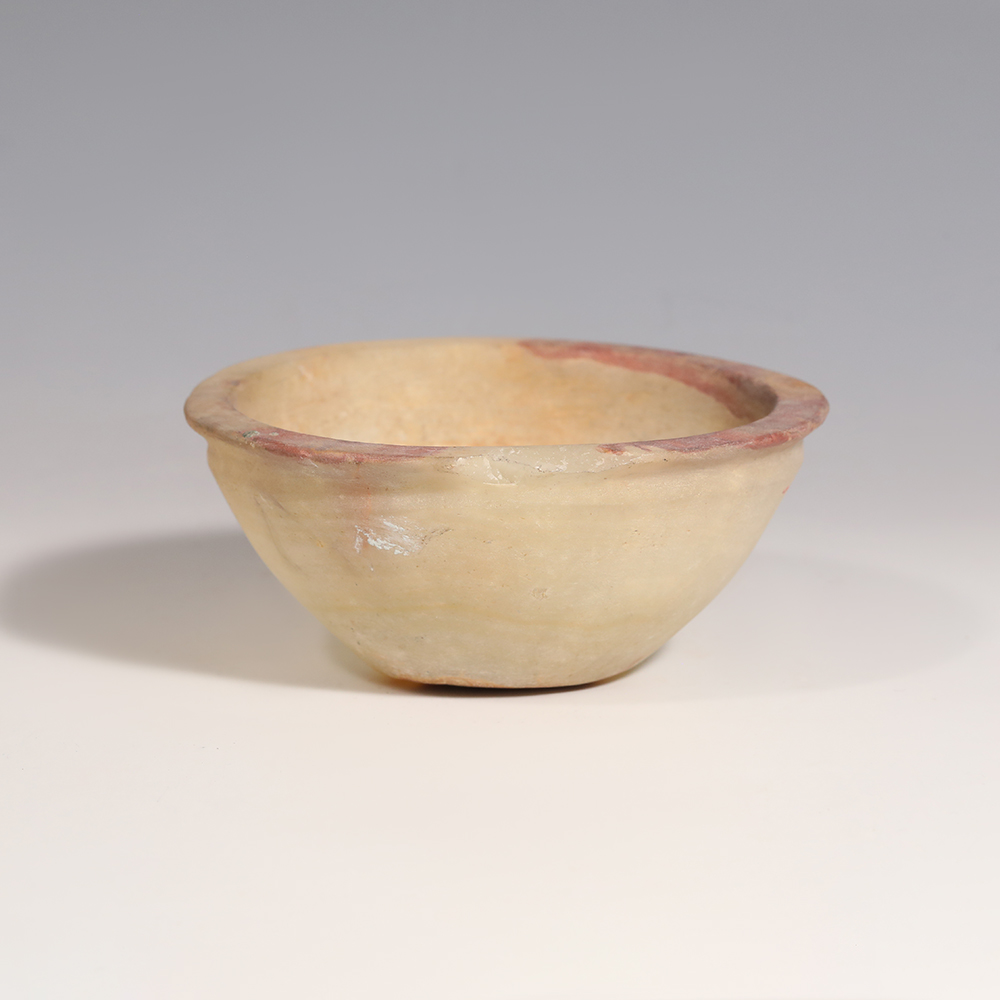
Ancient Egyptian Veined Alabaster Carinated Bowl
£ 495.00
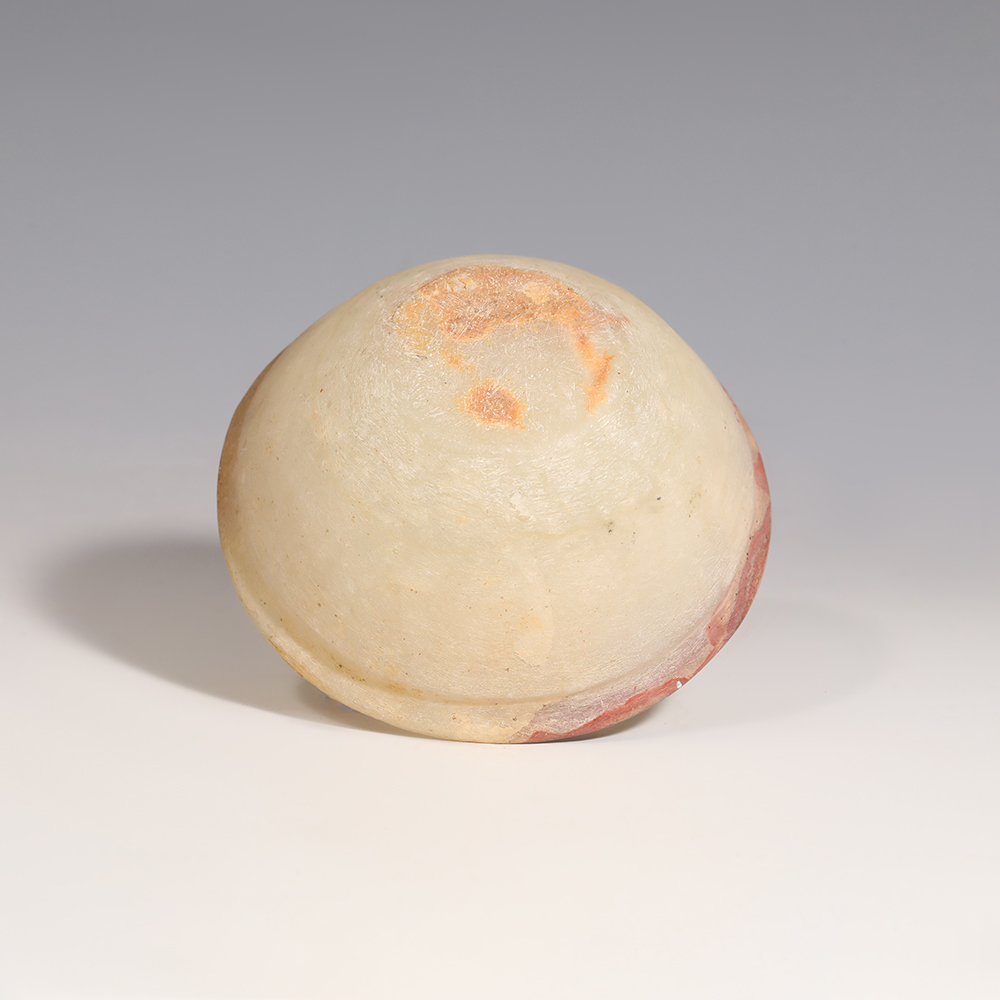
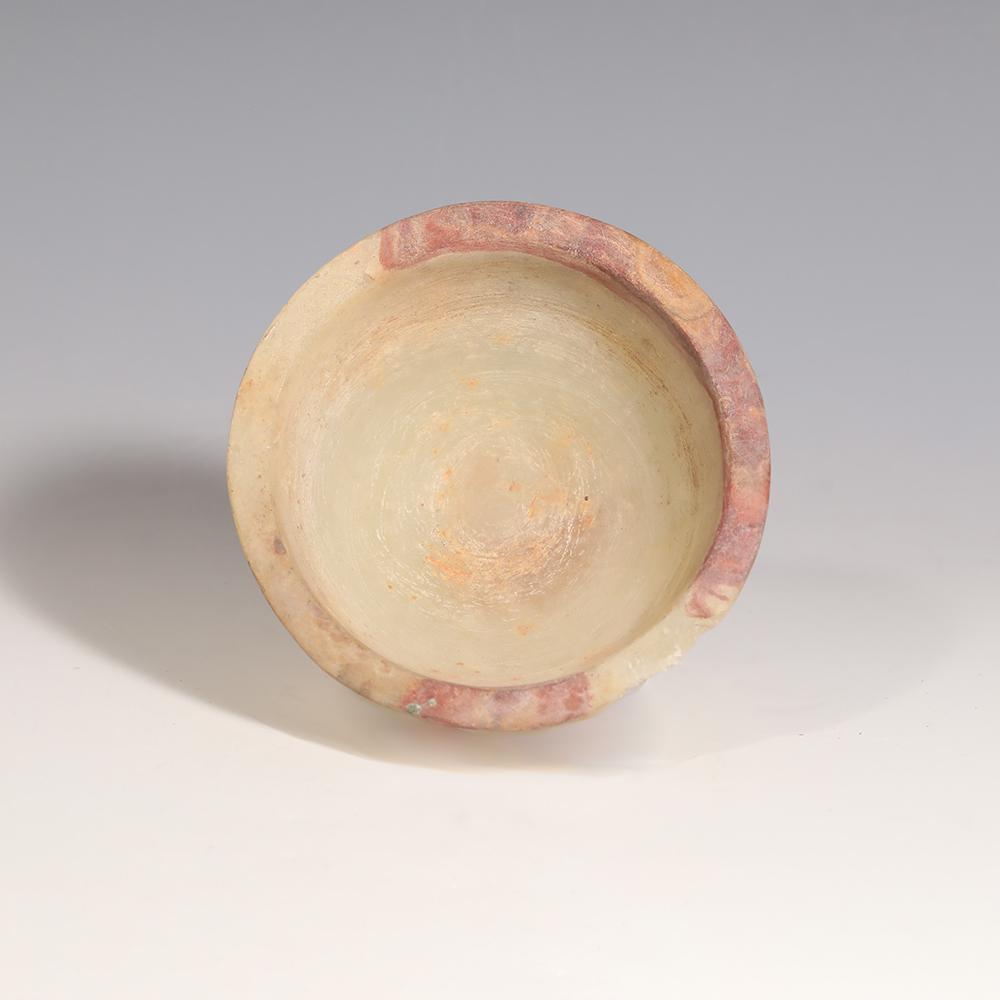
An ancient Egyptian alabaster carinated bowl. The vessel consists of a flat base and gently curved walls ending with a carinated shoulder. This leads to a flattened rim. which displays the varying colours and hues of veined alabaster. The varying shades of natural cream, brown and red display ancient Egypt’s fine alabaster craftsmanship.
Period: Early Dynastic - Old Kingdom
Condition: Good Condition. Some encrustation to the base and some scratching within. Chip to the rim.
In stock
| Weight | 276 g |
|---|---|
| Dimensions | W 11.5 x H 5 cm |
| Culture | |
| Region | |
| Stone |