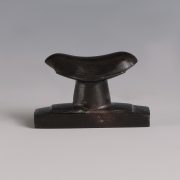
The Egyptians wore amulets alongside other pieces of jewellery. They were decorative, but also served a practical purpose, being considered to bestow power and protection upon the wearer, both living and deceased. Many of the amulets have been found inside the wrappings of mummies, as they were used to prepare the deceased for the afterlife.
In Egyptian culture and mythology, the heart was perceived as the most important organ, the seat of intelligence that decided all feelings and actions, housing all the memories of a person. It was believed that the heart was weighed in the afterlife against a feather representing ma’at, an Egyptian concept of truth and justice, at the Weighing of the Heart Ceremony. If their heart weighed the same or less, they were worthy enough to proceed onto the afterlife, but if it weighed more, they were destroyed. These heart amulets would have been worn as protection for the beholder’s in death, used exclusively for mummies, to ensure a positive judgement. The amulet became so important that it was bestowed on every mummy until the end of the Pharaonic Period.
To discover more on specific Egyptian amulets, please see our relevant blog post: Egyptian Amulet and their Meanings.