The wedjat, as the Eye of Horus, is one of the most popular amulets of ancient Egypt. The amulet combines elements of both human and falcon ocular imagery, as Horus was often depicted as a falcon. Its name comes from the ancient Egyptian ‘wḏꜣt’, meaning “the one that is complete”. The wedjat was highly apotropaic and associated with a number of Egyptian myths. The eye depicted could be either left or right, representing different imagery. Horus’ left eye was the sun and the right eye was considered the moon. In one creation myth, Horus’ eye was injured or stolen by the god Seth and then restored by Thoth. Hence the wedjat eye was thought to possess healing powers and symbolise regeneration. This healing and regenerative association is further enhanced by the properties of the lunar eye of Horus. As it waxes and wanes like the moon, it is thought to bring health and safety to its wearer. In another myth, Horus presents his healed eye to his father Osiris, to help him pass safely into his afterlife. Hence wedjat eye amulets were commonly placed within mummy wrappings to help the dead to help them pass safely into the afterlife.
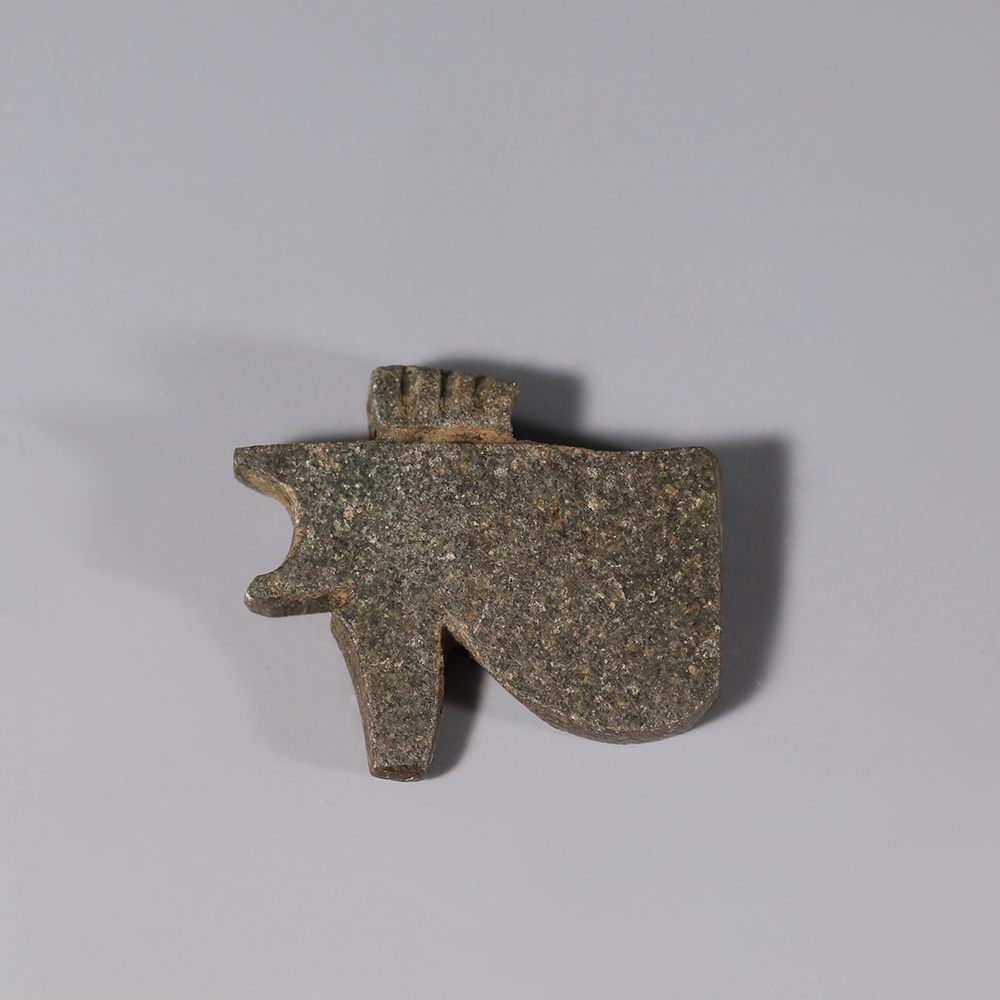
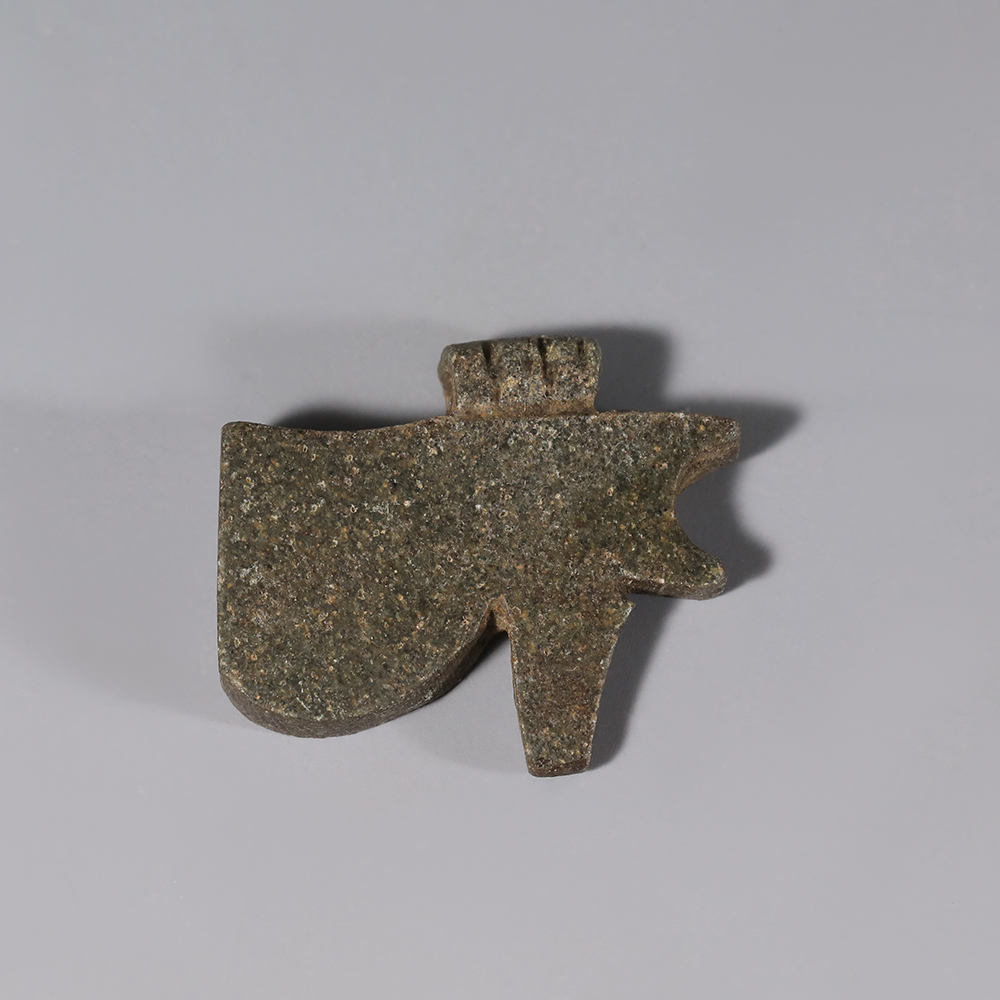
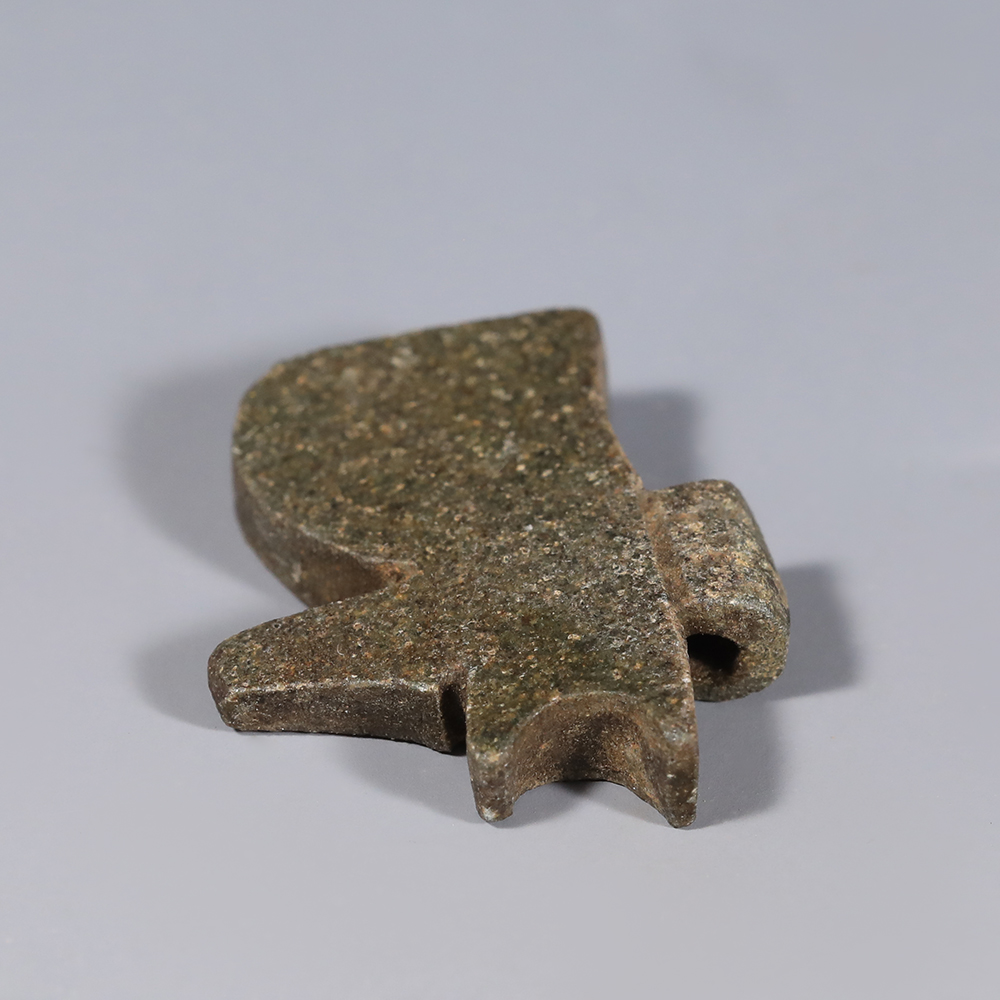
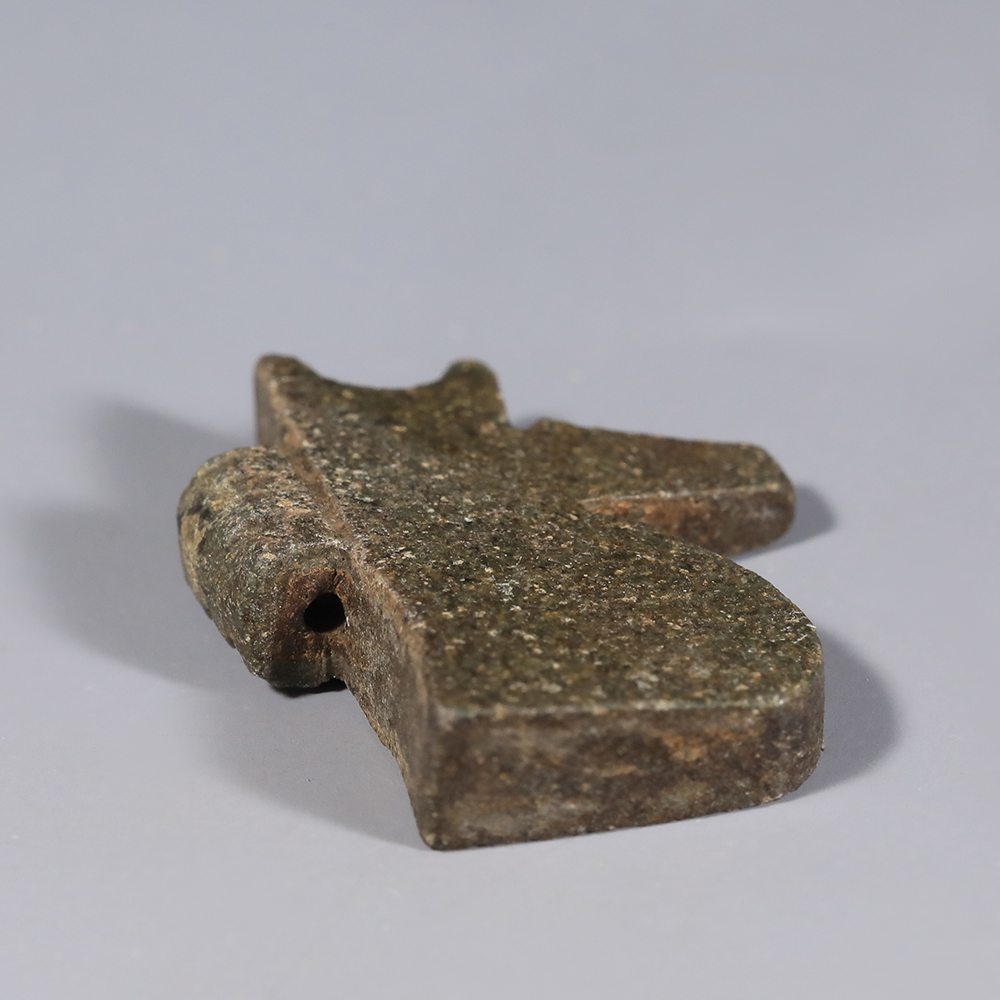
Egyptian Black Hardstone Wedjat Amulet
£ 195.00
An Egyptian amulet depicting a wedjat, or Eye of Horus, carved from black hardstone. The surface on both sides of the amulet is smooth and unadorned. The amulet features the typical silhouette, combining human and falcon ocular imagery. The top horizontal line represents the brow, and the sloping protrusion beneath depicts the corner of the almond-shaped eye. The vertical rectangle beneath the eye represents the cheek mark, from which the amulet curves to a flat end. The amulet is pierced through the ribbed rectangular protrusion at the top.
Period: Late Period - Ptolemaic Period
Condition: Very good.
In stock
| Weight | 1.57 g |
|---|---|
| Dimensions | L 1.8 x W 1.5 cm |
| Culture | |
| Egyptian Mythology | |
| Stone | |
| Region |


