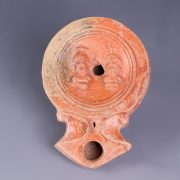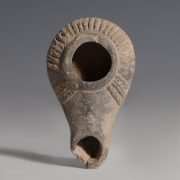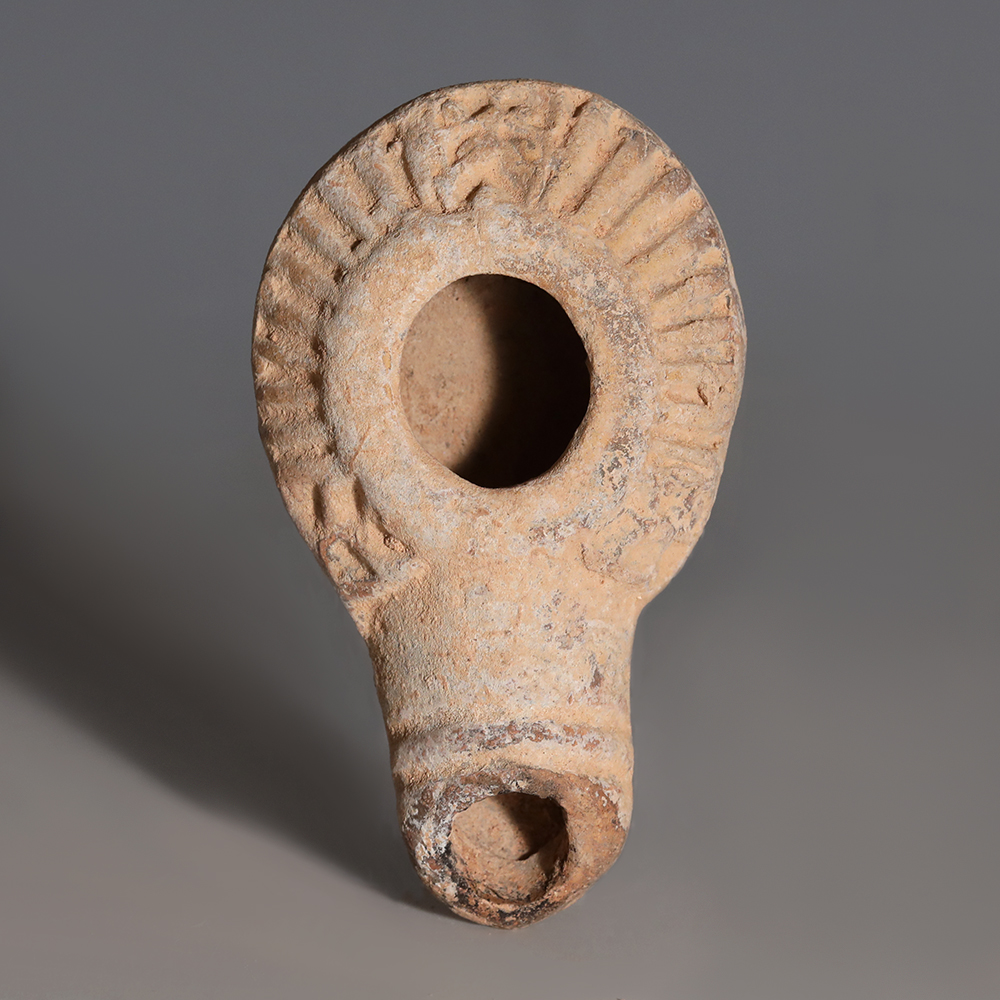
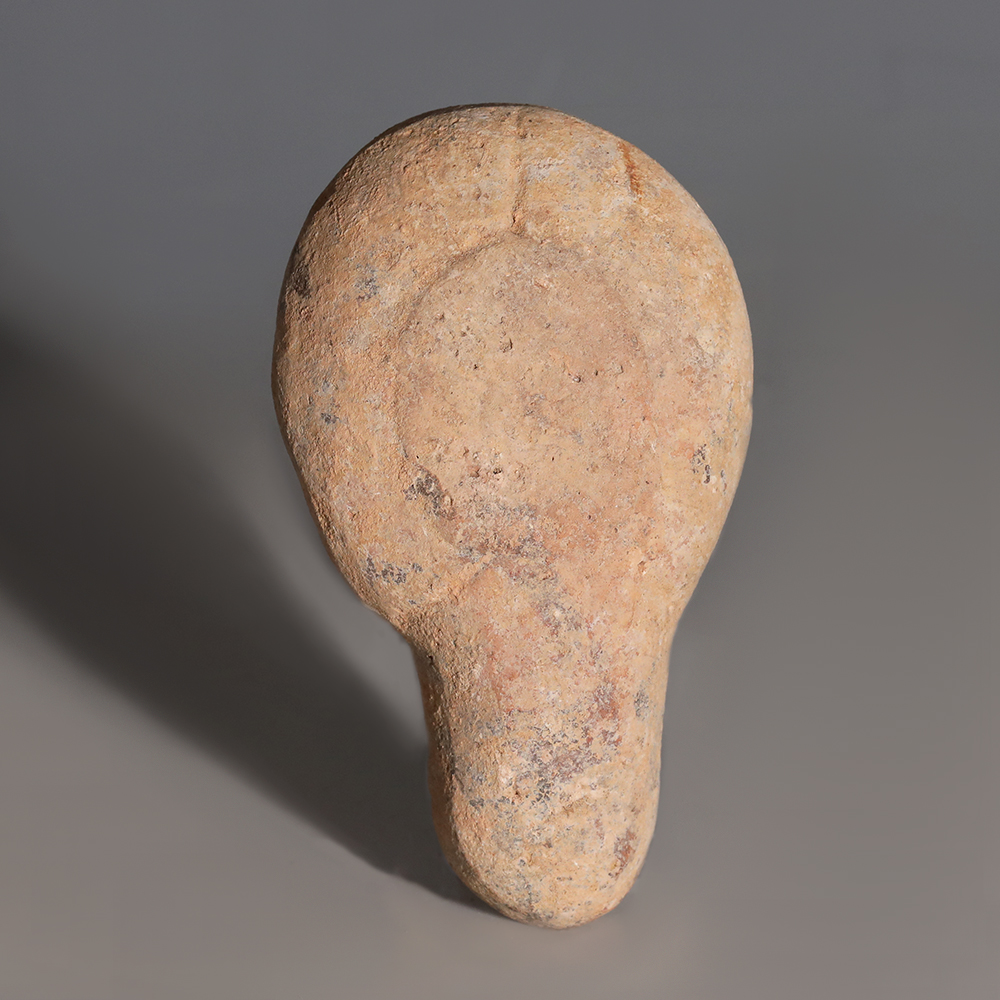
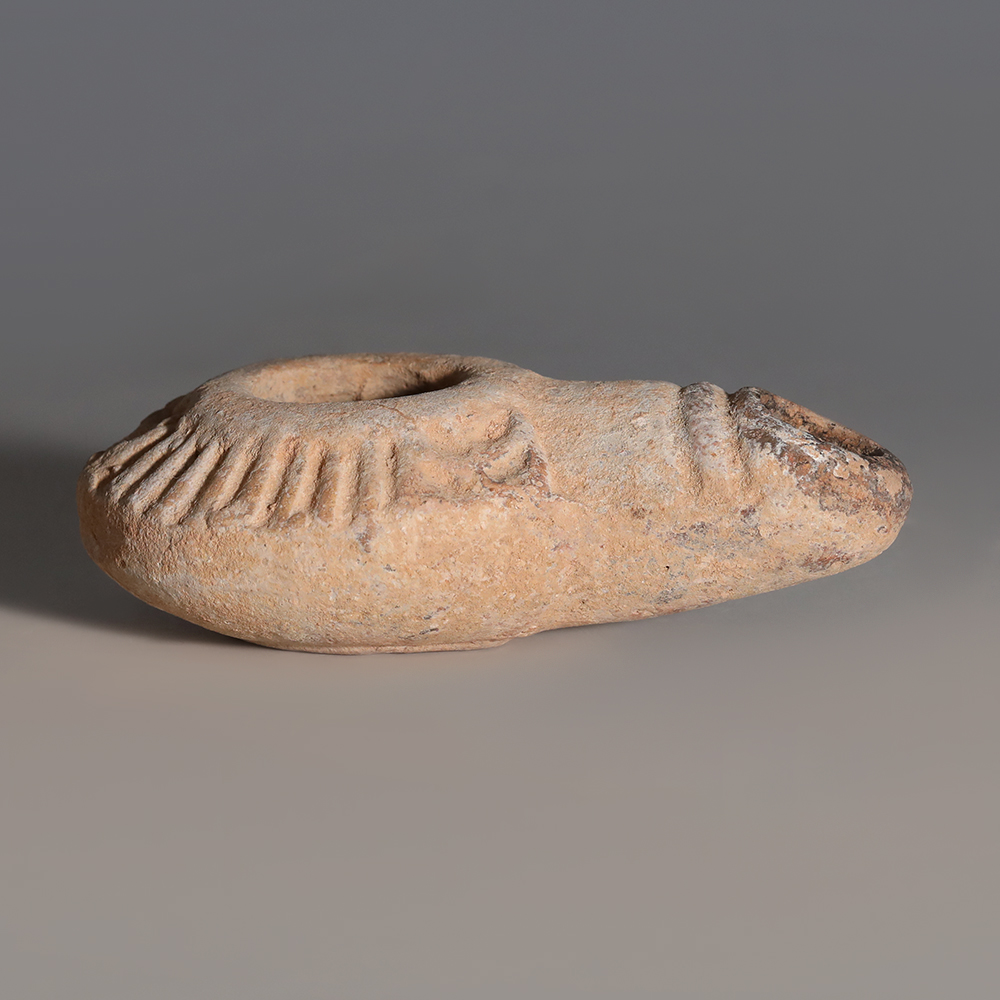
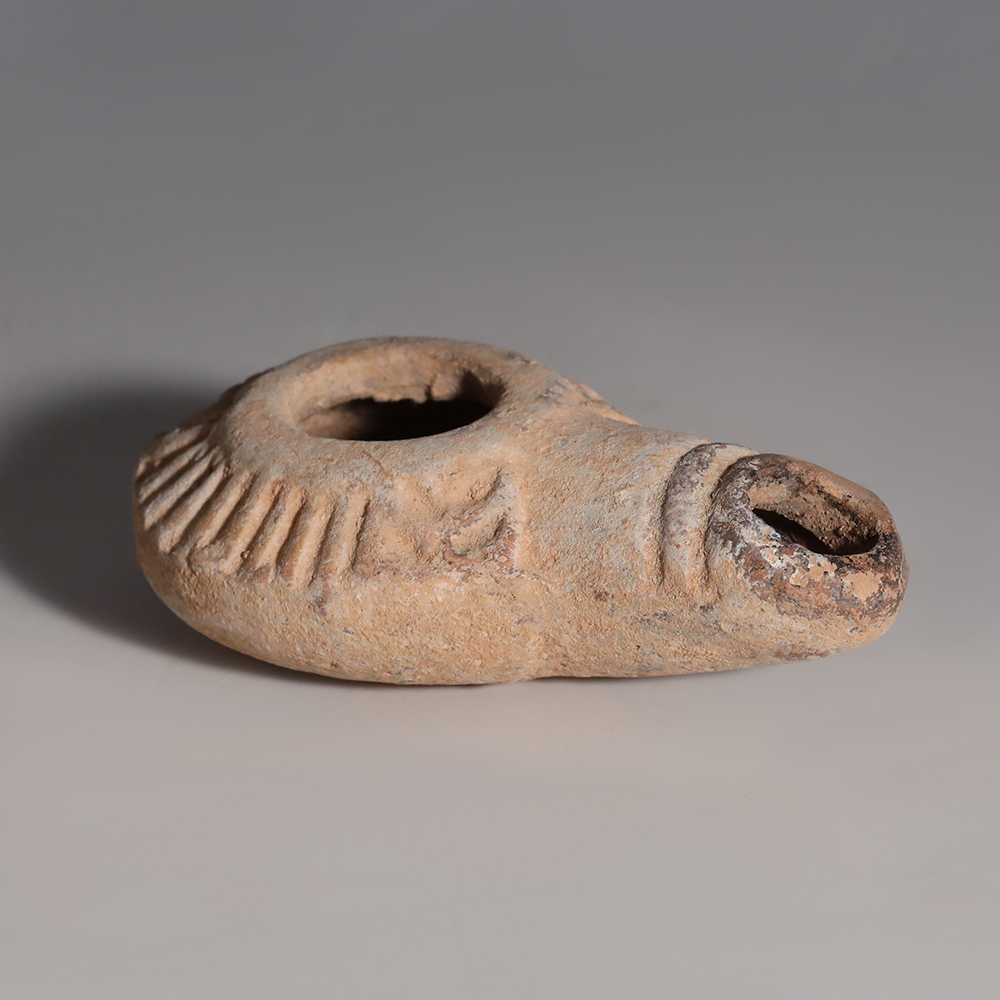
In Antiquity, a lamp was originally called a lychnus, from the Greek λυχνος, with the oldest Roman lamps dating back to the third century BC. It is thought that the Romans took the idea for lamps from the Greek colonies of Southern Italy. During the Roman Empire, it became commonplace to use lamps in funeral ceremonies and for public purposes. Over time, the manufacture of lamps increased, and so did the variation in decoration, which depended mainly on the shape and size of the lamp. Common decorative themes depicted on the discus were entertainment scenes (such as gladiators in combat), common myths, and animals. Pottery oil lamps could be made in three different ways: handmade, wheel made, or by mould. The use of the mould (which was made from clay or plaster), introduced in the third century BC, quickly became popular, because one mould could produce several lamps
To discover more about oil lamps, please visit our relevant blog post: Lighting The Way.