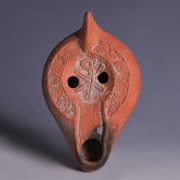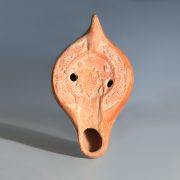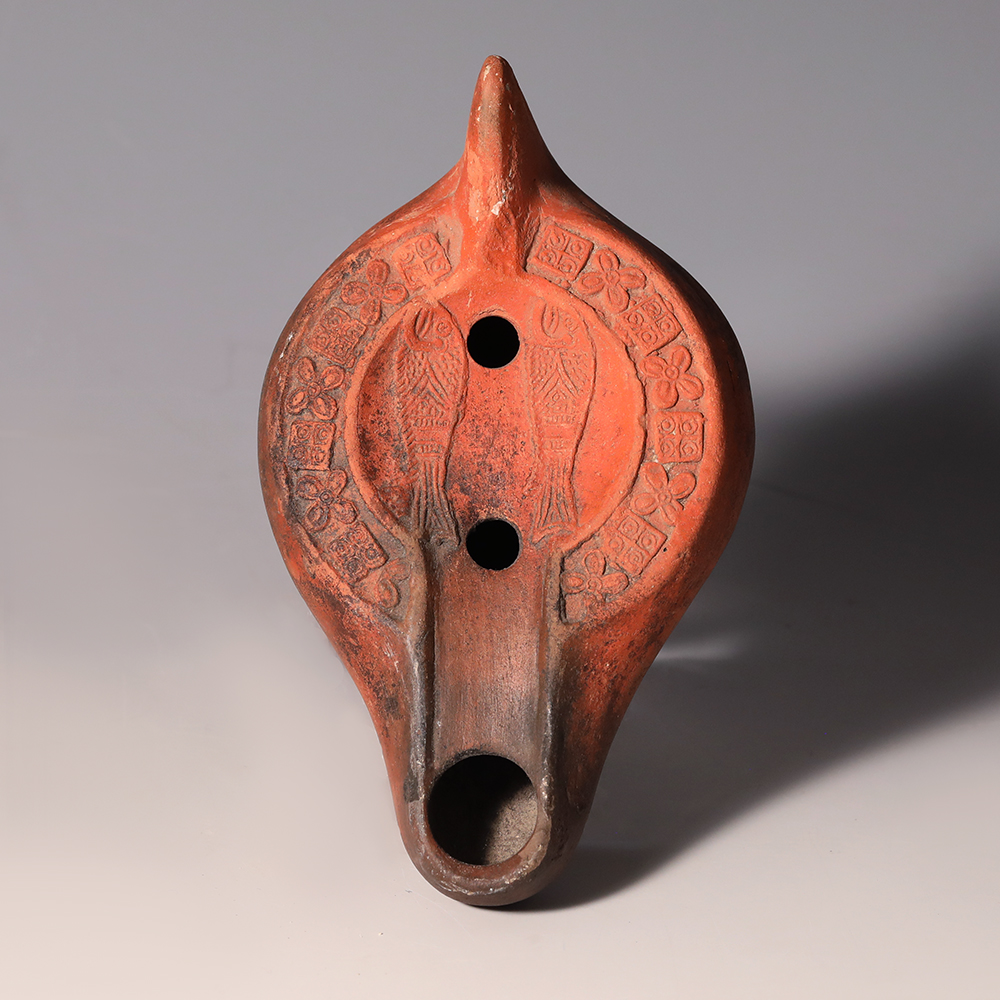
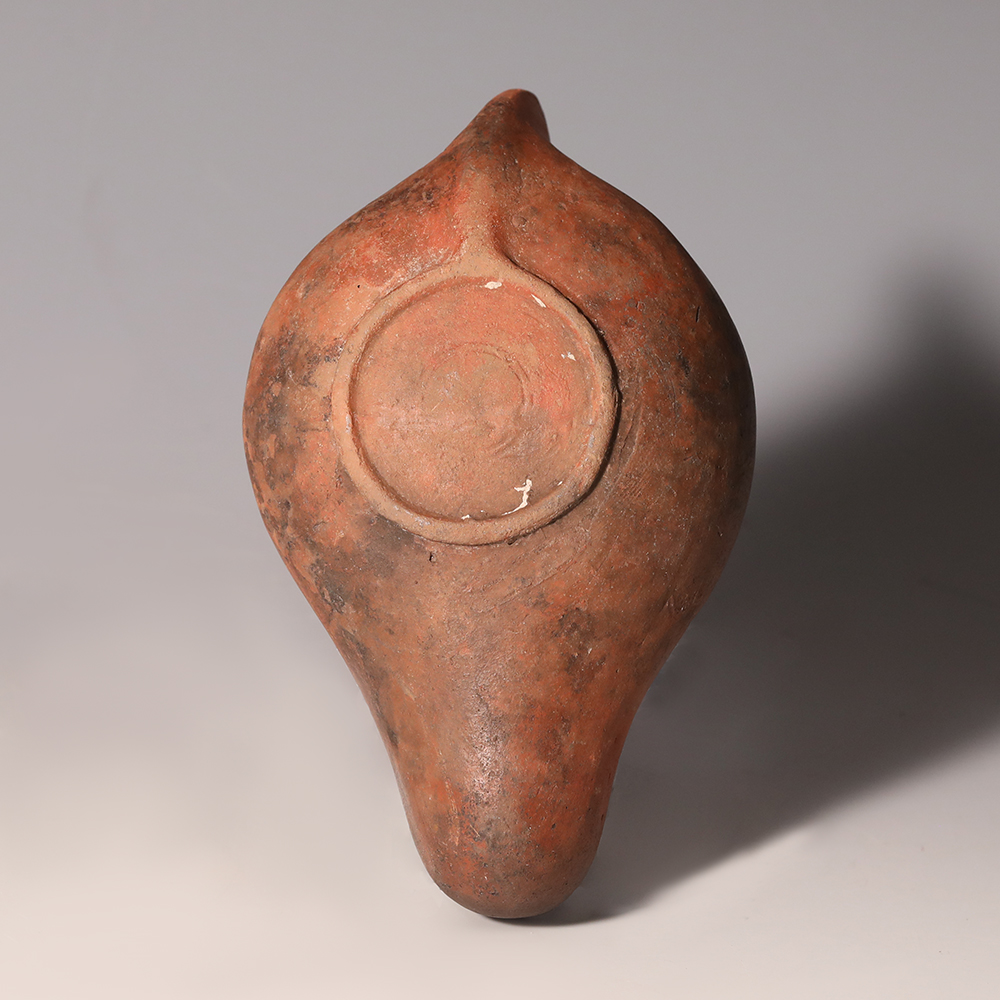
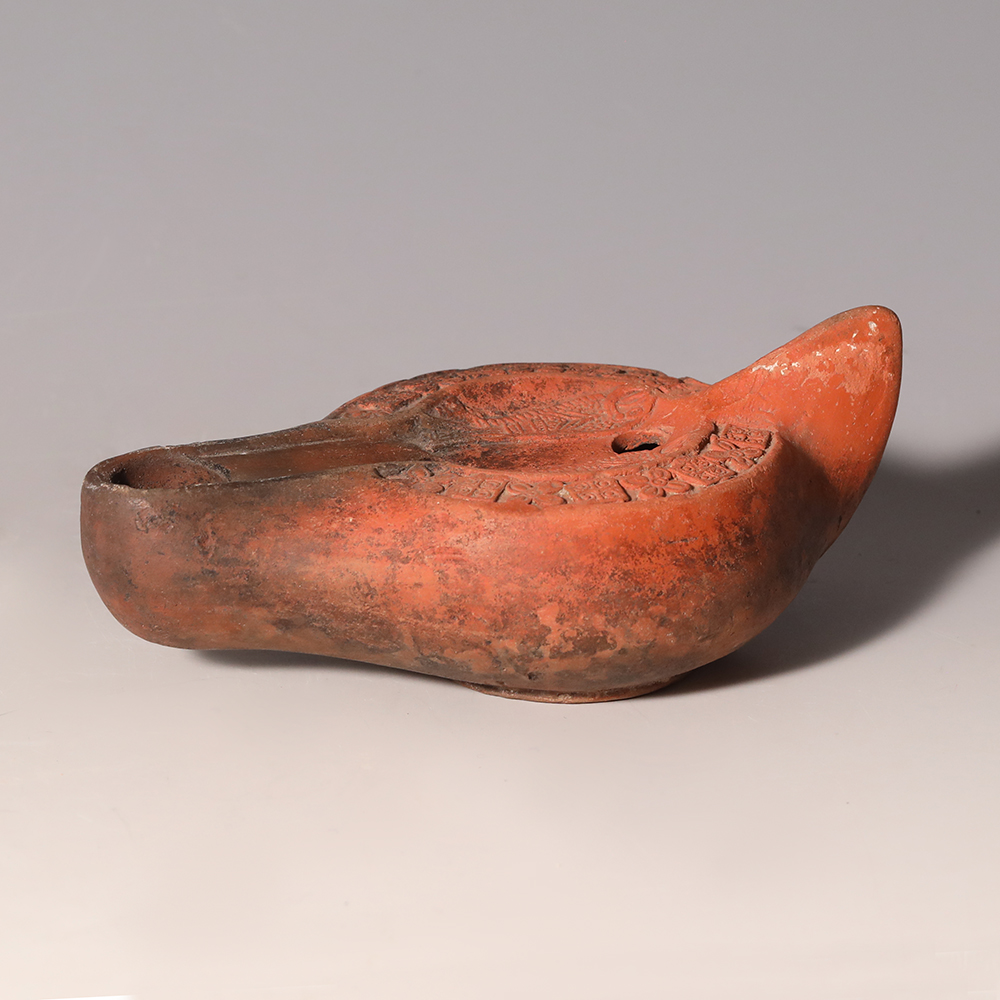

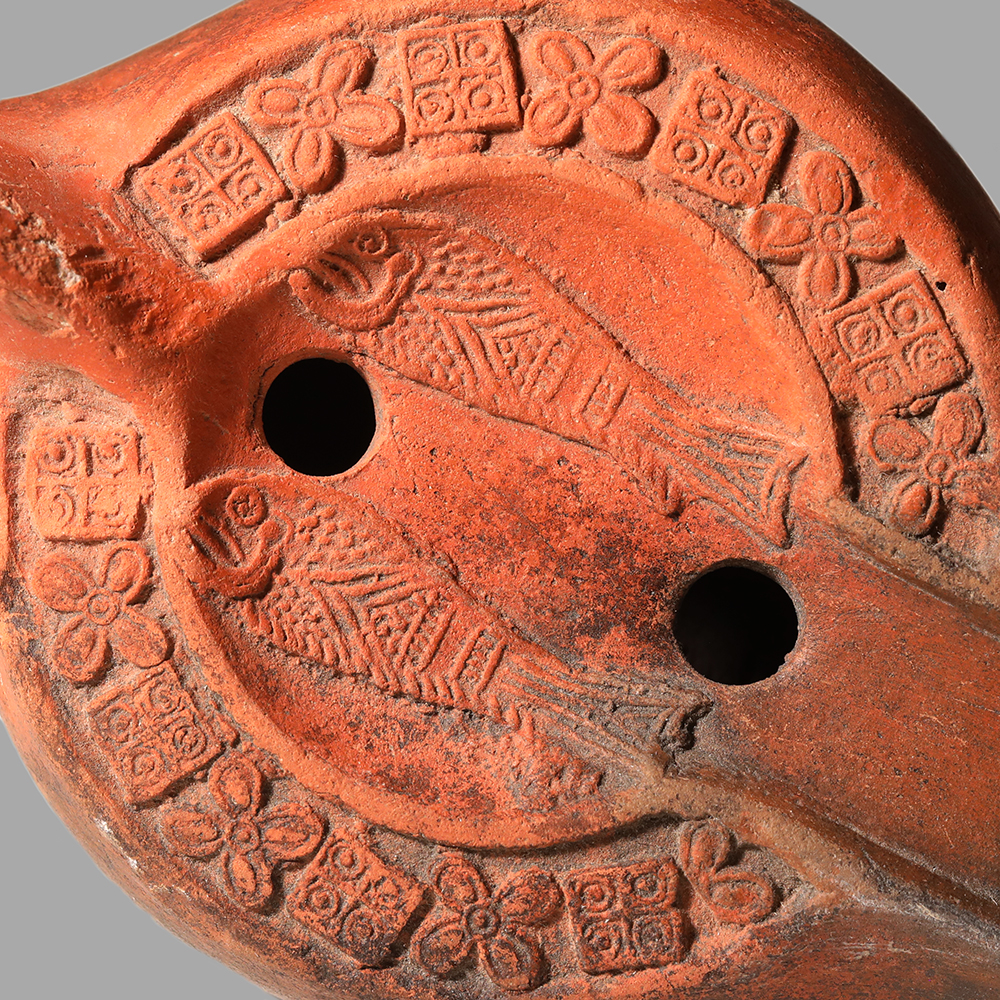
Oil lamps were originally called ‘lychnus’, from the Greek ‘λυχνος’, with the oldest Roman lamps dating back to the 3rd century BC. Over time, the manufacture of lamps increased, and so did the variation in decoration, which depended mainly on the shape and size of the lamp. During the fourth and fifth century AD, North Africa started to produce oil lamps from red slip, much like this fine example, with large discus areas which allowed for numerous designs. This oil lamp falls under Atlante X; Hayes IIA type, which holds characteristics from central Tunisia, one being the neatly drawn motives around the shoulder. Initially produced in Tunisia only, these oil lamps were broadly exported throughout the empire for about three centuries. The fish was a popular motif on such lamps. It was used as a subtle Christian motif, without broadcasting ones beliefs at a time when persecution was rife. The fish was used from the late 2nd century AD but became very popular in the 3rd and 4th centuries. The fish stood for ἸΧΘΥΣ: an acrostic for ‘Ἰησοῦς Χρῑστός Θεοῦ Υἱός Σωτήρ, or ‘Iesoous Khristos, Theou Huios Soter, which translates into English as ‘Jesus Christ, God’s Son, Savior’.
To discover more about oil lamps in Antiquity, please visit our relevant blog post: Lighting The Way.